
Same-day & Next-day Delivery

Quality Guaranteed

Unlock Your Welcome Offers: FREE Delivery | Up to 80% OFF | Free 30-day JoyPlus trial
Download the APP
An insulated bag lets you carry a meal to school, a drink to work or several portions for a picnic. But a poorly sized model that is awkward to clean can quickly become a real daily headache. Before placing your order, it is therefore worth separating the features that are genuinely useful from purely marketing-led claims.
A volume expressed in litres says very little about the interior shape. A tall, narrow bag may sometimes accommodate a wide lunch box less easily than a lower, soft cool bag. Remember to check the external dimensions, as well as the compartments, dividers and space taken up by the insulation.
For a child, a 6 to 7-litre size is generally enough for a lunch box, a snack and a water bottle. For a family day out, it is better to aim for 12 to 15 litres to leave a little room to spare. Larger models, particularly insulated backpacks, are ideal when several meals and drinks need to be carried.
An insulated leakproof bag often has an inner lining designed to contain minor spills. That does not necessarily mean its seams, fastening or outer coating will withstand being submerged. Instead, look for a PEVA lining, well-constructed seams and a fastening that helps limit leaks.
Food and drinks should also be placed in properly sealed containers. An insulated bag is not a substitute for an airtight lunch box, especially if it will end up in a schoolbag or be carried by bike.
For a child, an insulated lunch bag should remain lightweight once filled. A simple handle may be enough for a short journey, but adjustable shoulder straps will be much more practical for going to school or nursery. For adults, a padded shoulder strap or cushioned back panel significantly improves comfort on a hike.
Maintenance deserves just as much attention as the material. Some bags can only be cleaned with a damp cloth and are not machine washable. Remember to let the lining dry after every use: this helps prevent unpleasant smells and trapped moisture.
Insulation is most often based on foam, with the thickness varying from one model to another. For example, the 12-litre model shown below specifies 6 mm foam and an inner PEVA lining. An insulated backpack may instead use 8 mm foam combined with a PEVA lining described as leak-resistant.
This information gives you an idea of how the bag is designed, but it cannot guarantee the same storage time in every situation. The outdoor temperature, how often the bag is opened, the type of food and the use of ice packs also play a major role.
To choose a school lunch bag, measure your lunch box and water bottle before ordering. The Maped Picnik measures 28 × 16 × 21 cm, weighs 217 g and has two compartments, including an insulated lower section. An elasticated strap keeps the bottle upright in the upper compartment.
For days out, a 12- or 15-litre portable cool bag provides enough room for several cans and containers. External pockets are useful for storing cutlery, napkins and small accessories separately from the food.
Choosing an insulated picnic bag also depends on the distance you need to travel. Convertible straps allow you to change how you carry it, while an insulated backpack fitted with a waist strap distributes the weight more effectively during a hike.
At the beach or in a park, a picnic basket or a convertible bag with a mat can provide additional storage. However, bear in mind that this type of accessory does not replace proper insulation for food that is sensitive to heat.
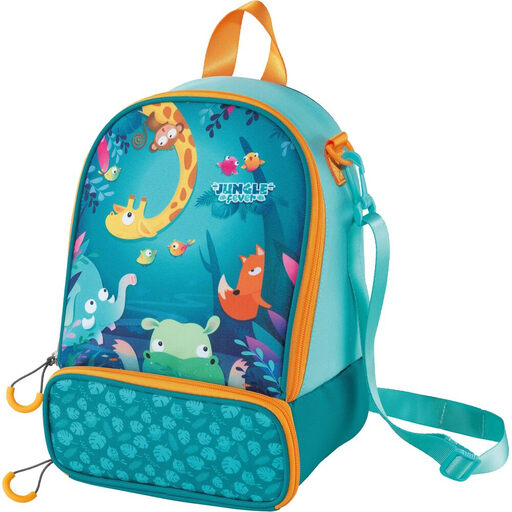
Why this choice suits this profile : With its 6.5-litre capacity, this model is suitable for school meals, nursery and short outings. Its stated weight of 217 g means it does not add unnecessary weight to your bag when empty.
Its two compartments let you separate the lunch box, water bottle and accessories instead of cramming everything into one space.
Insulated lower compartment, convertible straps, elasticated bottle holder and space for writing your name.
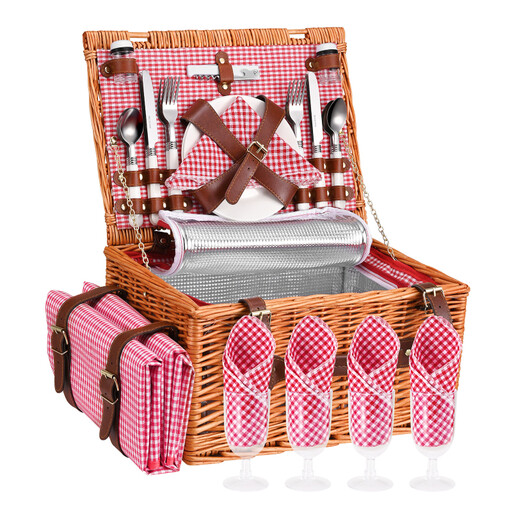
Why this choice suits this profile : This picnic basket is designed for families who want a smart presentation for four people, with an insulated compartment and a blanket listed in the product details.
The included blanket means you do not need to buy a separate mat, while clearly separating the transport area from the dining area.
Designed for four people, insulated compartment and PU faux-leather handle as stated in the description.
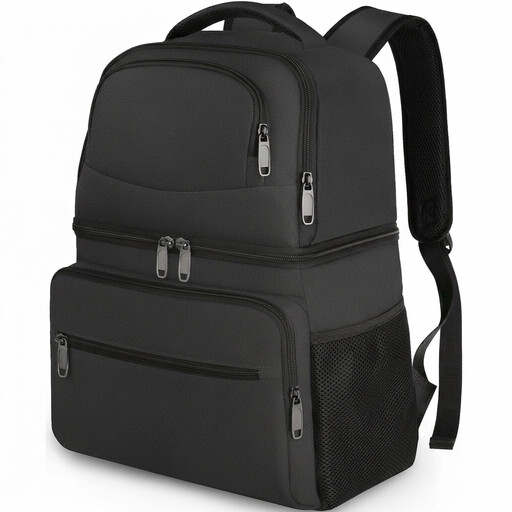
Why this choice suits this profile : This insulated backpack is designed for days at the beach, camping, fishing or hikes where you need plenty of space and hands-free carrying.
Separating the insulated compartment from the dry section prevents cans, meals and accessories from being mixed together during transport.
Two compartments, several pockets, adjustable shoulder straps, waist strap and PEVA lining described as leak-resistant.
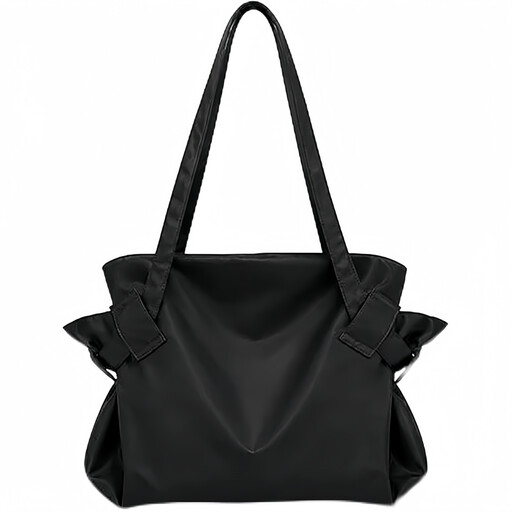
Why this choice suits this profile : This convertible bag is suitable for days out in town, at the beach or on a picnic when you would rather not carry a separate mat.
It is clearly designed for versatility. However, you should not choose it instead of an insulated cool bag for food that needs to stay chilled.
100 cm round mat, material described as water-resistant, compact folded size of 30 × 20 cm and integrated pockets.
We have brought together a complete, real-time updated selection of products that meet these demanding criteria and European safety standards.
Place already chilled food in the bag, add one or more ice packs suitable for its capacity and avoid opening it too often. Airtight containers also help reduce the risk of leaks. Keep the bag in the shade and do not leave it in a hot car.
For a child, start by comparing the dimensions of the lunch box and water bottle. A 6.5-litre model may be enough for a school day. For an adult or a family outing, a 12- to 15-litre soft cool bag will provide more room for several portions and drinks.
It depends on the insulation, contents, outdoor temperature and use of ice packs. The bag’s capacity alone cannot be used to determine a universal storage time. Check the manufacturer’s recommendations and follow the usual food storage guidelines.