
Livraison le jour même ou le lendemain

Qualité garantie

Débloquez vos offres de bienvenue: Livraison GRATUITE | Jusqu'à -80 % | 30 jours d'essai gratuits à JoyPlus
Téléchargez l'application
Carrying a homemade meal, snack or drink involves more than simply finding a container. An insulated lunch bag should suit the amount being carried, how it will be transported and the age of the person using it. For a child, weight and ease of opening matter just as much as the internal organisation. For an adult, leak resistance, pockets and laptop compatibility can make all the difference.
Before comparing an insulated lunch bag, soft cooler or children’s lunchbox, it is also worth knowing about the most common pitfalls.
A foam, PEVA or aluminium lining slows down heat transfer, but it does not replace a cold pack or a properly secured closure. How long food stays fresh depends, among other things, on the outside temperature, the contents of the bag and how often it is opened.
A leak-resistant lunch bag can help prevent spills thanks to the design of its lining, but it will not necessarily withstand a poorly closed bottle or overfilling. Check the seams, type of closure and care instructions before placing your order.
A large model may seem more practical, but it quickly becomes heavy once filled with a lunchbox, water bottle, cutlery and cold pack. For primary school, a compact and lightweight children’s lunch bag will often be easier to carry. For a working day or a picnic, however, a larger capacity may be worthwhile.
Character prints appeal to children, but they reveal nothing about the internal organisation or how easy the bag is to clean. A plastic children’s lunchbox may be perfectly suitable for a sandwich and some fruit, while offering no insulation at all. It is therefore important to distinguish a rigid lunchbox from a genuine lunch bag with an insulated compartment.
Start by measuring the available space in your school bag, work bag or car boot. The external dimensions do not always reflect the usable capacity: the lining and dividers take up space too.
A model with two compartments allows you to keep your meal separate from your water bottle, napkins or personal belongings. A section that keeps the bottle upright is another particularly useful detail.
Polyester and Oxford fabric generally stand up well to everyday handling, but their durability depends on the thickness of the material and the quality of the stitching. A PEVA or aluminium-film lining can usually be cleaned with a damp cloth. Always check the instructions, though: many insulated bags are not machine washable.
For regular use, look for:
The OEKO-TEX STANDARD 100 label, when shown on a product listing, refers to certification concerning the presence of certain controlled substances in textiles. It does not guarantee that the bag will keep food cold or that it is leakproof.
A 217 g children’s lunch bag, for example, will be more comfortable to carry than a cooler backpack weighing several hundred grams. For an adult travelling by bike, public transport or on foot, it is also important to look closely at the straps, back padding and how the weight is distributed.
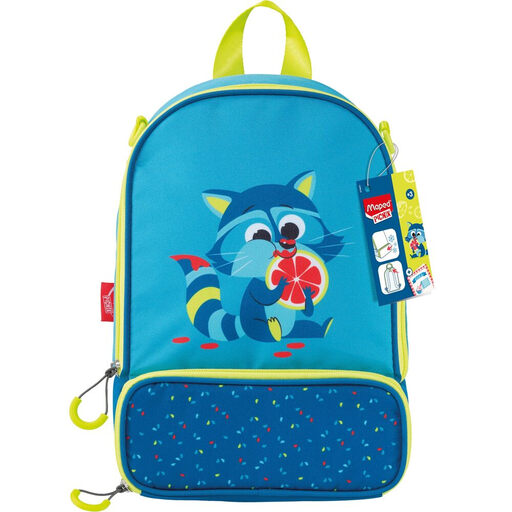
Why this choice suits this profile : With a capacity of 6.5 litres and a stated weight of 217 g, this model is suitable for school journeys and short outings. It can be carried by hand, over the shoulder or on the back.
The two compartments prevent the meal and water bottle from getting mixed together. The product listing mentions an insulated lower section and cleaning with a damp cloth, with no machine washing.
6.5-litre capacity, convertible strap, internal elastic strap to hold the bottle in place and name label.
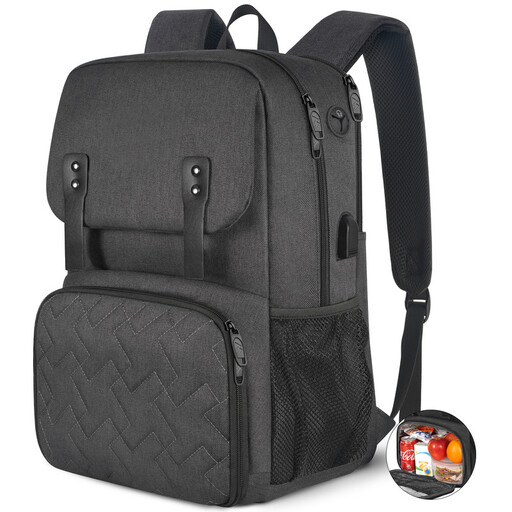
Why this choice suits this profile : This backpack combines a meal compartment, space for a laptop up to 15.6 inches and several pockets. It is an appealing option for students and working professionals who want to carry everything in one place.
The insulated compartment is separate from electronic devices and its lining is described as leakproof. However, the USB port requires a power bank: it is not a cooling function.
Foldable meal compartment, anti-theft pocket, luggage strap and adjustable shoulder straps.
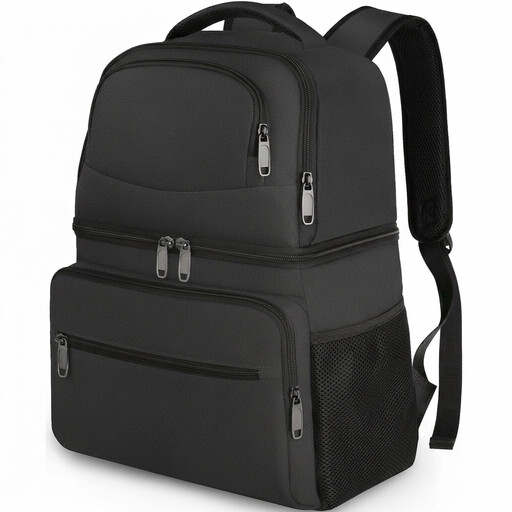
Why this choice suits this profile : With two compartments and a stated capacity of 26 cans, this cooler backpack is made for picnics, camping trips and long days outdoors.
The separation between the insulated section and the dry compartment helps prevent drinks from coming into contact with accessories. The product listing mentions a PEVA lining and water-resistant Oxford fabric.
Two storage levels, adjustable shoulder straps, waist strap and mesh side pockets.
We have put together a complete, real-time updated selection of products that meet these demanding criteria, as well as European safety regulations.
To extend the life of your insulated lunch bag, remove leftovers as soon as possible and wipe the lining after every use. Leave it open to dry completely before putting it away. Avoid sharp objects, overfilling and oversized cold packs, which could put strain on the seams.
A rigid lunchbox can generally be washed by hand using water and mild soap. PAW Patrol, Spidey and Frozen models designed for children aged 3 and over are practical for a simple meal, but their product listings specify that they are not suitable for use in a microwave. Check the condition of the fasteners, any cracks and small parts regularly.
There is no universal timeframe. The result depends on the insulation, ambient temperature, how full the bag is and whether or not a cold pack is used. Some product listings state two to four hours for specific models, but this remains product-specific guidance rather than a guarantee that applies in every situation.
A lunchbox is suitable for foods that need to be kept separate and for short journeys. A bag offers more space and can hold a water bottle or snack. For everyday school journeys, a lightweight model with several compartments will often be more practical. For a picnic, a larger soft cooler will meet a different need.
Use containers that are properly sealed, carry bottles upright and avoid overfilling the compartment. Even when a product is described as waterproof or leakproof, check the closure after every use and wipe away any moisture inside immediately.