
Livraison le jour même ou le lendemain

Qualité garantie

Débloquez vos offres de bienvenue: Livraison GRATUITE | Jusqu'à -80 % | 30 jours d'essai gratuits à JoyPlus
Téléchargez l'application
Choosing an insulated food bag may seem straightforward: sufficient capacity, a practical closure and an insulating lining should do the job. In practice, certain details can make all the difference day to day. A bag that is too large soon becomes heavy, a difficult-to-clean lining can retain odours, and a closure that is not fully leakproof may allow a drink or sauce to escape.
Before comparing an insulated lunch bag, an insulated lunch tote or a cool bag, it is therefore best to start by defining how you intend to use it, checking the actual available capacity and looking carefully at the care instructions.
A 15-litre insulated bag can hold several meals, but the thickness of the insulating foam, the interior shape and the different compartments can sometimes reduce the available space. Conversely, a small 6.5-litre children's lunch bag may be more than enough for a lunch box, a water bottle and a snack.
To avoid unpleasant surprises, check the external dimensions, the number of compartments and whether there is a dedicated bottle pocket. A capacity stated in litres is not always enough to give you a clear idea of the storage space available in everyday use.
Some manufacturers state how long food can be kept cool when ice packs are used. However, this figure depends on many factors: the outside temperature, how often the bag is opened, the quantity of food, the quality of the closure and the initial temperature of the contents.
Treat these times as general guidelines only. For perishable food, follow the storage recommendations on the packaging and use a suitable ice pack. An insulated bag is not a substitute for a fridge.
A lining described as leakproof makes cleaning easier, but this does not necessarily mean that the bag can be submerged or put in the washing machine. The seams, zips and inner corners require particular attention.
After each use, remove any residue, clean the bag with a damp cloth or soft sponge in accordance with the manufacturer's instructions, then leave it fully open to dry completely.
Insulation generally consists of foam placed between the outer fabric and the inner lining. PEVA is often used because its surface is easy to wipe clean. A heat-sealed lining with few seams can help reduce the risk of leaks, but the manufacturer's recommendations should always take priority.
A zip that runs across the entire top helps keep the contents securely in place. When carrying liquids, choose a lining described as leakproof or leak-resistant and, where possible, keep bottles upright.
For school, a children's lunch bag with two compartments makes it easier to separate the meal from the water bottle. For work or a day out, a hiking cool bag or picnic cool bag should above all provide easy access and capacity suited to the number of people using it.
Here are a few useful guidelines:
A 21-litre cool bag can carry more boxes and containers, but will naturally be bulkier than a compact model.
The unladen weight is particularly important for a child. Adjustable shoulder straps, a handle and a shoulder strap allow you to adapt how the bag is carried to the journey. For hiking or frequent travel, a padded back, side pockets and a stable base are also real advantages.
Polyester is very commonly used for the outer section. It stands up well to everyday use, but sharp objects can damage the fabric or lining. Avoid overfilling the bag to reduce strain on the closures and seams.
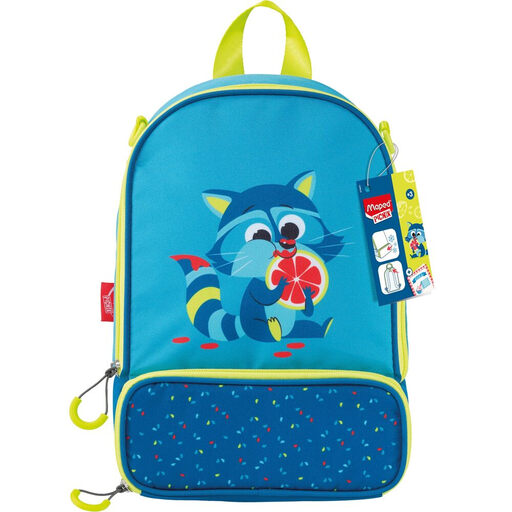
Why this model suits this user: With a capacity of 6.5 litres and dimensions of 28 × 16 × 21 cm, it is ideal for the school run, snacks and small picnics.
The two compartments keep the insulated meal separate from the accessories. The elasticated bottle holder stops the water bottle from moving around inside the bag.
A stated weight of 217 g, shoulder straps that convert the bag into a rucksack and a space for writing the name. Clean with a damp cloth only.
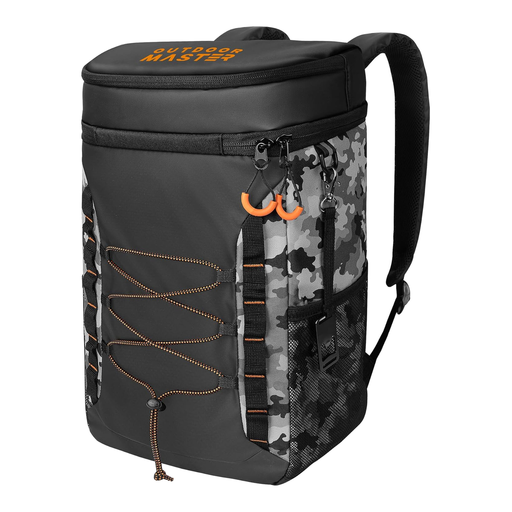
Why this model suits this user: With its 21-litre capacity, it is designed for adults looking for a comfortable cool bag for days out, sport, trips to the beach or shared meals.
The PEVA inner lining is described as leakproof and can be wiped clean or rinsed, in accordance with the care instructions.
Two compartments, two mesh side pockets, a padded back and a bottle opener included. The manufacturer states that it can keep contents cool for up to 20 hours with ice.
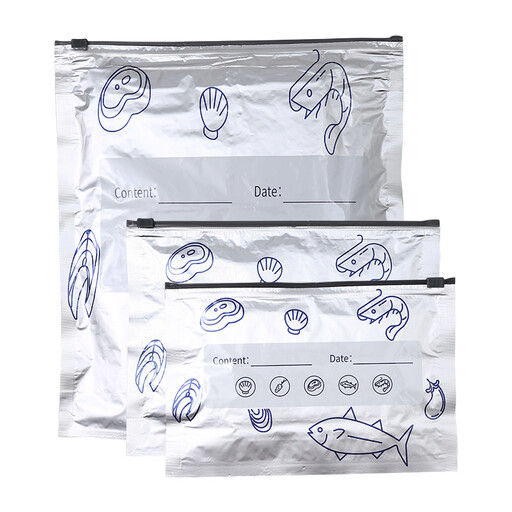
Why this model suits this user: This set makes it easier to organise food in the fridge and freezer, particularly in households that prepare several portions in advance.
The three sizes, slider closure and labelling area make it easy to identify portions and the date they were stored.
30 food storage bags with zip closures, supplied in three sizes, made from multi-layer PET-aluminium-PE material and with a stated usage range of −20 °C to 100 °C. Do not use in the oven, microwave, boiling water or over a naked flame.
An insulated lunch bag is designed for transport. Food storage bags with zip closures are mainly intended for storing food in the fridge or freezer. The Maxcook models featured here are designed to keep food in reusable bags, with a sliding closure and labelling area.
To help prevent leaks, do not overfill airtight freezer bags and leave room for food that may expand when frozen. Also avoid very sharp foods or particularly liquid preparations, which may put pressure on the sides. After cleaning, dry the bags completely before reusing them.
We have selected a complete, real-time updated list of products that meet these demanding selection criteria as well as European safety regulations.
For lunch at school or work, a capacity of 6 to 8 litres is generally enough for a lunch box, a drink and a snack. A 12- to 15-litre model provides more room for several containers or a picnic.
The length of time depends on the insulation, the outside temperature, the contents and whether ice packs are used. Figures provided by the manufacturer should be treated as guidelines, not as a guarantee that applies in every situation. To extend cooling time, keep the bag closed and pre-chill the food whenever its storage instructions allow this.
Clean stains promptly, dry the lining before closing the bag and store it in a dry place. Avoid sharp objects, machine washing when it is not permitted and overloading the bag in a way that could deform the closure.