
Livraison le jour même ou le lendemain

Qualité garantie

Débloquez vos offres de bienvenue: Livraison GRATUITE | Jusqu'à -80 % | 30 jours d'essai gratuits à JoyPlus
Téléchargez l'application
Choosing a new hob is a key step when designing or renovating a kitchen. The built-in 4-zone induction hob has established itself as the modern choice, combining rapid cooking, safety, and minimal maintenance. But faced with a maze of models and vague marketing jargon, it's easy to get lost. As a Product Recommendation Manager at Joybuy, my mission is to help you decode the spec sheets to make an informed decision that truly meets your needs.
Before you even start comparing models, it's essential to know the common pitfalls that can turn a promising purchase into a daily frustration.
To make the right choice, focus on a few objective parameters that define the quality and user experience of a 4-zone induction hob.
This is the absolute basic. A 60 cm hob is the standard size, but this refers to the total width of the product. The crucial dimension is the one for the installation niche to be cut into your worktop. For a 59 cm wide model, the cutout is typically 56 cm x 49 cm. Always check this data on the technical sheet to ensure a perfect fit and, most importantly, proper ventilation.
Rather than the total power, scrutinise the power of each individual zone, with and without the induction hob booster function. This feature allows for lightning-fast heat-up by concentrating power on a single zone for a few minutes. A good balance would be, for example, two 1500 W zones (boost to 2100 W) and two others at 1800 W (boost to 2400 W). This gives you the flexibility to simmer a dish while bringing a large pot of water to a boil in record time.
Touch controls have become the standard, but their responsiveness and the features they control vary enormously. Three safety features are non-negotiable, especially with children at home:
Rather than an endless catalogue, we've matched user profiles with models that tick all the boxes on our performance and reliability criteria.
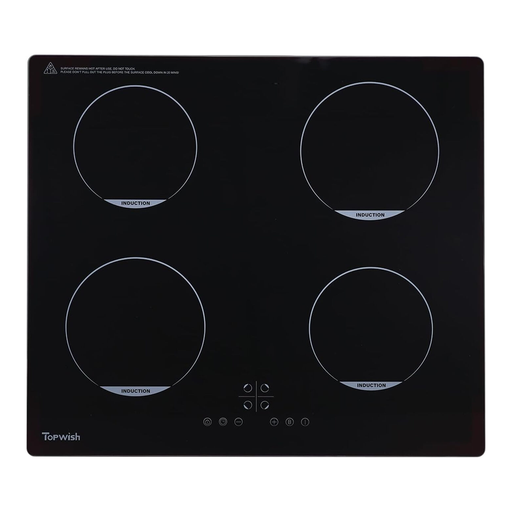
Why we recommend it: This model focuses on the essentials and does them well. It offers four efficient cooking zones, a well-managed 7200 W power output, and all the essential safety features for worry-free family use.
The spec sheet is transparent, detailing the power of each zone (2x1500W and 2x2100W with booster). No nasty surprises on real-world performance when multiple pans are on the go.
Excellent features-to-price ratio. Includes child lock, timer, residual heat indicator, and overheat protection.
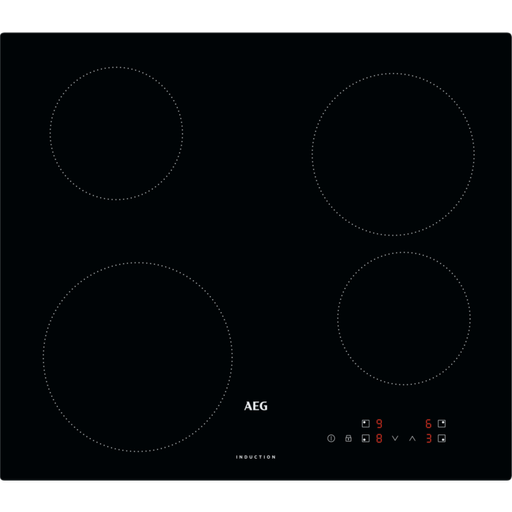
Why we recommend it: For those who want the performance and reliability of a major brand. This AEG model ensures consistent power and an effective booster function on each zone for precise and responsive cooking.
The quality of the design and components, especially the ventilation system, is built for intensive use. Say goodbye to the risks of excessive noise and overheating typical of entry-level models.
High and stable power (up to 2400 W on one zone). Ultra-responsive touch controls and a frameless design for a discreet integration.
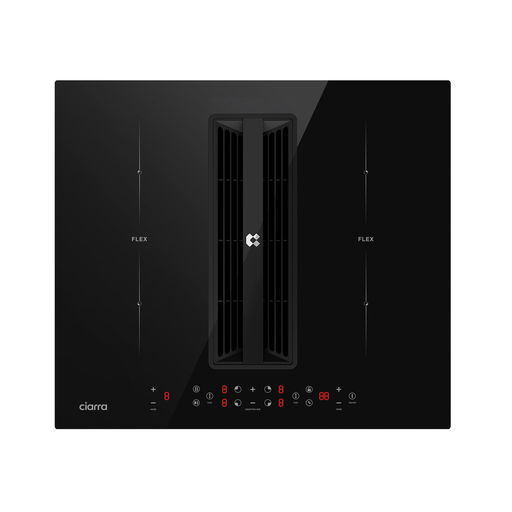
Why we recommend it: Perfect for modern kitchens with a central island or for those who want a minimalist design. This 2-in-1 product combines a high-performance 4-zone hob with a central downdraft extractor.
It tackles the problem at the source by integrating a high-performance hood. No more headaches over ventilation and clutter. The Plasma? filtration technology neutralises smoke and odours, an ideal solution for open spaces.
Ultra-sleek and space-saving 2-in-1 concept. Flexible cooking zones (FlexiZone) and PowerBoost function on all 4 burners.
We have selected a full range of products that meet our performance criteria and French safety standards.
The lifespan of an induction hob is generally between 10 and 15 years. This longevity depends on the quality of the components, the frequency of use, and, above all, the quality of the installation. Good ventilation under the worktop is crucial to protect the electronics from overheating and thus maximise the appliance's lifespan.
Yes, and this is a non-negotiable safety point. A built-in 4-zone induction hob, with a total power rating approaching 7200 W, requires a dedicated and protected electrical line. The French standard NF C 15-100 mandates a specialised circuit with a 32 A circuit breaker and 6 mm? cross-section wiring. Hiring a qualified electrician is therefore strongly recommended to ensure a 100% compliant and safe installation.
No, only cookware with a ferromagnetic base will work. This includes cast iron, steel, and certain types of stainless steel. Vessels made of copper, glass, aluminium (unless they have a compatible bonded base), or ceramic will not be recognised by the hob. The magnet test is a foolproof way to check: hold one to the bottom of your pan. If it sticks firmly, it's compatible.