
Livraison le jour même ou le lendemain

Qualité garantie

Débloquez vos offres de bienvenue: Livraison GRATUITE | Jusqu'à -80 % | 30 jours d'essai gratuits à JoyPlus
Téléchargez l'application
An induction hob speeds up cooking, simplifies cleaning and frees up space in a small kitchen. But the differences between built-in, portable and multi-zone models go far beyond the wattage displayed.
Three common pitfalls to watch out for when buying:
Here are the key criteria to consider when choosing a solution that suits your home and your cooking habits.
To replace an old standard hob, a 60 cm built-in induction hob typically measures around 59 cm wide, with a cut-out close to 56 × 49 cm. However, always check the exact dimensions given in the specification sheet and instruction manual.
A 4-zone induction hob is ideal for families and anyone cooking several dishes at once. 3-zone models can give each pan more space, while a 2-zone induction hob is better suited to a couple, a small home or a secondary kitchen.
For camping, a van or occasional use, a 2,000 W portable induction hob is easy to store and plugs into a suitable socket. It usually works with just one pan at a time.
Power shouldn't be your only consideration. An induction hob with a booster function speeds up heating, but this feature can increase the electrical demand when several zones are on.
On a built-in model, check:
A 2,000 W portable hob is fine for boiling water, making soups and everyday cooking with a compatible pan. The result also depends on the base diameter and the material of your cookware.
Choose features that meet a real need:
A touch-control induction hob can be pleasant to use, but the sensitivity of the buttons and the clarity of the display matter more than the number of programmes advertised. Before buying, also check your cookware is compatible: a magnet should generally stick to the base of the pan.
The references below are for different uses. The features listed are those provided in the product specifications.
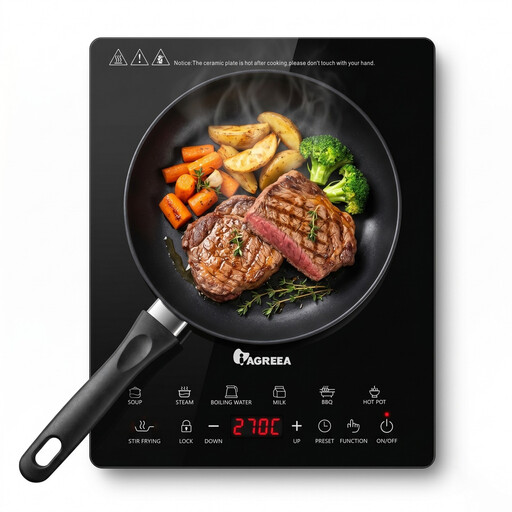
Why this suits this profile: Its portable design and adjustable power from 100 to 2,000 W make it ideal for a studio flat, student room, secondary kitchen or a first hob without built-in installation.
Its 8 power levels, pan absence detection and child lock prevent imprecise settings and accidental start-ups.
Power up to 2,000 W, adjustable temperature from 60 to 270 °C, timer up to 3 hours and easy-to-clean black glass surface.
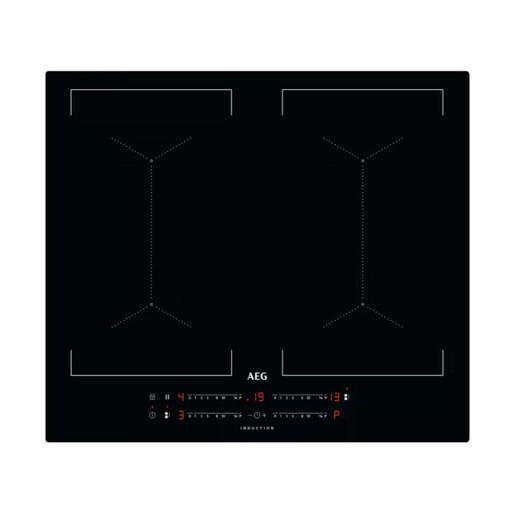
Why this suits this profile: This 4-zone built-in hob is aimed at regular cooks who want to use several pans at once, including large frying pans or a griddle.
The two FlexiBridge zones can be combined to accommodate a large pan, without being limited to a fixed zone diameter.
4 zones, 4.8-inch colour TFT display, per-zone timer, Stop&Go function, child lock and PerfectFry sensor, according to the product specification.
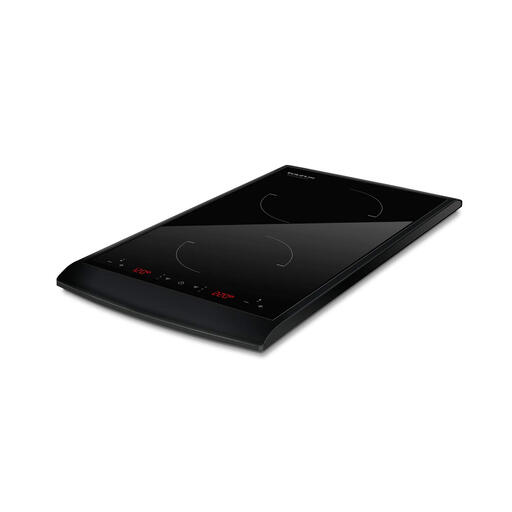
Why this suits this profile: Its two zones and 600 × 310 mm size are designed for van, caravan, camping or small kitchen users who want to cook with two pans.
Unlike a simple portable hob, it offers two zones distributing up to 2,900 W, with overheat protection and automatic shut-off linked to the timer.
Power levels of 1,300 W and 1,600 W, 10 settings, timer up to 3 hours, child lock and black ceramic glass surface.
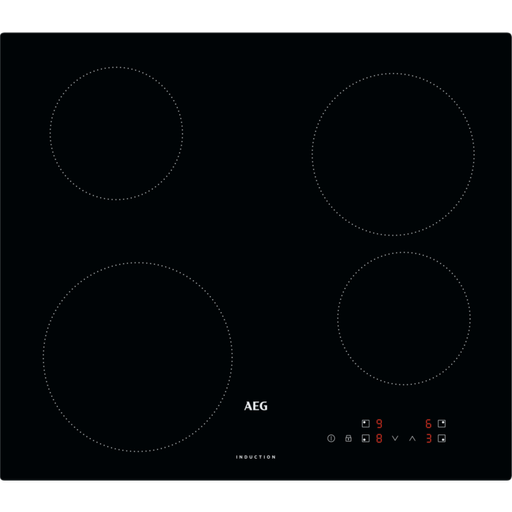
Why this suits this profile: This frameless built-in model is ideal for a fitted kitchen that wants a discreet look and simple controls for everyday cooking.
The specification gives the cut-out dimensions, possible two-phase connection and incompatibility with flush mounting. Details to check before ordering.
Rated power of 6,900 W, booster function, pan detection, residual heat indicator and child lock.
We've put together a comprehensive, real-time updated list of products that meet these strict selection criteria and European safety regulations.
For a built-in hob, check the worktop cut-out, the ventilation underneath the appliance and the compatibility of the electrical circuit. Powerful models without a plug must be connected by a qualified electrician. Do not use a multi-socket extension lead or an adapter if the manual prohibits it.
After each use, wait for the surface to cool before wiping it with a soft cloth and a product suitable for ceramic glass. Avoid abrasive sponges and do not place heavy objects on the black induction hob. Even though induction mainly heats the pan, the glass can remain hot through thermal conduction.
Consumption depends on the power used, cooking time and the number of active zones. The maximum power stated does not necessarily mean constant consumption. Using a timer, covering pans and choosing the right diameter can reduce operating time.
Place a magnet under the pan. If it sticks firmly, the pan is generally suitable for induction. The base should also be flat enough and match the diameter range specified by the manufacturer.
The lifespan depends on the quality of the components, how often it's used, the installation and maintenance. To protect the surface and controls, follow the instructions, do not block the ventilation openings and stop using the appliance if the glass is cracked.