
Livraison le jour même ou le lendemain

Qualité garantie

Débloquez vos offres de bienvenue: Livraison GRATUITE | Jusqu'à -80 % | 30 jours d'essai gratuits à JoyPlus
Téléchargez l'application
A pot that is too small, a planter that holds on to water or a wheeled stand unable to support a heavy planter can quickly turn a decorative purchase into wasted money. Whether you are furnishing a balcony, patio, living room or garden, choosing the right indoor and outdoor plant containers and accessories should primarily take account of how they will be used, their weight and the climate conditions.
Product listings often focus on appearance. However, three pitfalls come up time and again:
Before comparing models, it is therefore best to distinguish purely decorative criteria from the features that will genuinely make a difference every day.
For a plant placed on a balcony or indoors, check that it has drainage holes and that you can add a saucer. A self-watering planter works differently: it stores a quantity of water separately from the growing medium, which can mean you need to water less often. However, it does not remove the need to follow each plant’s specific requirements.
A generous water reservoir is not necessarily an advantage for a species that prefers dry growing medium. Check the dimensions, the usable capacity and the care recommendations before making your choice.
The weight of the container is only part of the load to be moved. You also need to add the weight of the pot, damp compost, the plant and, where applicable, the saucer. For a large shrub or a planter on a patio, a wheeled plant stand can make it much easier to move when cleaning or changing its position.
A model with a brake prevents unwanted movement, particularly on a slightly sloping surface. However, check that the castors are suitable for the surface in question: indoors, outdoors, smooth flooring or uneven paving. When the total weight is substantial, the load capacity must be clearly stated by the seller.
For outdoor use, look for precise indications such as frost-resistant or UV-resistant. These descriptions provide information about how the material performs in certain conditions, but they do not replace the installation and care instructions.
A frost-resistant outdoor flower pot can be left outside during the cold season if this is specified in its product listing. Conversely, a decorative pot not designed to withstand frost may crack. If it is exposed to sunlight for long periods, a UV-resistant pot will generally retain its appearance for longer. With glass, the priorities are different: stability, stated thickness and careful handling are essential.
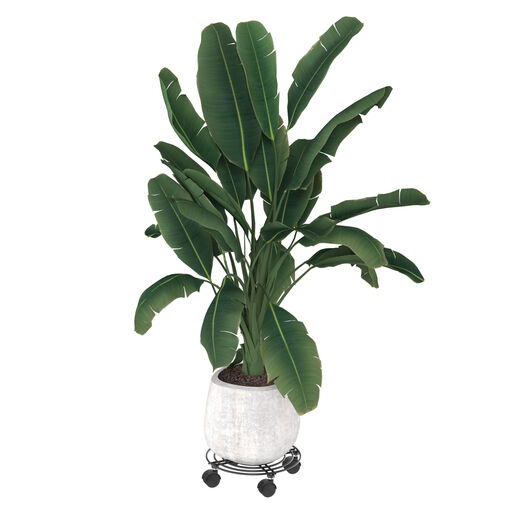
Why this choice suits this profile : This square stand is ideal for anyone who wants to move a plant more easily without investing in sophisticated equipment. It can be used at home or in the garden, provided you check that the load is suitable for the pot.
The locking system reduces the risk of the pot rolling or moving while you water or clean it.
A metal structure, square design and locking system to keep the container stable.
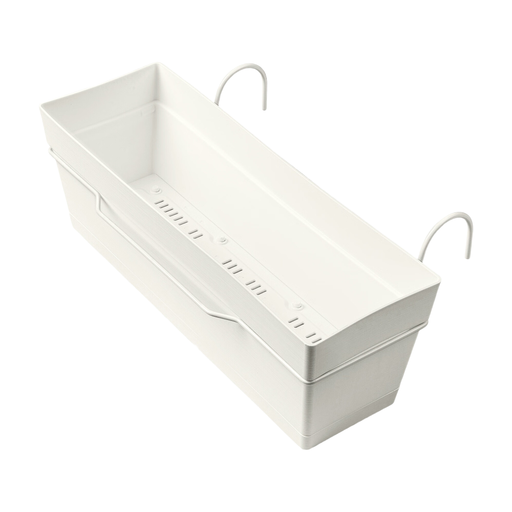
Why this choice suits this profile : At 49 cm long and featuring a water reservoir, this planter box fits neatly into a carefully designed space while offering more consistent watering management.
The listing states that it is designed to resist frost and UV, so you are not choosing an outdoor planter solely for its appearance.
Recycled and recyclable polymer according to the listing, a water reservoir, and stated resistance to frost and UV.
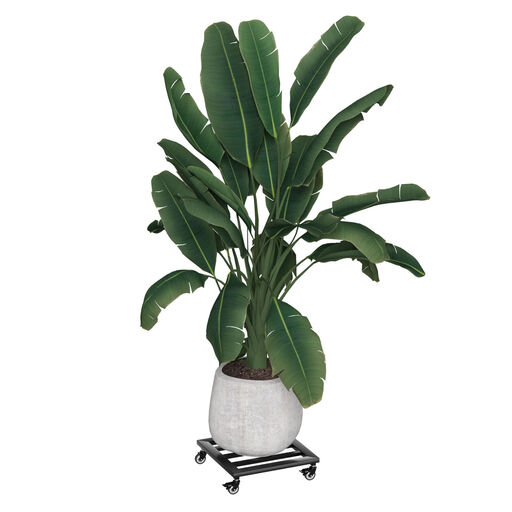
Why this choice suits this profile : The round design is suitable for circular pots and frequent moves between a bright spot, a conservatory or a patio.
The castor locks limit unwanted movement, which is particularly useful when the stand is used regularly.
A round design, metal structure and locking system for indoor and outdoor use.
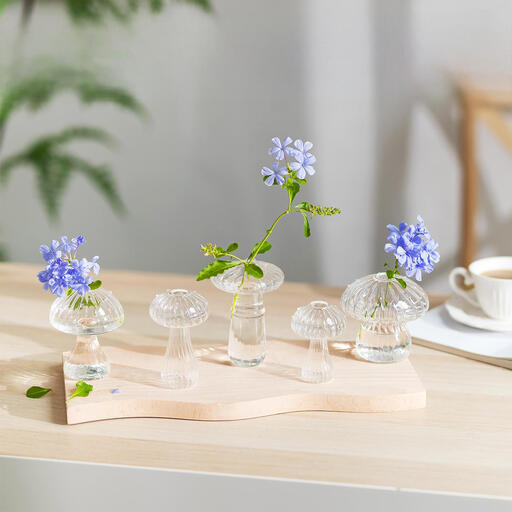
Why this choice suits this profile : These small mushroom-shaped vases sit neatly on a shelf, windowsill or table. They also let you grow cuttings in water while showing them off to their best advantage.
The openings and varied-shaped bases make it easier to arrange cuttings and monitor the water level.
Stated borosilicate glass, five assorted vase shapes, and the option to use them as a propagation station or small glass terrarium.
We have brought together a comprehensive, real-time selection of products that meet these exacting criteria, in line with European safety regulations.
Even a well-chosen container requires a few simple precautions :
The cost of use mainly depends on how often you water, whether the compost needs replacing and the time spent on care. A mobile stand can also reduce the effort involved in moving plants, without requiring any electricity.
It can extend the time between some waterings by storing water in a dedicated compartment. The result depends on the plant, temperature, exposure and reservoir capacity. However, the growing medium should not remain waterlogged at all times.
It all depends on the material and the manufacturer’s recommendations. A model described as frost-resistant is designed to withstand these conditions as specified. Even so, you should check that the drainage works properly and prevent water from collecting inside the container.
Compare the shape of the stand with that of the pot, the castor surface area, the type of flooring and the total weight to be moved. A plant stand with a brake can be particularly useful if the container needs to be moved and then secured in place. Before buying, make sure its load capacity is sufficient.