
当日/次日达

品质保障

开启新人专享福利: 全场免邮 | 低至 2 折 | 免费试用 30 天 JoyPlus 会员
下载 Joybuy
Faced with overflowing shelves, choosing the right cleaning product often feels like a puzzle. Between promises of miracle-like effectiveness, so-called "green" formulas, and XXL value packs, it's all too easy to make the wrong choice. Our mission: to help you cut through the noise and make a smart decision. Let's break down the most common traps and the criteria that truly matter.
The marketing for cleaning products often uses and abuses punchy, frequently misleading claims. Here are the three pitfalls to know so you won't get fooled again:
To make the right choice every time, focus on these few objective points that make all the difference.
Don't just look at the sticker price. To calculate the real cost, check the recommended dose (in ml) for a standard use (e.g., for a 5-litre bucket). A 5-litre jug of professional-grade cleaner might seem expensive upfront, but if you only need 10 ml per bucket, it will be far more cost-effective than a 1-litre bottle that requires 60 ml. Options like a bulk cleaner value pack or a cleaning product refill are specifically designed to optimise this cost-per-use while reducing waste.
For a healthier, more eco-friendly home, certifications are your best guide.
These labels are a true guarantee of transparency, far more credible than a simple marketing slogan. They are particularly relevant for an eco-friendly laundry detergent or products that come into contact with sensitive skin.
Every cleaning task has its star product. A floor cleaner with a neutral pH will be suitable for delicate surfaces like hardwood, while a powerful degreaser is essential for a stovetop. Bleach, for example, is an effective whitening and disinfecting agent, but its use must be targeted and cautious. A gel format with a precision cap, for instance, allows for controlled application and prevents splashes on areas you don't want to treat.
To put theory into practice, here is our selection of products that meet different needs, all while avoiding the traps we've just discussed.
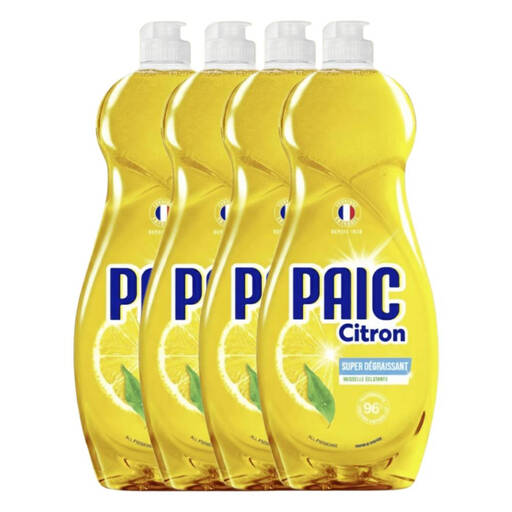
Why we chose it: Perfect for families who want to keep their budget in check without compromising on effectiveness. This XXL format ensures a comfortable stock for daily, heavy-duty use.
Its large 3-litre format makes it easy to see the cost-per-litre, which is much more advantageous than smaller bottles. Paic's concentrated formula, renowned for its degreasing power, is very economical to use: a few drops are all you need.
Unbeatable quantity-to-price ratio: Fewer purchases, more savings.
Proven effectiveness: A powerful formula that cuts through grease, even in cold water.
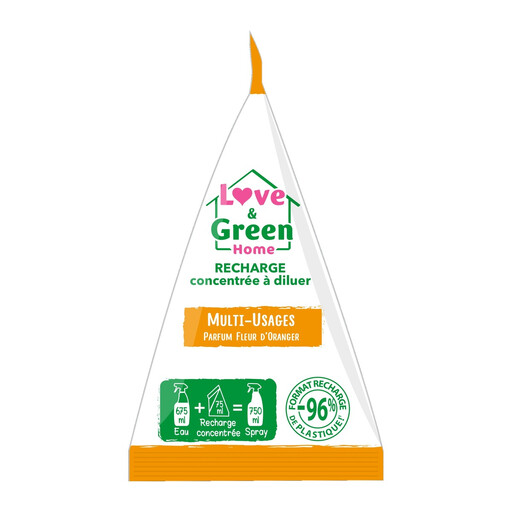
Why we chose it: For those who refuse to choose between effectiveness and healthy ingredients, or between cleanliness and waste reduction. This refill system is the smart solution for a more sustainable cleaning routine.
It avoids the *greenwashing* trap with a rock-solid Ecocert certification, which attests to a 99% naturally derived formula. Its refill system directly tackles single-use plastic, with 96% less waste according to the brand.
Zero-waste (almost): The bottle is infinitely reusable, and the refill is ultra-compact.
Healthy and certified ingredients: The Ecocert label guarantees a formula free from undesirable ingredients.
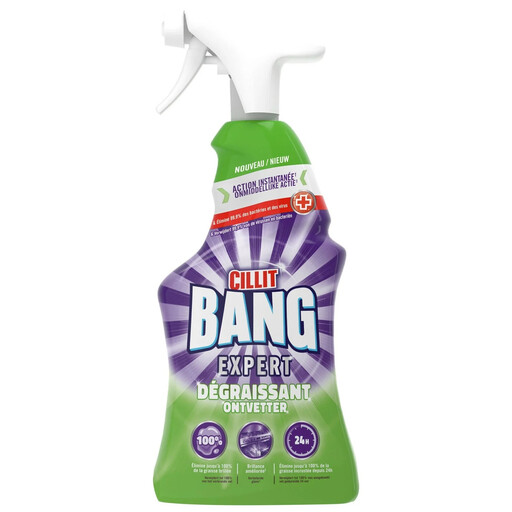
Why we chose it: To declare war on baked-on grease and caked-on grime in the kitchen. This is the ultimate weapon for impossible jobs, a specialist that makes no compromises on performance.
It shatters the "all-in-one" myth by owning its role as a pure specialist. Its mission, which it accomplishes brilliantly, is to disintegrate tough grease on cooker hoods, ovens, and hobs.
Surgical precision: Its foam formula clings to surfaces to dissolve grease deep down.
Heavy-duty power: Formidable effectiveness on burnt and caked-on grease.
Explore our full selection of products that meet our selection criteria and current regulations.
Yes, as long as you trust the right labels. To obtain a certification like the EU Ecolabel or Ecocert, a product must prove it is at least as effective as a conventional market leader. Their formulas, often based on plant-derived active ingredients (black soap, etc.), bicarbonate of soda, or vinegar, are incredibly effective for daily cleaning. For the most stubborn dirt, you often just need to let the product sit for a few extra minutes.
The calculation is simple: divide the price of the pack by the total quantity (in litres or kg) to get the price per litre/kilo. Then, compare it to a standard-sized product. Don't forget to factor in the concentration: a more concentrated product, even if it's more expensive per litre, will often be much more economical to use.
Household vinegar is a great cleaner and descaler, but its acidity makes it an enemy to certain surfaces. You should never use it on porous or calcareous materials like marble, travertine, or any natural stone, as it will cause irreversible damage. The golden rule: never mix it with bleach, as the chemical reaction releases highly toxic chlorine gas. In all cases, always read the safety precautions on the label.