
Livraison le jour même ou le lendemain

Qualité garantie

Débloquez vos offres de bienvenue: Livraison GRATUITE | Jusqu'à -80 % | 30 jours d'essai gratuits à JoyPlus
Téléchargez l'application
Finding an eco-friendly dish soap that is tough on grease, gentle on your hands, and good for the planet can be a real headache. Faced with shelves overloaded with green promises, greenwashing is never far behind, and it's easy to be misled. As a product expert at Joybuy, my role is to help you see things more clearly. Let's break down the pitfalls to avoid so you can make the right choice.
Here are the two most common traps when looking for a supposedly "green" dish soap:
To sort through the options, forget the slogans and focus on concrete evidence. Here are the three key points to check before you finalise your purchase.
Certifications are your best allies for verifying a brand's promises.
A quick look at the ingredients list often speaks volumes. Prioritise formulas that contain:
For sensitive skin, look for and avoid certain potentially irritating preservatives (like isothiazolinones) and opt for formulas with a neutral pH or, even better, those that are dermatologically tested.
No, an eco-friendly product shouldn't mean sacrificing performance for the sake of the planet.
To put theory into practice, here are a few products that tick all the boxes, selected according to the criteria we've just discussed.
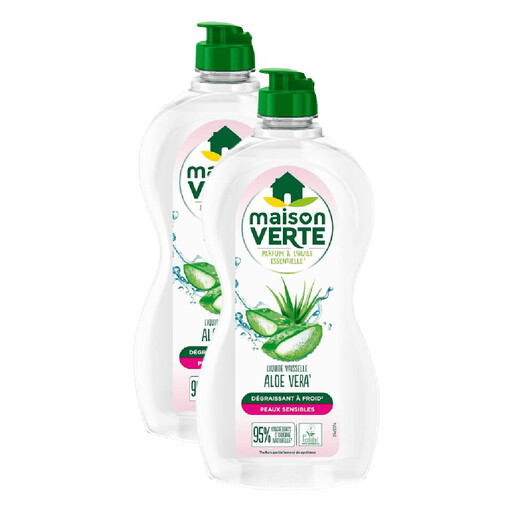
Why we recommend it: This is the perfect solution for those who finish washing up with dry or irritated hands. This formula cares for your skin while ensuring an impeccable clean, even in cold water.
It doesn't just promise gentleness. The "dermatologically tested" mention and its hypoallergenic formula are real guarantees.
Certified with the European Ecolabel and effective from 20°C, it ticks all the boxes: skin protection, respect for the planet, and energy savings.
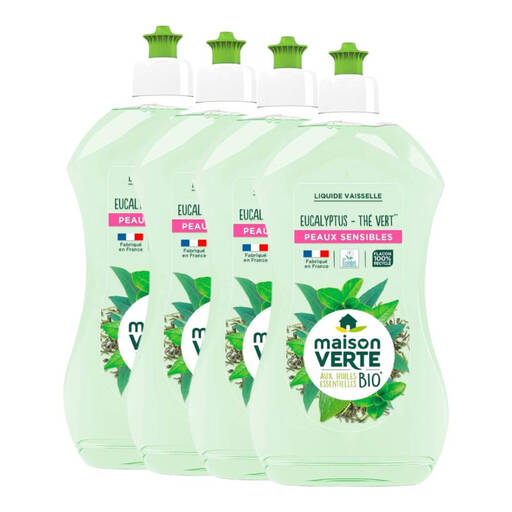
Why we recommend it: Ideal for large families and anyone looking to optimise their budget and environmental impact without compromising on cleanliness.
No empty talk here. The product is certified with the European Ecolabel, made in France, and its bottle is made from 100% recycled and recyclable plastic. These are facts, not promises.
The bulk format of 2 litres (4x500ml) is ultra-economical and means fewer trips to the store. The icing on the cake: the formula includes essential oils from organic farming.
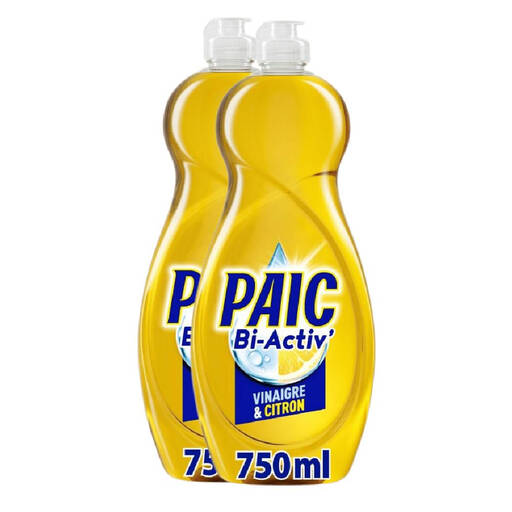
Why we recommend it: For anyone who still doubts that an eco-friendly product can be a true degreaser. This formula relies on ingredients with proven effectiveness, like vinegar, for a powerful action against tough grease.
It proves that a powerful degreasing dish soap can also be more sustainable. The proof? Its formula with 96% naturally derived ingredients and its 100% recycled and recyclable bottle.
Its effectiveness on baked-on grease is formidable, and it works from just 18°C. This combines top-tier performance with a lower electricity bill.
Discover our full selection of cleaning products that meet the demanding criteria of this guide.
Yes, as long as you choose wisely! Products certified with the European Ecolabel, for example, must prove a washing efficiency at least equivalent to that of conventional market leaders. Modern formulas use high-performance, plant-based surfactants to dissolve grease effortlessly.
An Ecolabel dish soap focuses on the product's overall impact throughout its entire life cycle: effectiveness, biodegradability, harmful substances, packaging, and more. An organic dish soap, on the other hand, guarantees the organic origin of some of its ingredients (essential oils, etc.). A product can also have both certifications.
Absolutely, and on several levels! First, a dish soap effective in cold water directly lowers your electricity bill. Second, since eco-friendly formulas are often highly concentrated, a small amount goes a long way, making your bottle last longer. Finally, buying in bulk lowers the price per litre while reducing waste. It's a triple win