
Livraison le jour même ou le lendemain

Qualité garantie

Débloquez vos offres de bienvenue: Livraison GRATUITE | Jusqu'à -80 % | 30 jours d'essai gratuits à JoyPlus
Téléchargez l'application
Between the promises of natural ingredients, the "hypoallergenic" claims and the refillable formats, choosing an eco-friendly liquid laundry detergent can quickly become a headache. The needs of a family aren't necessarily the same as those of a baby's parent, someone with sensitive skin, or a household running several washes a week.
The label is your best starting point. It lets you compare the ingredients, the number of washes, the temperature range and the type of packaging, without being guided solely by marketing claims.
A detergent described as plant-based may contain surfactants derived from plants, but also enzymes, fragrance, preservatives or other additives. The percentage of naturally derived ingredients alone isn't enough to tell you the product's true composition.
To compare two products, examine the ingredients list and look for specific claims: free from MIT and BIT, no colourants, no microplastics and no animal-derived ingredients.
A large bottle isn't necessarily the most economical per cycle. The dosage varies depending on the amount of laundry, how dirty it is and the hardness of your water. A concentrated liquid detergent may need less product per wash, while a refill can reduce the amount of plastic used.
Always compare the total volume, the stated number of washes and the recommended dosage on the packaging.
A formula that's effective at low temperatures can work perfectly well on cotton, synthetic fibres and everyday laundry. However, some detergents aren't suitable for wool or silk. Delicate fabrics need to be washed with a product designed for those fibres.
The fragrance also deserves your attention. A hypoallergenic detergent may limit certain fragrance ingredients, but that doesn't guarantee it won't cause a reaction in everyone. For baby clothes or sensitive skin, choose a clearly documented formula and do a first test on a small amount of laundry.
To choose a detergent for sensitive skin, look for concrete information:
Enzymes can tackle certain stains, especially food residue. A formula containing natural or bio-based enzymes can be useful for low-temperature washes. However, the result also depends on the fabric, the dosage and how old the stain is.
A detergent claimed to be effective from 20 °C can work for lightly or normally soiled laundry, as long as you follow the garment label and the manufacturer's instructions. For heavily stained items or certain hygiene requirements, a higher temperature may still be necessary.
To reduce energy consumption, fill the drum properly, don't over-dose and treat stubborn stains before washing. The EU Ecolabel provides a regulated environmental benchmark, but it doesn't replace the need to follow the usage instructions.
Soft refill pouches, refillable bottles and large formats can reduce the amount of packaging needed per cycle. However, check that the refill is compatible with the bottle you're using and that the amount dispensed matches the stated dosage.
The calculation is simple: price of the product ÷ number of stated washes. This method stops you from comparing products based on the bottle price alone. For a household that uses its washing machine regularly, a concentrated or large-capacity format can be more practical, provided you have enough space to store it.
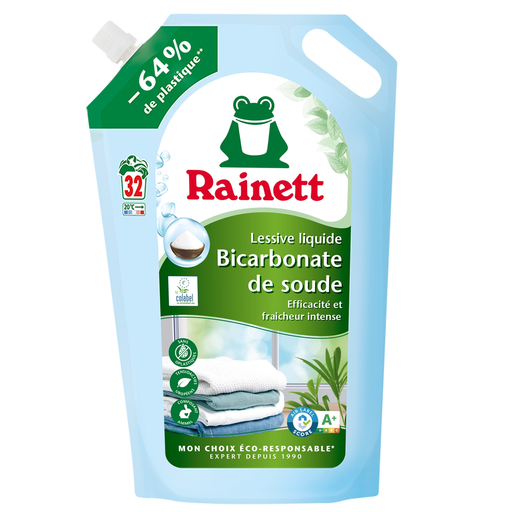
Why this choice suits this profile: With its 1.6L refill and 32 stated washes, this product offers a simple starting point for comparing the cost per cycle. The formula works from 20 °C to 95 °C.
The number of washes is clearly stated and the product claims to be free from added MIT, BIT and CMIT. Still, check the dosage on the packaging before each use.
EU Ecolabel stated, plant-based surfactants claimed and bicarbonate included in the formula.
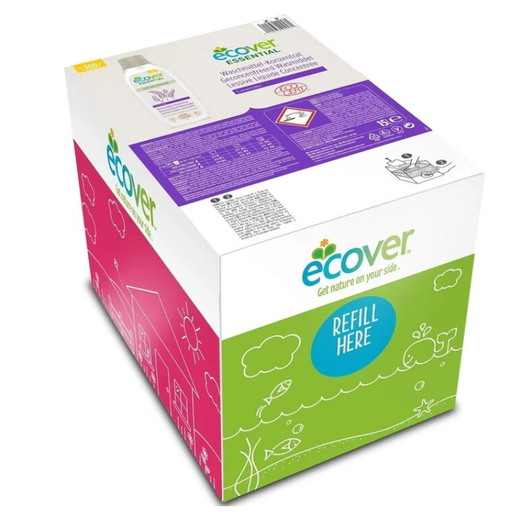
Why this choice suits this profile: With 300 stated washes, this large format is ideal for households that want to buy less often and have enough storage space.
The volume and number of washes are clearly specified. This lets you calculate the cost per cycle rather than relying on the bottle price alone.
Plant-based ingredients claimed, ECOCERT certification mentioned and a recycled and recyclable bottle.
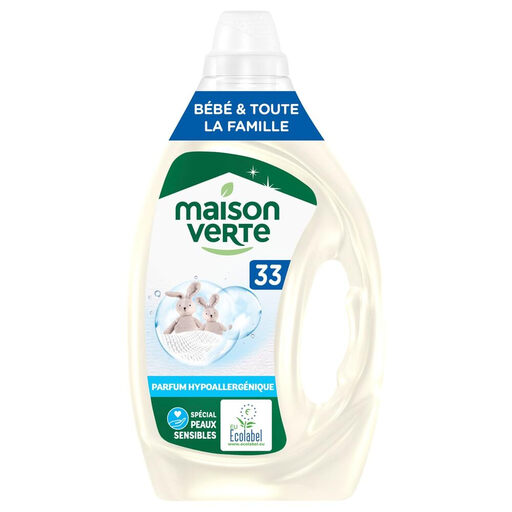
Why this choice suits this profile: This baby detergent is designed for both family laundry and baby clothes. It works from 20 °C and its 1.485L bottle provides 33 washes.
The product page states it's free from added MIT and BIT, colourants and microplastics. It also specifies that the detergent is not suitable for wool or silk.
Formula claimed with five naturally derived enzymes, fragrance described as hypoallergenic and EU Ecolabel certification stated.
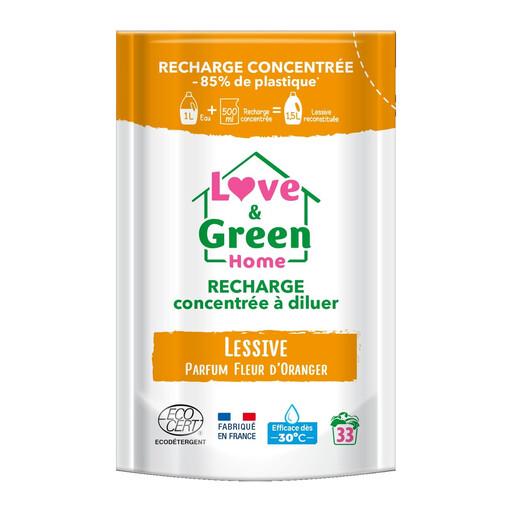
Why this choice suits this profile: This concentrated detergent to dilute is ideal for those who want to keep a refillable bottle and avoid buying large containers.
The product page details the dilute format, the dosage and use with hard water. Follow the stated dilution: the concentrate must not be poured directly into the drum.
96.5% naturally derived ingredients claimed, recyclable and refillable bottle, made in France stated.
We've put together a complete, real-time updated selection of products that meet these demanding criteria and comply with European safety regulations.
Even the best eco-friendly liquid laundry detergent won't work miracles if you overload the machine or dose blindly. To get the most out of every wash:
Some formulas are claimed to be effective from 20 °C thanks to their surfactants and enzymes. However, the result depends on the stain, the fabric, the dosage and the programme you choose. Always check the garment label and the manufacturer's instructions.
A hypoallergenic detergent or a baby detergent can be a good option when it details its ingredients, specifies which substances are excluded and limits fragrances, depending on your preference. No product can guarantee it won't cause a reaction in everyone. If you have a known sensitivity, ask a healthcare professional for advice.
Not necessarily at the point of purchase. However, it can reduce the amount of packaging and limit how often you buy new bottles. To compare offers objectively, calculate the price per wash based on the volume, the recommended dosage and the stated number of cycles.