
Livraison le jour même ou le lendemain

Qualité garantie

Débloquez vos offres de bienvenue: Livraison GRATUITE | Jusqu'à -80 % | 30 jours d'essai gratuits à JoyPlus
Téléchargez l'application
Choosing a new bike can quickly become a headache. Between the marketing jargon, indecipherable spec sheets, and a jungle of available models, it's easy to make the wrong choice. The result: a bike that's ill-suited for your rides, too heavy to manoeuvre, or loaded with useless features that often ends up gathering dust in the garage.
As a product expert at Joybuy, my mission is to help you see things more clearly. Together, we'll break down the pitfalls to avoid and the criteria that truly matter, so your next bike becomes a source of daily joy, not frustration.
Before we dive into the details, let's identify the most common mistakes that lead to buyer's remorse.
To make an informed choice, there's no need to get bogged down in the details. Focus on these fundamental points that determine the performance and comfort of your future bike.
The frame is the skeleton of your bike. Its material directly influences weight, stiffness, and price.
The type of brakes is a non-negotiable safety feature. Two main families dominate the market.
A bike of the wrong size is uncomfortable and can cause pain. Make sure to choose a frame size that fits your body. Manufacturers usually provide size guides. Most importantly, the type of bike must match your needs:
To put theory into practice, here are a few models that perfectly illustrate these criteria for different types of cyclists.
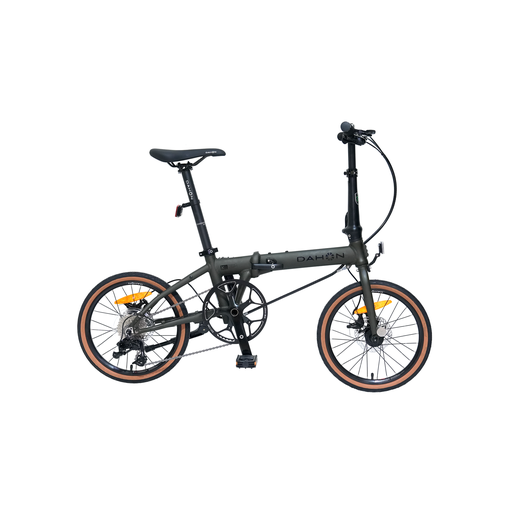
Why it's a match: Ideal for multimodal commutes (bike + train/metro). Its quick folding and compact size allow it to be easily stored under a desk or in a small flat. It's the solution for flexible urban mobility.
As a city specialist, it doesn't pretend to be an MTB. Its ultra-light aluminium frame (10.4 kg) is its best asset—a non-negotiable feature for a folding bike you carry every day.
Its disc brakes ensure reliable braking in all weather, a guarantee of safety in the urban jungle. The 9-speed transmission is perfectly calibrated for the city's gentle slopes.

Why it's a match: Perfect for weekend getaways on forest paths or trails, it remains versatile enough for an occasional ride in the city.
It doesn't fall into the 'do-it-all' trap by embracing its MTB DNA. Its suspension fork and disc brakes are built for off-road trails, where a city bike would give up.
The dual disc brakes are a real bonus for safety on loose or wet terrain. Its 18-speed transmission provides the versatility needed to tackle climbs and accelerate on flats.
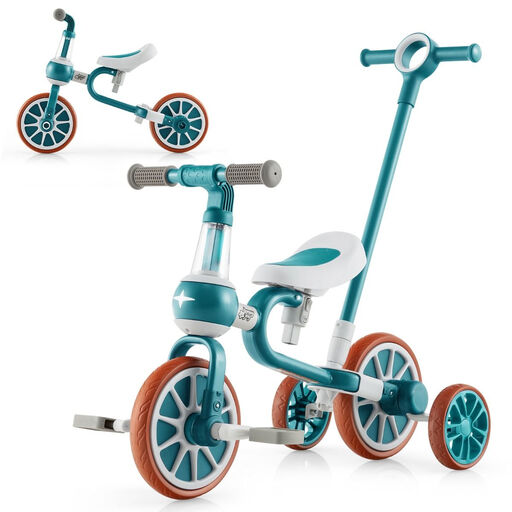
Why it's a match: Designed to accompany the first pedal strokes of 2-4 year-olds, it transforms to follow the child's development: balance bike, tricycle, then first real bike.
It ends the headache of buying multiple bikes during the early years. Its evolutive design makes it a smart and sustainable investment for learning balance and then pedalling.
The parent push handle, adjustable and removable, allows you to stay in control and guide the child safely. The pedals and training wheels can be added or removed in an instant.
Discover our full selection of bikes, all chosen for their quality, reliability, and compliance with European safety standards.
A bike's size is usually expressed in inches (for the wheels) or centimetres (for the frame). For an adult, the key is your inseam measurement. Refer to the manufacturer's size guides: they link this measurement to the recommended frame size. For a kids' bike, the size is often related to the child's age and height in centimetres. They should be able to place their feet flat on the ground when seated on a balance bike, or the tips of their toes for a pedal bike.
Absolutely, provided you choose the right one. A lightweight folding bike (ideally under 13 kg) with a simple folding mechanism is extremely practical. It allows you to take public transport during peak hours, store it at the office without taking up space, and keep it easily at home. It's an excellent solution for urban mobility.
For occasional use in dry weather and on flat terrain, V-brakes are sufficient and cost-effective. However, if you ride daily, in all weather, or on hilly routes, disc brakes are a very wise investment in your safety. They offer superior and more consistent braking performance, especially in the rain.