
Livraison le jour même ou le lendemain

Qualité garantie

Débloquez vos offres de bienvenue: Livraison GRATUITE | Jusqu'à -80 % | 30 jours d'essai gratuits à JoyPlus
Téléchargez l'application
Keeping your garage, basement, or workshop organised is easier than you think. The secret? The right equipment. The cornerstone of this organisation is undoubtedly the heavy-duty garage shelf, designed to support your tools, equipment, and storage boxes without ever buckling. But be careful: faced with a dizzying array of options, it's easy to be tempted by the wrong model and make a purchase that's useless, or even dangerous.
Before pulling out your credit card, it's essential to read between the lines on product descriptions and focus on what really matters. Here are the most common mistakes to avoid:
To ensure you get it right, focus on three technical criteria that never lie. They are your guarantee of safety, durability, and practicality for your future garage storage.
For heavy-duty use, steel remains the king of materials. Opt for an industrial shelf with a galvanised or powder-coated steel frame. These treatments protect the metal from rust, a non-negotiable feature for basement storage or garage use. The thickness of the steel is also a good indicator of sturdiness: a quality frame is heavy and won't bend under hand pressure.
The number that truly matters isn't the total load, but the maximum static load per shelf. This is the value that tells you what you can safely store. For a workshop shelf that will hold heavy tools, car parts, or large paint cans, aim for at least 150 kg per shelf. This is a realistic safety threshold. Verify that this information is clearly highlighted by the manufacturer, not hidden in the fine print.
A good modular shelf must be easy to reconfigure. There are two key points to check:
To help you make sense of it all, we've selected a few models that perfectly illustrate these criteria, each meeting a specific need.
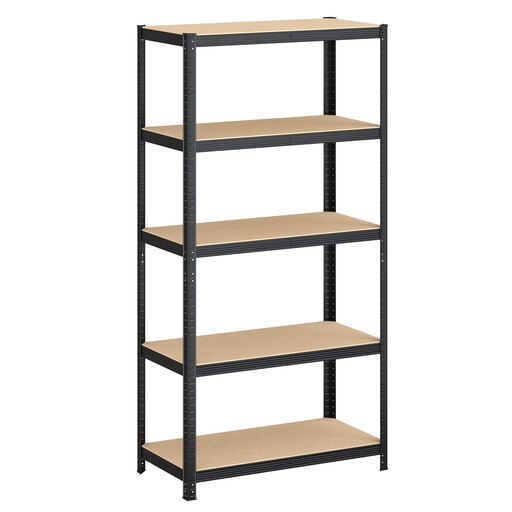
Why it's a great choice: Ideal for organising a medium-sized workshop or garage. Its tool-free assembly and a capacity of 120 kg per shelf are perfect for storing toolboxes, paint cans, and other equipment without a second thought.
Its steel frame and clearly stated per-shelf capacity (120 kg) prevent you from falling for the trap of inflated marketing numbers. Its modular design ensures it will adapt to your future needs.
Its simple, boltless assembly and its ability to be split into two separate workbenches for maximum versatility.
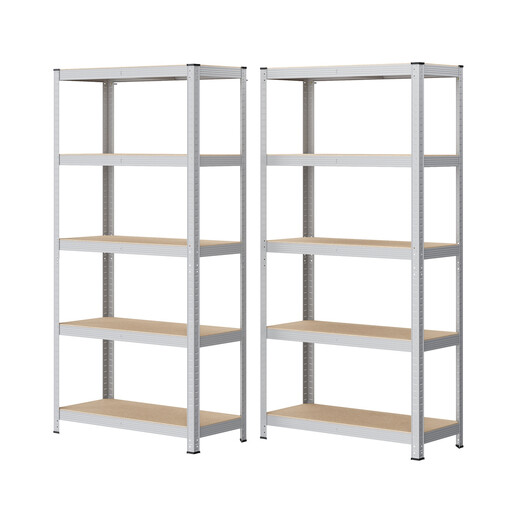
Why it's a great choice: This set is the ideal solution for outfitting a large garage or basement in one go. It offers massive storage capacity, perfect for tyres, gardening equipment, or archive boxes, all with a solid load capacity of 175 kg per shelf.
With two complete units, the flexibility is total. The adjustable shelves and the ability to create up to four separate workbenches completely free you from the constraints of a rigid, fixed shelf.
Unbeatable value for money. The very high load capacity (875 kg per unit) and flexible configuration make it a smart investment.
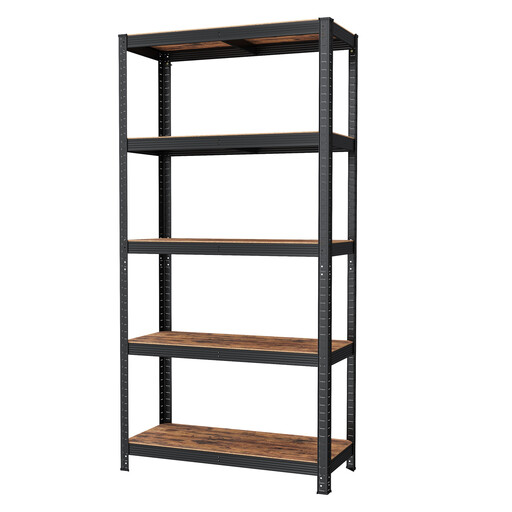
Why it's a great choice: The go-to model for tradespeople, amateur mechanics, or anyone storing heavy items: engine parts, pro-grade tools, etc. Its capacity of 175 kg per shelf is designed to handle the toughest loads.
Its reinforced steel frame and thick MDF shelves are built to last. The included anti-tip kit is a direct answer to the risk of instability—a very real danger with heavy loads poorly distributed on low-end shelves.
A per-shelf load capacity of 175 kg that inspires confidence. Its reinforced frame ensures rock-solid stability, with a bold industrial look.
We've put together a complete, up-to-date selection of products that meet our selection criteria and safety standards.
The static load is the maximum weight a shelf can support when the objects are stationary and well-distributed. This is the only value that matters for storage. The dynamic load, which is always lower, applies to situations involving movement (on a trolley, for example) and is not relevant for a fixed shelf in a garage. Rely only on the static load provided by the manufacturer.
Good models almost always come with an anti-tip kit. This consists of one or two straps (or brackets) to be screwed between the top of the shelf and the wall. Installing it is highly recommended, especially if children are present or if you are storing heavy objects up high. Remember to use screws and wall plugs appropriate for your wall type (plasterboard, brick, concrete, etc.).
MDF (medium-density fibreboard) is cost-effective and very strong, which is why it's so common. Its Achilles' heel? Moisture. If your basement or garage is particularly damp, good ventilation is crucial. For added protection, you can apply a waterproof varnish or paint to the shelves before assembly. In the most extreme cases (water infiltration, etc.), a 100% metal shelf remains the safest solution.