What should you check before buying?
Whether you’re choosing a baby food jar, a family-sized glass jar or a standard tin, start with the texture your child needs. Then check the ingredients and choose a format you can use after opening.
| What to consider |
What to check |
Who is it for? |
| Age and texture |
The age recommendation on a baby food jar and the texture to serve; for a family product, how it needs to be prepared. |
When my baby is starting weaning, I look for a product suited to their age and the texture they need. Around 42% of consumers put the match between age and texture first. |
| Salt and ingredients |
The ingredients list and the ‘salt’ value per 100 g. Don’t judge the ingredients by labels such as ‘organic’ or ‘in its own juice’ alone. |
To control how much seasoning goes into a meal, I want to know whether the product contains added salt. This is the main consideration for around 33% of consumers. |
| Pack size and leftovers |
The amount you can use, storage instructions after opening, and what to do with a jar the child has eaten from directly. |
If I’m preparing small portions, I prefer a pack size I can use in line with the storage instructions. Portion sizes and leftovers come first for around 25% of consumers. |
Joybuy products to suit these needs
These products include green beans to prepare for a family meal and an assortment of purées labelled as suitable for 4–6 months. If you’re buying for a baby, always check the variety, ingredients, salt content and texture before serving.
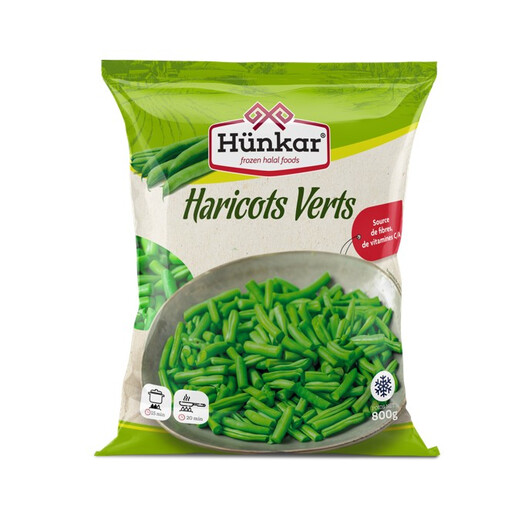 Image unavailable
HÜNKAR Green Beans, 800 g
Worth considering for preparing green beans as part of a family meal. If you’d like to serve them to a baby who is just starting weaning, check the ingredients and prepare a suitable texture. The pack size is 800 g.
View on Joybuy
 Image unavailable
BONDUELLE Extra-Fine Green Beans, 750 g
This 750 g pack could be used to prepare a family meal. If you’re looking to avoid added salt, check the ingredients and cooking instructions before adding salt to the water. Adapt the texture if you’re preparing it for a baby.
View on Joybuy
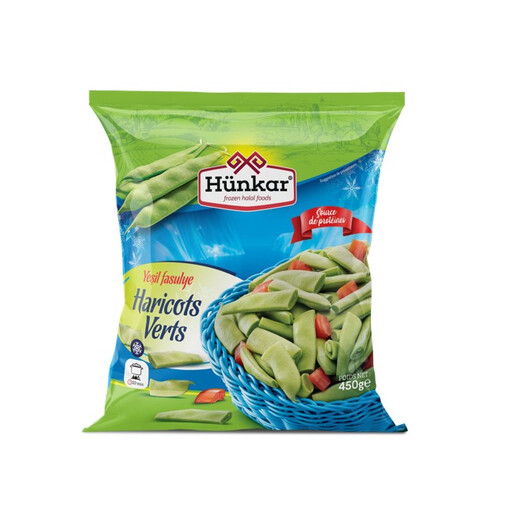 Image unavailable
HÜNKAR Green Beans, 450 g
This 450 g pack is worth comparing with the 800 g HÜNKAR option, depending on how much you need for a family meal. If you’re looking for green beans on their own, check the ingredients for this variant; if you’re serving it to a baby, check the texture too.
View on Joybuy
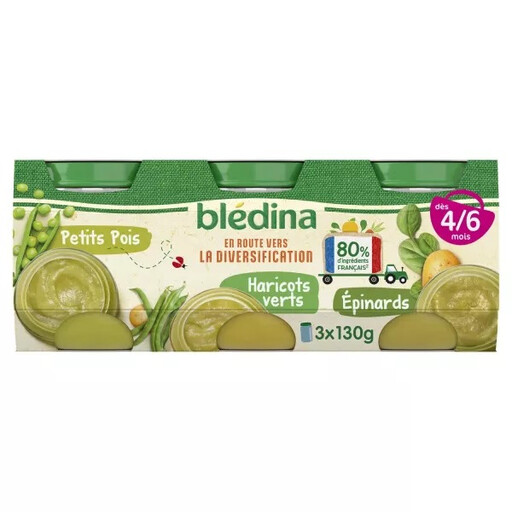 Image unavailable
BLEDINA Vegetable Purées, 4–6 months, 3 × 130 g
Worth a look if you’re after purée portions for the start of weaning. This is an assortment, so check which jar contains green beans and potatoes, as well as the ingredients and ‘salt’ value for each variety.
View on Joybuy
Frequently asked questions
From what age can you offer green beans to a baby?
Green beans can be offered when weaning begins: according to ameli, this should be no earlier than 4 months and no later than 6 months. For the early stages, the First 1,000 Days guide describes very smooth purées. Choose a texture that suits your child’s stage.
Can a family-sized jar with no added salt replace baby food?
Not as it is for a baby just starting weaning: no added salt doesn’t guarantee an age recommendation or a smooth texture. You could use a family product if you adapt the preparation and portion size for your child. A baby food jar labelled as suitable from 4 months, on the other hand, gives an age recommendation and a texture designed for this stage.
Does ‘organic’ or ‘product of France’ mean no added salt?
No. These labels are no substitute for checking the ingredients and the ‘salt’ value per 100 g. An Auchan listing for D’Aucy green beans of French origin includes salt in the ingredients, so check the exact product you’re considering buying.
What should you do with leftovers after opening?
Follow the instructions for the product you’re using and check whether your child has eaten directly from the container. For the NaturNes jar described in the product information, any leftovers must be thrown away if the child has eaten from the jar. Otherwise, the covered jar can be kept in the fridge for up to 48 hours. The organic D’Aucy cut-bean product described should be transferred to an airtight container, refrigerated and eaten within two days.
After the age of one, do green beans still need to be prepared separately?
Not necessarily. The First 1,000 Days guide says that from the age of one, children can share family meals if the texture and portion size are suitable. You can prepare one meal for everyone, while checking the seasoning and the portion served to your child.


