
Livraison le jour même ou le lendemain

Qualité garantie

Débloquez vos offres de bienvenue: Livraison GRATUITE | Jusqu'à -80 % | 30 jours d'essai gratuits à JoyPlus
Téléchargez l'application
Choosing baby food is not simply a matter of picking the prettiest packet on the shelf. With claims such as “ natural ”, “ organic ” and “ no added sugar ”, alongside promises of age-appropriate textures, the information that really matters can easily be overlooked. To avoid unsuitable purchases or products left gathering dust at the back of the cupboard, three points deserve particular attention.
The first is the age stated on the packaging. A product designed for babies from 4 months does not offer the same texture or benefits as a baby meal from 12 months. The second concerns allergens, which may be present in recipes that appear very simple. The third is the format: a pouch is very convenient when you are out and about, but it does not always replace fruit purée given by spoon, particularly when your child is beginning to learn to eat independently.
Here are the criteria to check before choosing baby food jars, baby fruit purée, baby cereals or a baby snack.
The age recommended by the manufacturer is an essential guide. Recipes from 4 months are generally completely smooth, such as fruit or vegetable purées. From 6 months, weaning allows you to gradually broaden your baby’s range of flavours and introduce certain cereals. From 12 months, textures can become thicker and include small, soft pieces.
It is therefore better not to rely solely on the flavour or the nutritional information displayed on the front. A dish intended for a baby meal from 6 months should not be chosen in the same way as a recipe designed for a child of 15 or 18 months.
Marketing claims should never replace the full ingredients list. In particular, remember to check:
For example, a fruit-based purée can help your child gradually discover different flavours, while a pasta dish may contain gluten, egg and celery. If your child has a known allergy or you have any doubts, always rely on the label of the product you receive rather than its online presentation.
Individual portions make mealtimes easier at home, at nursery or when you are out and about. 200 to 250 g dishes are better suited to a complete meal, while 100 to 130 g jars and pouches are ideal for dessert or a snack.
When it comes to baby biscuits, you still need to remain vigilant. Even when they are designed to soften in the mouth, your child must be seated and supervised while eating. Recipes containing gluten, milk or hazelnuts also require careful checking of the allergens.
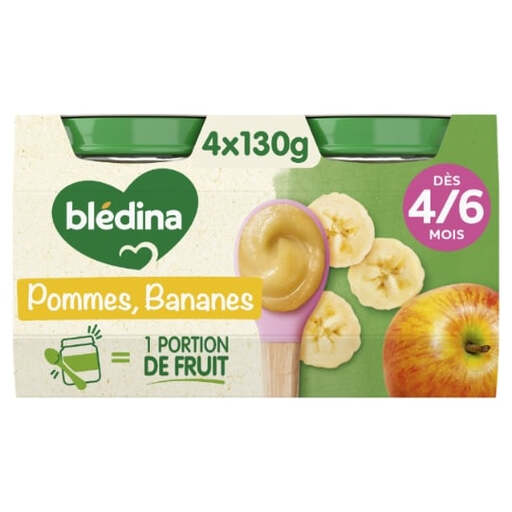
Why this choice suits this profile : The pack of four jars makes it easy to get started with weaning, offering ready-to-serve portions that are simple to store before opening.
The recommended age, smooth texture and stated composition — 80 % apple and 20 % banana — are clearly indicated.
Four 130 g jars, a smooth texture and a gluten-free recipe according to the product information provided.
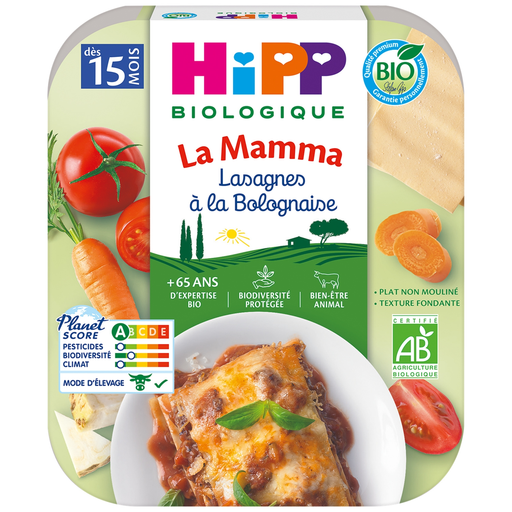
Why this choice suits this profile : From 15 months, this organic recipe is aimed at families looking for a dish with textures closer to those of a family meal.
The product information makes it clear that this is not a purée, but a meal with small, tender pieces. The allergens are also detailed.
Ingredients from organic farming, a 250 g dish, plus organic vegetables and cereals.
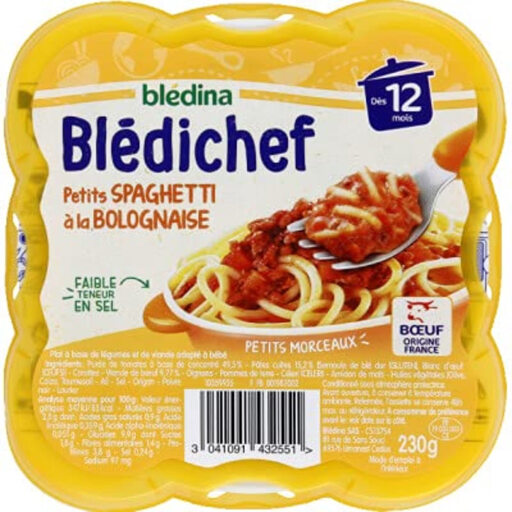
Why this choice suits this profile : At 230 g and presented in a dish, this meal is ideal for quick meals at home when you do not have time to cook.
The product information clearly highlights the presence of gluten, egg and celery, as well as the possibility of traces of mustard and soya.
230 g, cooked pasta, 49.5 % tomato purée and a beef content listed as 9.77 % in the stated composition.
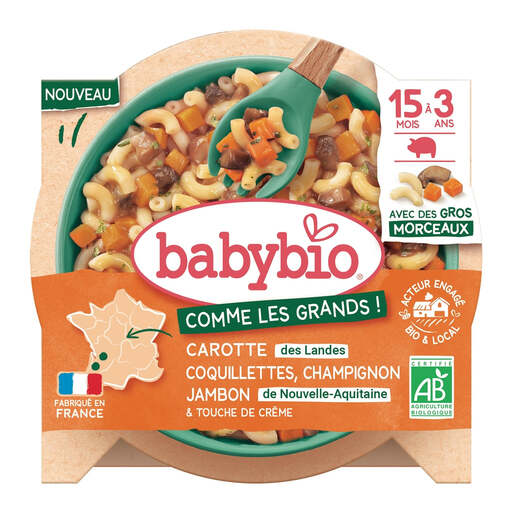
Why this choice suits this profile : This dish offers children aged 15 months to 3 years an organic recipe combining pasta shells and vegetables.
The age recommendation, FR-BIO-01 organic certification and absence of added salt are clearly stated. The preparation instructions also specify that the dish should not be placed directly in the microwave.
A 200 g portion with pasta shells, carrots and mushrooms, made with ingredients from organic farming.
We have put together a complete, real-time updated selection of products that meet these demanding criteria, as well as European safety regulations.
Before opening, most meals and fruit purées can be stored at room temperature in a clean, dry place. Once opened, instructions vary depending on the product: some recommend keeping them in the fridge for 24 or 48 hours. In all cases, follow the instructions on the packaging.
To reheat a baby meal:
Instant cereals, particularly some baby cereals from 6 months, should be prepared and eaten straight away. Biscuits and other finger foods require your child to be seated, with an adult remaining constantly by their side.
Recipes from 4 months are generally smooth and simple, such as fruit purées or certain vegetable purées. Food introduction should follow your child’s own pace and the advice of the healthcare professional supporting your family. Do not introduce foods before the age stated on the packaging.
No. The organic label provides information about how the ingredients are produced, but does not guarantee the absence of milk, gluten, egg, soya or nuts. The allergen list should be checked every time you shop, including for Babybio or HiPP products.
It depends on the product. Product information often recommends storing it in the fridge for 24 to 48 hours, in a sealed container, provided the portion has not been reheated. If your child has eaten directly from the jar or with a spoon, check the instructions and avoid keeping any leftovers that have come into contact with their mouth.