People with coeliac disease
A recipe made with rice or maize isn’t enough on its own to confirm that a crispbread is suitable for a strict gluten-free diet. The first thing to check on the product you choose is whether it’s labelled ‘gluten-free’.


If you need to avoid gluten strictly, first choose a crispbread labelled ‘gluten-free’ and look for the Crossed Grain symbol if it appears. For a mid-morning break, compare portion sizes, protein and fibre to suit your appetite, as well as allergens and pack size. If a Nutri-Score is shown, remember that it doesn’t replace any of these checks.
A recipe made with rice or maize isn’t enough on its own to confirm that a crispbread is suitable for a strict gluten-free diet. The first thing to check on the product you choose is whether it’s labelled ‘gluten-free’.
If a light crispbread doesn’t feel like enough for your break, compare the portion size and the protein and fibre content of the recipes available, particularly those combining maize and lentils.
A gluten-free petit-beurre biscuit and a crunchy crispbread aren’t the same kind of snack. Check the ingredients, allergens and nutritional information for the product you’re considering.
If gluten-free is a requirement for you, start by checking that the product meets it. Then compare the recipes according to your appetite and how you plan to take your snack with you.
| Criteria | What to check | Who is it for? |
|---|---|---|
| Avoiding gluten | ‘Gluten-free’ labelling, ingredients and allergens; look for the Crossed Grain symbol if present. | For someone with coeliac disease, a grain that is naturally gluten-free isn’t enough to rule out the risk of cross-contamination. Suitability for a strict gluten-free diet would be the top priority for around 36% of consumers. |
| Hunger before lunch | Planned portion size, protein and fibre per 100 g. | If a small snack won’t keep me going until my meal, I want to be able to compare the recipes and how much I’ll eat. Around 29% of consumers would put this hunger-related need first. |
| Ingredients | Ingredient list and nutritional information, particularly sugars and salt. | When comparing two gluten-free recipes, some consumers want to look at what’s in them rather than relying on a single claim on the packaging. This would be the main criterion for around 21% of them. |
| Easy-to-carry format | Type of crispbread or biscuit, packaging and storage instructions after opening. | If you’re having your break away from home, how easy the snack is to carry and store may determine what you choose. Around 14% of consumers would prioritise this practical format. |
A rice, maize or buckwheat crispbread may have been exposed to gluten during manufacture or packaging. So the grain named on the front of the pack doesn’t, on its own, tell you whether the finished product is gluten-free.
If you need to avoid gluten strictly, check that the product you’re buying is labelled ‘gluten-free’. The Crossed Grain symbol is an additional sign to look for if it’s present.
According to the DGCCRF, displaying a Nutri-Score is voluntary in France. If it isn’t shown, you can still check the nutritional information on pre-packed food.
Compare the values per 100 g, particularly sugars, fat, fibre and salt, then consider how much you plan to eat.
Two crunchy crispbreads can have different nutritional profiles. Auchan’s product listings for Bjorg’s maize and lentil and 4-grain recipes state that they contain 18 g and 8 g of protein per 100 g respectively. These figures alone don’t tell you which portion size is right for you.
If hunger before lunch is guiding your choice, compare the fibre content and portion size too. Don’t assume that one figure alone will determine how filling a snack is.
The organic butter crispbread featured by St Michel contains wheat flour and is labelled ‘Contains: gluten’.
Check that the product is gluten-free and read the ingredients list before considering any other features of the recipe.
Carrefour offers a 160 g pack of organic, gluten-free five-grain crispbreads.
Auchan’s gluten-free range includes 4-grain and maize and lentil crispbreads.
This range includes ready-to-fill gluten-free buckwheat crêpes.
E.Leclerc offers a 130 g gluten-free petit-beurre biscuit in this range.
The organic butter crispbread featured by St Michel is included here as a comparison with products explicitly labelled gluten-free.
This selection features Bjorg 4-grain crunchy crispbreads for a ready-to-eat snack. If you need to avoid gluten strictly, check the labelling and other information on the pack you receive.
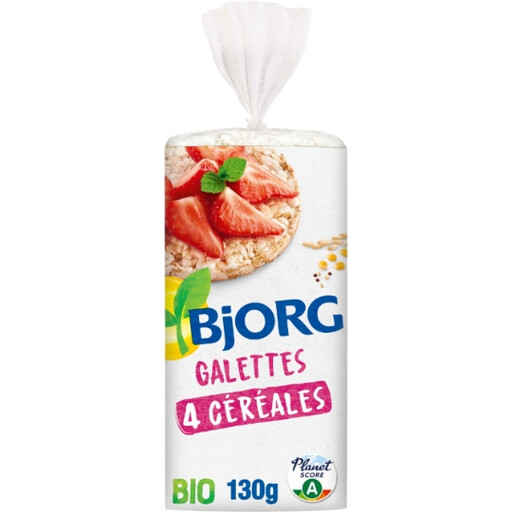 Image unavailable
A crunchy option to consider for a mid-morning break. For this 130 g recipe, Auchan’s product listing states that it contains 0.2 g of salt, 3.5 g of fibre and 8 g of protein per 100 g. It may contain traces of soya, so check the labelling if this allergen is a concern for you. If you need to avoid gluten strictly, also check that the pack is labelled ‘gluten-free’ and whether it carries the Crossed Grain symbol.
In the European Union, Implementing Regulation (EU) No 828/2014 reserves this claim for foods containing less than 20 mg/kg of gluten. If you have coeliac disease, check the labelling of the product you choose. AFDIAG also recommends looking for the Crossed Grain symbol when available.
No. According to the DGCCRF, Nutri-Score is voluntary in France. To compare two crispbreads, check the ingredients list, any allergens listed and the nutritional information, whether or not the logo is displayed.
Not without checking the recipe. The organic butter crispbread featured by St Michel contains wheat flour and is labelled ‘Contains: gluten’, so being organic doesn’t make it suitable for a gluten-free diet.
Choose packaging that suits the portion you’re taking with you, and follow the pack’s instructions after opening. If the product needs to be resealed and stored in a dry place, bear this in mind when taking it out with you.