
Livraison le jour même ou le lendemain

Qualité garantie

Débloquez vos offres de bienvenue: Livraison GRATUITE | Jusqu'à -80 % | 30 jours d'essai gratuits à JoyPlus
Téléchargez l'application
A garment steamer can save you valuable time before leaving for work, rescue an outfit prepared at the last minute or freshen up curtains without getting out the ironing board. However, some models disappoint after just a few uses: the water tank is too small, the steam is inconsistent or the appliance is awkward to hold.
Here are the criteria to consider when comparing a steam generator iron, a vertical steamer and a portable model, without relying solely on the stated power rating.
A high power rating generally means the appliance heats up more quickly, but it is not enough to assess steam quality. Also look at the steam output, measured in grams per minute, as well as the pressure in bars for a steam generator iron.
A 1,500 W appliance may be perfectly suitable for occasional use. A 2,400 to 2,600 W steam generator iron will be more comfortable when working through a pile of clothes and tackling thicker fabrics. However, these figures do not guarantee the same results on every type of textile.
A small tank makes the appliance easier to carry, but means you will need to refill it regularly. Conversely, a steamer with a 1 to 1.8 litre tank is more practical for a family or a long ironing session, although it will take up more space.
Check whether the tank is removable, whether its opening is wide enough and whether the descaling process is clearly explained. In areas with hard water, a limescale collector or dedicated cleaning function can make everyday maintenance considerably easier.
Automatic shut-off is a welcome safety feature, particularly if the appliance is left stationary. However, it does not replace essential precautions: unplug the appliance before filling the tank, allow the soleplate to cool down and never direct the steam towards a person, animal or electrical equipment.
Before buying, also check compatibility with the French electrical supply, generally 220-240 V, as well as the CE marking and the manufacturer’s instructions. The CE marking represents a declaration that the product complies with the applicable European requirements; on its own, it is not an indicator of performance.
To quickly remove creases from shirts, dresses or jackets on a hanger, a continuous output of around 20 to 25 g/min may be sufficient for light use. Steam generator irons generally offer higher pressure and steam output, making them better suited to ironing flat on an ironing board.
Vertical steam lets you treat a garment directly on its hanger, as well as curtains or a jacket. A heated soleplate adds a steam iron function and can be useful for creating crisp creases on an ironing board.
For a quick touch-up in the morning, a heat-up time of 30 to 45 seconds is particularly useful. A steam generator iron takes up more space, but its large tank reduces interruptions. Some models claim unlimited runtime because they can be refilled during use: always check the procedure and conditions specified in the instructions.
The weight, cord length and position of the buttons have a direct impact on ease of use. A portable garment steamer weighing less than one kilogram can easily fit into a suitcase or drawer. For larger loads of laundry, a heavier model with a lockable steam button can save you from having to keep pressing the trigger.
Treat delicate fabrics gradually, at the correct distance and in accordance with the care label. A brush can help guide steam into the fibres, but it does not replace a preliminary test on an inconspicuous area.
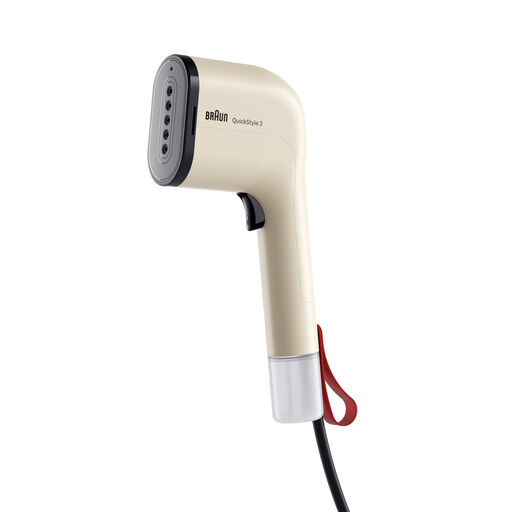
Why this choice suits this profile: With its slim 770 g design and stated 30-second heat-up time, this model is a good first purchase for removing creases from a few garments each day.
The heat-up time and removable 70 ml tank are clearly stated, so you can plan for its limited runtime.
Stated continuous output of 20 g/min, heat-resistant storage bag included and 2 m cord.
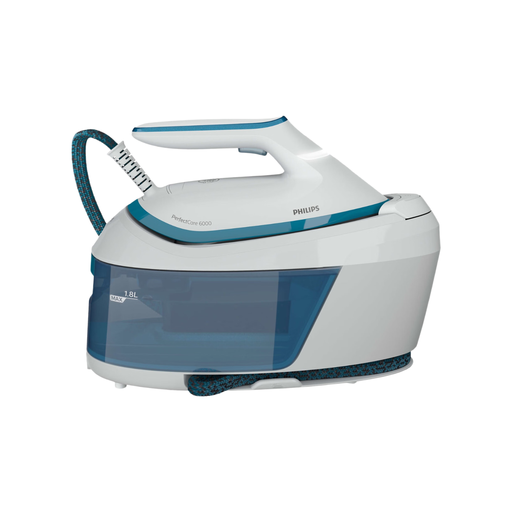
Why this choice suits this profile: This steam generator iron is aimed at households that regularly iron different types of fabric and want to minimise manual adjustments.
The 1.8 litre removable tank and descaling system with collection container are well suited to long ironing sessions.
Stated maximum pressure of 6.5 bars, continuous steam of up to 150 g/min and automatic shut-off.
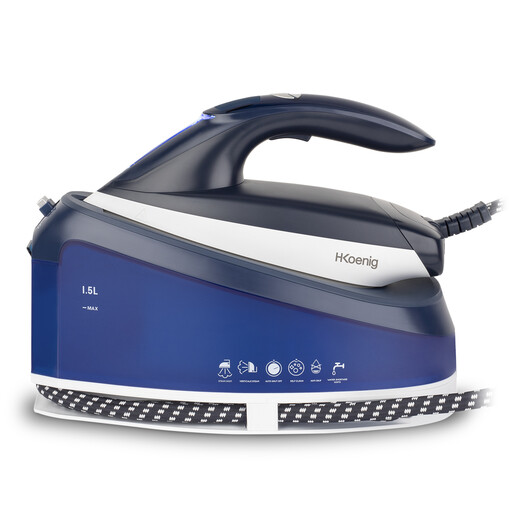
Why this choice suits this profile: It combines flat ironing and vertical steaming, with features designed for frequent sessions and a range of garments.
The 8 bar pressure and 1.5 litre tank provide concrete reference points, rather than simply promising « powerful » steam.
Stated power of 2,600 W, output of 120 g/min, non-stick ceramic soleplate and automatic shut-off.
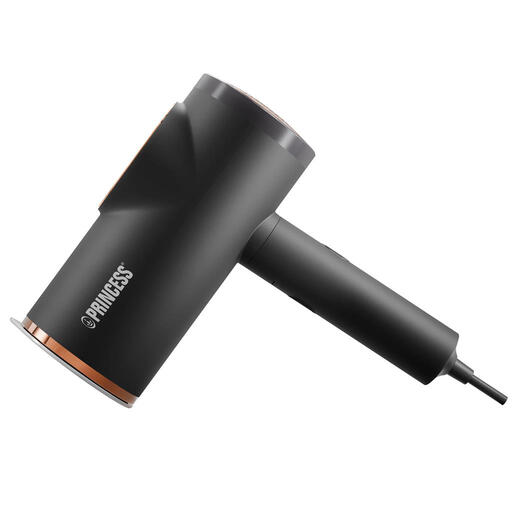
Why this choice suits this profile: Its foldable design and 800 g weight make it a practical companion for travelling, small bedrooms and storing in a suitcase.
The 0.10 litre tank and stated 30-second heat-up time help you plan for short sessions without overestimating its runtime.
Foldable design, lockable steam button, automatic shut-off and integrated lint-removal accessory.
We have put together a complete, real-time updated list of products that fully meet these strict selection criteria and European safety regulations.
To minimise water marks and mineral deposits:
The appliance’s lifespan and consistent performance depend in particular on how often it is used, the quality of the water and whether descaling is carried out correctly. An appliance stored properly, with its cord protected and tank maintained, will generally remain more reliable than one left damp or covered in limescale.
Yes. A vertical steamer is designed to work directly on a hanging garment. It is suitable for shirts, jackets, dresses and curtains. However, for creating a crease or tackling a very crumpled item, a heated soleplate and ironing board will provide greater precision.
Always follow the recommendations in the instructions first. Some appliances accept tap water, while others require precautions when the water is very hard. Avoid scented water and additives unless the manufacturer explicitly permits them.
Automatic shut-off prevents an appliance from staying heated unnecessarily, but energy consumption also depends on its power rating, heat-up time and how you use it. To compare models, check their power rating in watts and only run the appliance for as long as necessary.