
Livraison le jour même ou le lendemain

Qualité garantie

Débloquez vos offres de bienvenue: Livraison GRATUITE | Jusqu'à -80 % | 30 jours d'essai gratuits à JoyPlus
Téléchargez l'application
A garment steamer can make it much easier to prepare an outfit, freshen up a curtain or care for a textile that is difficult to place on an ironing board. However, product specifications often mix power, steam output and sometimes vague claims. To buy with confidence, focus on how you plan to use it, the tank capacity and the safety features.
An appliance rated at 1,500 or 1,600 W is not necessarily faster or more effective. Power indicates the energy consumed during heating, but it is mainly the steam output, expressed in grams per minute, that tells you how much steam is produced continuously. The soleplate design, the consistency of the flow and the distance between the appliance and the fabric also matter.
A small tank helps keep a portable garment steamer lightweight, but it may require several refills to deal with a complete outfit. Conversely, a larger tank often makes the appliance heavier to hold. You should therefore consider its capacity alongside the stated operating time, rather than focusing solely on the number of millilitres.
An appliance that can only be used vertically does not meet the same needs as a model designed to work both horizontally and vertically. An anti-drip feature helps prevent water marks, but it does not remove the need to follow the manufacturer's recommendations. After each use, empty the tank and allow the appliance to cool down to help limit mineral deposits and stagnant-water odours.
For a quick touch-up at the office or just before heading out, a heat-up time of 30 to 45 seconds is particularly convenient. The travel-friendly models featured here generally fall within this range. A continuous output of 20 to 25 g/min is suitable for many touch-ups on shirts, dresses or lightweight jackets. For more demanding needs, a steam generator with a stated pressure rating, such as the H.Koenig V7 at 8 bar and 120 g/min, will be better suited to regular use with an ironing board.
These figures are still specification data: they do not guarantee identical results on every fabric. With wool, silk, polyester or coated textiles, always check the care label and test the appliance on an inconspicuous area.
A foldable garment steamer or compact model can easily fit into a suitcase. Weight and cord length are also important: a lightweight appliance will be more comfortable to use on a few garments, while a 2 to 2.5 m cord gives you greater freedom around a power socket.
For steaming curtains, suits or several garments one after another, choose a vertical garment steamer with a removable tank, a lockable steam button or a generous operating time. If you also want to flatten creases on a surface, a steam iron or a steam generator combining vertical steaming with horizontal ironing will be more versatile.
A 70 to 150 ml tank is mainly suitable for quick touch-ups. A capacity of 250 to 300 ml may be enough for several garments, depending on the output and duration of use. For frequent household use, a steam generator with a 1.5 l tank will save you from repeated refilling.
At a minimum, look for:
Steam and the soleplate can cause burns. Always unplug the appliance before filling, emptying or cleaning the tank, and keep it out of reach of children.
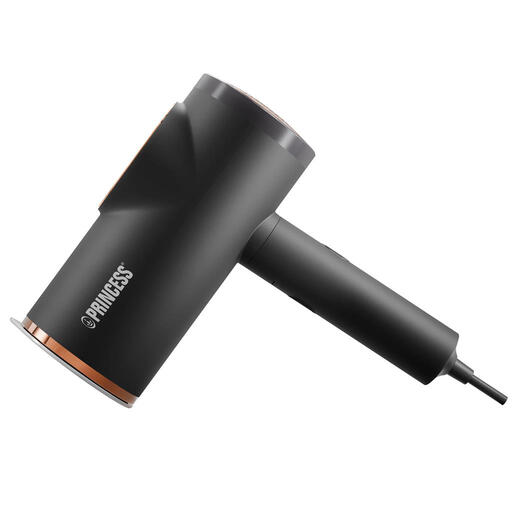
Why this product suits this profile : Its foldable 0.80 kg design, stated 30-second heat-up time and removable 0.10 l tank make it suitable for simple touch-ups at home or in a small suitcase.
The lockable button means you do not have to keep the control pressed down, while the automatic shut-off provides useful extra safety during breaks.
Stated output of 18 g/min, integrated lint-removing attachment and a 2-year manufacturer's warranty listed in the specifications.
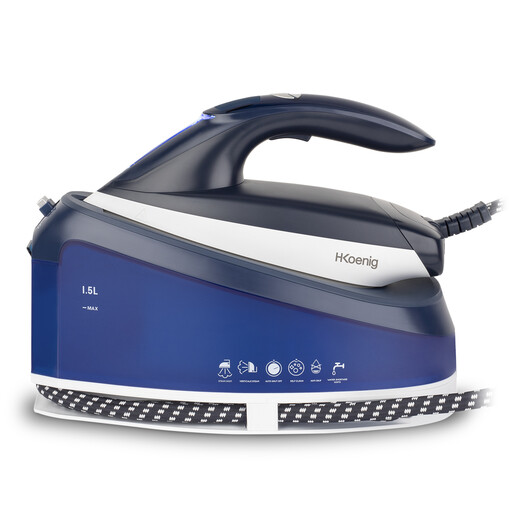
Why this product suits this profile : This 2,600 W steam generator with a 1.5 l tank is designed for households that alternate between horizontal ironing and vertical steaming.
Its large capacity reduces the need for repeated refilling, while the automatic shut-off provides a clearly documented safety feature.
Stated pressure of 8 bar, output of 120 g/min and non-stick ceramic soleplate.
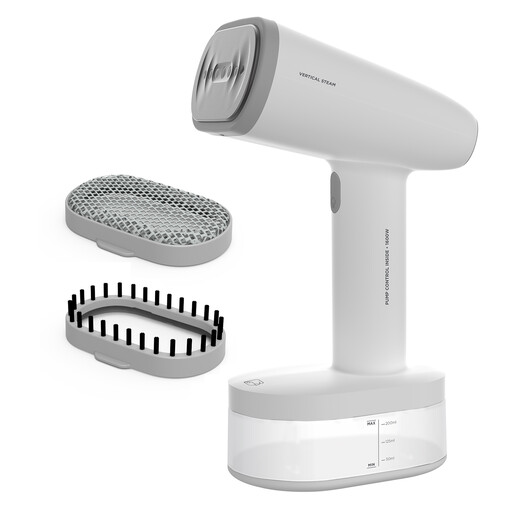
Why this product suits this profile : Its vertical design, 250 ml tank and steam lock are suitable for suits, curtains, upholstery and long runs of garments.
The anti-drip function helps prevent water marks, while the self-cleaning cycle helps combat mineral deposits.
Stated power of 1,600 W, output of 25 g/min, ceramic soleplate and stated operating time of 15 to 20 minutes.
We have put together a complete, real-time updated selection of products that meet these strict criteria, as well as European safety regulations.
Hang the garment on a sturdy hanger, gently stretch the fabric and move the head from top to bottom without lingering in one place. For delicate materials, keep a sufficient distance and check the care label. A brush can help tame thicker fibres, but use it in accordance with the instructions.
A travel garment steamer is mainly designed for light creases and small quantities of clothing. For a family, shop or professional use, compare the tank capacity, availability of spare parts, ease of descaling and length of the warranty instead. The term professional garment steamer does not correspond to a single standard: rely on measurable specifications rather than the marketing name.
Some models allow it, such as Braun products that specify this in their technical details. However, water quality varies from one local authority to another. Follow the instructions: in areas with hard water, some manufacturers recommend using filtered or demineralised water. Never add perfume, essential oil or chemicals to the tank unless explicitly instructed to do so.
A garment steamer is mainly used on a hanging garment and often means you can avoid getting out the ironing board. A steam iron, on the other hand, applies pressure to a flat surface, making it easier to create sharp creases in a shirt or trousers. A steam generator such as the H.Koenig V26 combines horizontal ironing and vertical steaming, with an anti-scale collector and the option to refill during use, according to its technical specifications.
It depends on how often it is used, the quality of the water, storage and maintenance. Empty the tank after every session, remove deposits in accordance with the instructions and allow the appliance to cool down before storing it. A good warranty, removable tank and anti-scale system also make it easier to maintain the appliance over the long term.