
Livraison le jour même ou le lendemain

Qualité garantie

Débloquez vos offres de bienvenue: Livraison GRATUITE | Jusqu'à -80 % | 30 jours d'essai gratuits à JoyPlus
Téléchargez l'application
Moving a sofa, wardrobe or table without scratching the parquet flooring involves more than simply slipping a piece of felt under the legs. Furniture sliders reduce friction, make moving furniture easier and create a barrier between the furniture and the floor. However, you need to choose the right fastening system, size and load capacity.
A large-diameter slider is not necessarily designed to support a very heavy piece of furniture. The stated load often applies to a set of four sliders, rather than to a single piece. You therefore need to consider the weight of the furniture, its contents and how the load is distributed across its legs.
A fully loaded sideboard will put more strain on the sliders than a chair that is only moved occasionally. Always check the maximum load specified by the manufacturer and allow a safety margin.
Adhesive furniture sliders can be fitted quickly and without tools. They are suitable for clean, flat and sufficiently wide legs. However, a dusty, greasy or uneven surface can compromise adhesion.
Nail-on furniture sliders provide a durable fixing, but the leg must be able to accommodate a nail. This solution is not suitable for every piece of furniture, particularly when the support is too thin or fragile.
Varnished parquet flooring, tiles, laminate, vinyl and uneven flooring each present different challenges. A rigid slider may glide smoothly over a hard surface, but perform less effectively on flooring with joints or small uneven areas.
To protect the floor from scratches, the base of the slider must be kept clean and in good condition. A single grain of sand trapped underneath can become a powerful abrasive. Sliders do not remove the need to move furniture carefully either: if there is an obstacle in the way, it is better to lift the furniture slightly.
Before sticking on a slider, clean the surface with a degreasing product, leave it to dry, then press down firmly. Depending on the model, the manufacturer may recommend maintaining pressure for 30 seconds and waiting 24 hours before moving the furniture.
Measure the part of the leg that will come into contact with the slider. A round 19 mm model does not protect the same area as a 50 mm model. Rectangular sizes, such as 35 × 24 mm or 70 × 19 mm, may be better suited to elongated legs.
Honeycomb sliders have a structured surface that limits direct contact and makes gliding easier. As for advertised performance claims, such as a 50% improvement in gliding, treat them as information provided by the manufacturer: results may vary depending on the weight of the furniture, the type of flooring and the condition of the slider.
For everyday furniture, some adhesive models are advertised as supporting 100 or 150 kg per set of four. Larger sizes can support up to 300 or 400 kg, depending on the product details. Versions designed for castor feet are sometimes rated for loads of up to 500 kg for four sliders.
These figures do not replace basic checks. Check the furniture’s stability, the condition of the floor and the quality of the fixing. For sliders designed for parquet flooring and tiles, choose a clean base without sharp edges and suitable for slow movement.
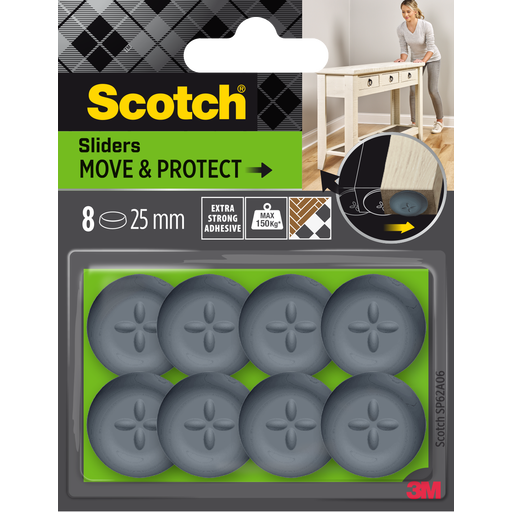
Why this choice suits this profile : Its compact size and adhesive backing are ideal for small tables, chairs and occasional furniture that you want to fit without tools.
The 25 mm diameter and pack of eight make it possible to check the fit on a lightweight piece of furniture before fitting out an entire room.
Honeycomb structure, adhesive backing, eight pieces and a stated load capacity of up to 150 kg for four sliders.
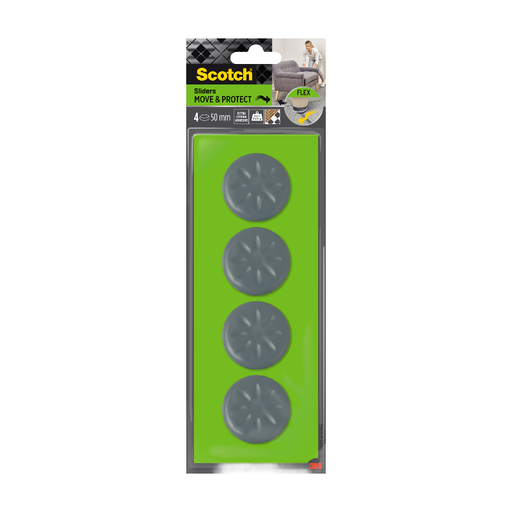
Why this choice suits this profile : This model is aimed at anyone looking for an adhesive fitting that can cope better with minor irregularities in parquet flooring or tiles.
The articulated joint and cushioning foam are designed to absorb minor irregularities without requiring a perfectly flat surface.
50 mm diameter, honeycomb structure, articulated joint and a stated load capacity of up to 400 kg for four pieces.
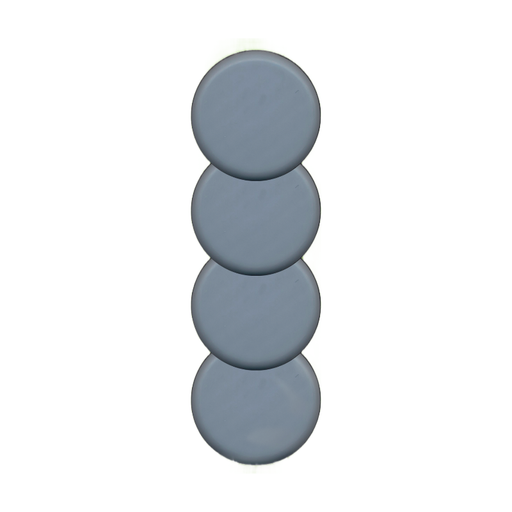
Why this choice suits this profile : Its size and design are intended for furniture fitted with castors, such as pianos, pool tables and heavy furniture.
This is not a universal adhesive slider to stick under any type of leg: it is specifically designed for castor feet.
Smooth plastic, 65 mm diameter and a stated load capacity of up to 500 kg for four sliders.
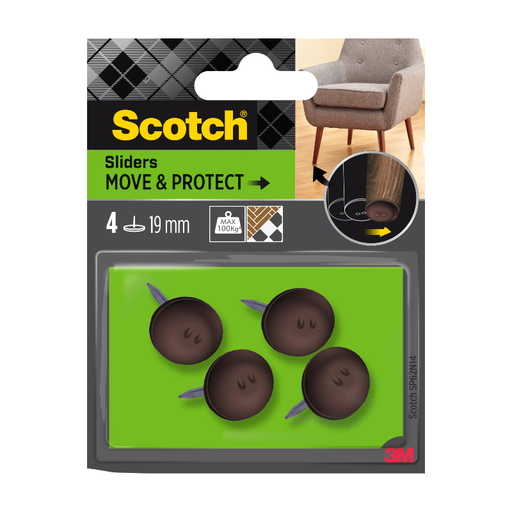
Why this choice suits this profile : Its nail-on fixing is suitable for wooden legs when the slider needs to stay in place for a long time.
The mechanical fixing reduces the risk of detachment caused by an inadequately prepared surface, but requires you to check the thickness and material of the leg.
Round 19 mm format, honeycomb structure, permanent installation and a stated load capacity of up to 100 kg for four sliders.
Non-slip furniture sliders can improve stability in certain situations. However, an accessory designed to make furniture easier to move should not be used to stop a piece of furniture from moving altogether. In rooms used by children or pets, keep small parts and packaging out of their reach.
The surface must be clean, dry and completely free from grease. Press firmly across the entire base, then wait for the recommended period before putting the furniture under strain. On a very textured, porous or damp leg, a nail-on fixing may be preferable if the material is suitable.
It depends on the weight of the furniture, how often it is moved, how clean the floor is and how well the slider is fitted. Furniture that is rarely moved will cause less wear than a chair or piece of equipment handled every week. Replace the slider as soon as its surface becomes worn or its grip diminishes.
The product details for several models mention parquet flooring, tiles, laminate and vinyl. However, always test the movement in an inconspicuous area, especially if the floor is old, delicate or uneven. Remove any dirt trapped under the slider and do not exceed the stated load for the complete set in use.