
Livraison le jour même ou le lendemain

Qualité garantie

Débloquez vos offres de bienvenue: Livraison GRATUITE | Jusqu'à -80 % | 30 jours d'essai gratuits à JoyPlus
Téléchargez l'application
Choosing a new front-load washing machine can often be a headache. Between the marketing jargon, indecipherable energy labels, and an avalanche of features, it's easy to get lost. The risk? Feeling overwhelmed and making a purchase you'll regret a few months later.
To help you sort through the noise, we've decoded the pitfalls to avoid and the criteria that truly matter before you pull out your credit card.
To make an informed choice, put the marketing aside and focus on these objective technical specifications. They are what determine performance, durability, and whether the appliance is truly right for you.
The capacity, in kilograms, should match your household size: 5 to 7?kg for a single person or a couple, 8?kg to 9?kg for a family of 3-4, and 10?kg or more for large families.
But capacity isn't everything. The footprint is an equally crucial criterion, especially if you live in an apartment. A slim washing machine (or shallow depth, less than 50-55?cm) will fit much more easily into a tight kitchen or bathroom. The best models combine this shallow depth with a large-diameter drum (over 500?mm)—the perfect equation for optimising space without sacrificing tumbling efficiency.
The energy label is your best ally for managing your budget. A Class A appliance is an excellent starting point, but a model rated A-15% or A-30% will save you even more on your water and electricity bills.
Spin speed (in revolutions per minute, or rpm) is the other key to saving money. A 1400 rpm spin cycle can extract a significant amount of water from the fibres. The result? Drying time is drastically reduced, whether you use a tumble dryer (which will therefore consume less energy) or air-dry your laundry. The icing on the cake is that modern BLDC Inverter motors are not only more durable but also much quieter—an essential comfort if the machine is installed in an open-plan kitchen.
There's no need to drown in a laundry list of programs. Instead, identify the ones you'll actually use:
To guide you, here is a selection of models that tick all the right boxes, each tailored to a specific user profile.
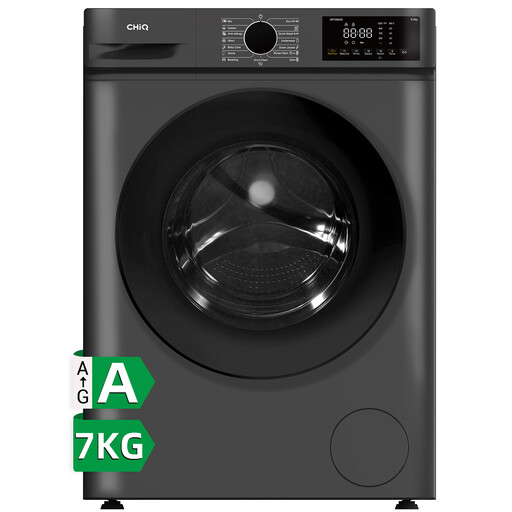
Why it's a great fit: Perfect for apartments and small laundry rooms. Its shallow depth of 47 cm allows it to fit into the tightest spaces, while still offering a 7 kg capacity, ideal for a couple or a small family.
It proves that compact doesn't mean compromised performance. Its 530 mm diameter drum ensures ample and effective tumbling, a far cry from the trade-offs of compact appliances with small drums.
Class A efficiency, 16 programs including the essentials (steam, smart wash), and an ultra-compact design.
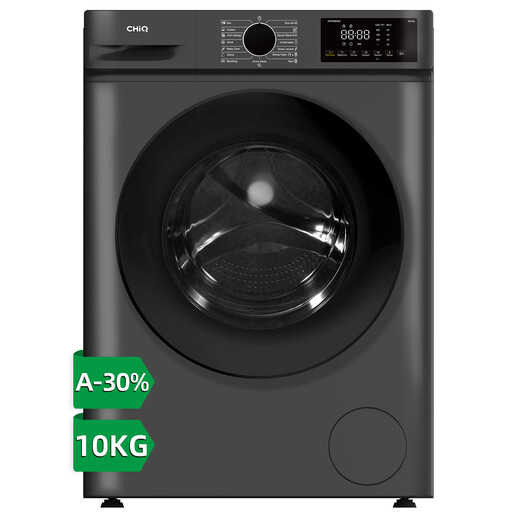
Why it's a great fit: With its 10 kg capacity, it effortlessly handles duvets and the laundry of large families. Its excellent A-30% energy efficiency is a real bonus for keeping budgets in check, even with heavy use.
Its large capacity isn't just a number on paper: it's backed by a wide 530 mm drum that guarantees a flawless wash. Its A-30% performance is a tangible advantage over standard Class A models.
A-30% energy efficiency, an XXL 10 kg capacity, and a powerful 1400 rpm spin for laundry that dries in record time.
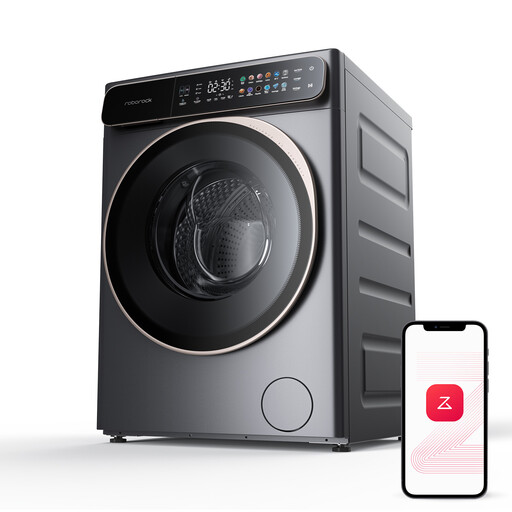
Why it's a great fit: This is the Swiss Army knife of laundry: a washer-dryer (10 kg wash / 6 kg dry) designed for those who want maximum convenience. Its key features? Automatic detergent dispensing and a self-cleaning lint filter system.
Here, technology isn't a gimmick. Automation solves real-world daily problems: no more guesswork with detergent dosing and no more chore of cleaning the lint filter.
Low-temperature Zeo-Cycle drying (which is gentle on delicate fabrics), automatic detergent dispensing, and filter self-cleaning.
Explore our full selection of products that meet our rigorous selection criteria and current safety standards.
A washing machine's lifespan depends on its build quality, of course, but also on how you use it. An excellent indicator of reliability is the length of the motor warranty. More and more brands are offering 10, 12, or even 20-year warranties on their motors (usually BLDC Inverter types), a vote of confidence in the durability of this core component. Of course, regular maintenance (cleaning the filter, running empty high-temperature cycles) is essential to extend its life.
Essential? No. Highly recommended? Yes. A 1400 rpm spin cycle (or higher) extracts far more moisture than a 1000 or 1200 rpm cycle. In practical terms, if you use a tumble dryer, it will run for less time and consume less energy. If you air-dry your laundry, it will dry much faster—a significant advantage in winter or in a humid home.
Yes, and this is an absolutely crucial step that should never be overlooked. All new washing machines are delivered with shipping bolts (or brackets). There are usually 4 on the back of the machine, and their purpose is to secure the drum to prevent damage during transport. You must remove them before the very first use. Forgetting this step guarantees vibrations worthy of a jackhammer, a deafening noise, and, most importantly, irreversible damage to your new machine. Finally, make sure the machine is perfectly stable and installed on a level surface.