What should you check first?
First, check where your laundry can dry and how well the room is ventilated. Then compare the capacity and usage information for appliances that will fit in the space.
| Priority |
What to check |
To suit my needs |
| Room humidity |
Look for a large, well-ventilated room or a suitable mechanical ventilation extractor. ADEME notes that air-drying laundry adds a lot of moisture indoors; a dehumidifier is no substitute for fresh air. |
I want to keep using an airer without neglecting the need to remove damp air. If ventilation is an issue, I won’t rely on a dehumidifier to replace it. |
| Spin-drying |
Compare the washing machine’s spin-drying efficiency class on its label, not just its maximum spin speed. ADEME recommends class A when laundry needs to dry quickly indoors. |
I can dry laundry in a suitable room, but I’d like to spend less time waiting for it to dry on the airer. |
| Space and capacity |
Measure the available space. For a washer-dryer, check the washing and drying capacities separately: LG France lists a 9/6 kg model, while Electrolux France lists a 10/6 kg model. |
I have room for just one appliance, but I need to know whether it can dry my usual load without splitting it. |
| How often you do laundry |
For a dedicated tumble dryer, weigh up its capacity, programmes, noise and installation requirements against how often you do laundry. If you’re thinking of stacking it on top of your washing machine, check the manuals and make sure you have a compatible stacking kit. |
When loads of laundry pile up, I’d rather consider a dedicated appliance than permanently give up a room to an airer. |
| Energy use |
Compare the labels and product information for appliances in the same category, taking the stated cycles into account. The European Commission says the A to G label for household tumble dryers applies to appliances placed on the market since 1 July 2025. |
I want to compare the energy needed for the use I have in mind, rather than judging energy use by a promise of speed alone. |
A guide to the brands mentioned
These examples of product ranges and models show how to interpret manufacturers’ stated capacities; they are not a ranking of the brands.
Bosch
Bosch Home Appliances France lists heat pump tumble dryers, including the WQG24502FR, which has a stated capacity of 8 kg.
- The stated capacity helps you compare this model with the loads you want to dry.
- Check the model’s product information for its dimensions and energy data before deciding where to put it.
LG
LG France lists washer-dryers, including the F964R56MBRS, with a stated capacity of 9 kg for washing and 6 kg for drying.
- This model combines washing and drying in one appliance.
- Its stated drying capacity is lower than its washing capacity, so compare both figures with your usual loads.
Electrolux
Electrolux France gives the heat pump washer-dryer EW9W1166RA a capacity of 10 kg for washing and 6 kg for drying.
- The separate capacity figures help you work out how much laundry you can dry in the same appliance.
- If you wash 10 kg, don’t assume you’ll be able to dry the whole load at once.
Equipment to explore on Joybuy
These options offer different ways to manage laundry indoors: wash it and hang it out to dry, use a dedicated tumble dryer, combine washing and drying in one machine, or use a dehumidifier alongside ventilation.
 Image unavailable
Samsung WD11DG6B85BEU3, 11/6 kg washer-dryer
This model combines washing and drying in one appliance, with a stated capacity of 11 kg for washing and 6 kg for drying. If your washing load is over 6 kg, plan to reduce or split it before drying. Also check the figures for the wash-and-dry cycle.
View on Joybuy
 Image unavailable
Hotpoint CHD84MWBSEE, 8 kg heat pump tumble dryer
This dedicated 8 kg tumble dryer means you won’t have to rely on an airer for the loads you put in it. You’ll need space for an extra appliance. Compare its class C rating with its energy information and the programmes that suit your needs.
View on Joybuy
 Image unavailable
Samsung WD10HG6U34BEU3, 10/6 kg washer-dryer
This is another option if you want a single appliance, with a stated capacity of 10 kg for washing and 6 kg for drying. The drying capacity is the figure to compare with your laundry loads. Check the product information to understand the stated class D rating and the figures for the cycle you’re interested in.
View on Joybuy
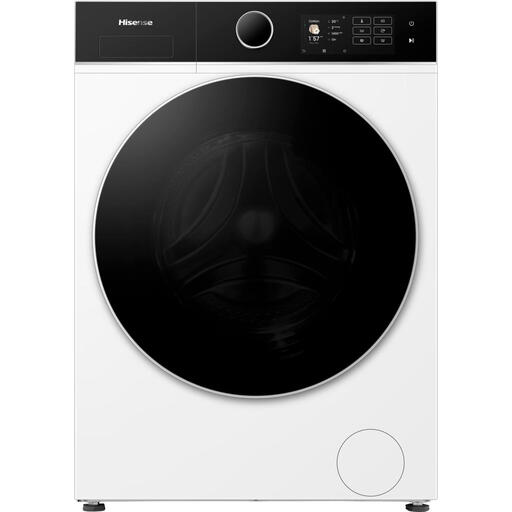 Image unavailable
Hisense WF5I8043BWF, 8 kg washing machine, 1 400 tr/min
If you’re keeping your airer, this 8 kg washing machine is worth considering before you add a separate drying appliance. Its maximum spin speed of 1 400 tr/min doesn’t tell you its spin-drying efficiency class, so be sure to check that too. Your laundry will still need to dry in a properly aired or ventilated room.
View on Joybuy
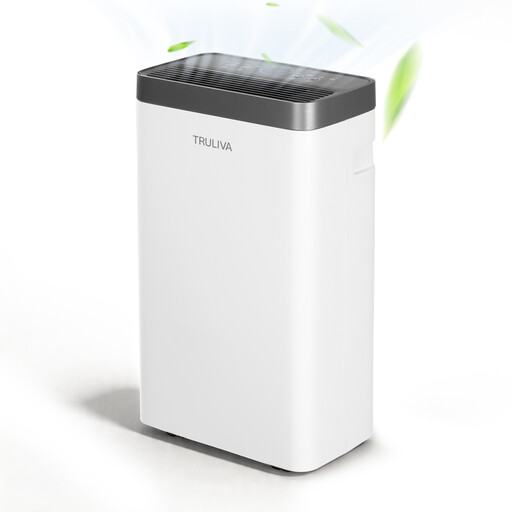 Image unavailable
TRULIVA AP10-2012EE, dehumidifier with continuous drainage
Only consider this as an extra if your laundry is drying in a room that is already properly aired or ventilated. This model is described as suitable for drying laundry and has a 24-hour timer and continuous drainage. Check that the drainage system will work with your setup, and confirm the humidity range you can set for this model.
View on Joybuy
Frequently asked questions
Can a dehumidifier replace airing the room or using mechanical ventilation while laundry dries?
No. ADEME recommends drying laundry in a large, well-ventilated room or one with an extractor, and says mechanical ventilation removes moisture from the home. A dehumidifier may be used as an extra in a room that is already ventilated, but it won’t make up for a lack of fresh air.
What should I look for in a washing machine if I dry my laundry on an airer?
Pay particular attention to its spin-drying efficiency class, then consider its capacity, energy use and noise levels for the way you use it. ADEME recommends class A for spin-drying when laundry needs to dry quickly indoors. You’ll also need a well-ventilated room or one with an extractor.
Can a washer-dryer dry a full load straight after washing it?
Not necessarily: check its washing and drying capacities separately. LG France lists a model with a 9 kg washing capacity and 6 kg drying capacity, while Electrolux France gives the EW9W1166RA a 10/6 kg capacity. So a full washing load may need to be reduced or split before drying.
Can you stack a tumble dryer and washing machine in a small home?
Yes, as long as the manuals, dimensions, stacking kit and floor allow for a stable installation. Que Choisir recommends placing the tumble dryer on top of the washing machine, never the other way round. Check they’re compatible before you buy.
Which label should I compare when buying a tumble dryer in France?
The European Commission says that an A to G energy label applies to household tumble dryers placed on the market since 1 July 2025. Compare models in the same category, checking their capacity and product information too, rather than relying on the rating alone.


