
Livraison le jour même ou le lendemain

Qualité garantie

Débloquez vos offres de bienvenue: Livraison GRATUITE | Jusqu'à -80 % | 30 jours d'essai gratuits à JoyPlus
Téléchargez l'application
A well-organised pantry often starts with the right containers. However, choosing food storage jars is not simply a matter of comparing their appearance or price. Capacity, closure system, material and care all have a direct impact on how practical they are for everyday use.
Certain pitfalls come up time and again when shopping. Here they are before we review the different options.
A wooden or plastic lid may look stylish without providing sufficient protection. For pasta, rice, flour or cereals, choose a silicone seal or a system explicitly described as airtight. This helps limit exposure to moisture and prevents spills, provided the jar is closed properly.
A large container is not necessarily the most practical option. Once filled with flour or rice, it can become heavy and difficult to handle. Conversely, a small jar may quickly prove too limited for bulk purchases. An assortment of different sizes will generally make it easier to adapt your storage to the quantities you actually use.
The phrase ‘dishwasher safe’ does not mean that every component can be cleaned in the same way. A lid containing a wooden section will often need to be washed by hand. Similarly, jars designed for dry foods should not be placed in the oven or microwave, or filled with very hot liquids, unless the manufacturer explicitly says they are suitable.
Glass storage jars make it easy to identify their contents at a glance and are highly resistant to lingering odours. On the other hand, they are heavier and can break if dropped or exposed to thermal shock.
Transparent plastic containers are lighter and more resistant to knocks. For food use, check the material information, particularly for a BPA-free statement where one is provided. According to their product details, the models featured here use either BPA-free plastic or glass combined with a food-grade silicone seal.
For airtight jars, check for a seal, a secure-fitting lid and easy handling. An effective closure should be simple to open while being secure enough to prevent small particles from escaping and stop spills inside a cupboard.
Wooden lids add a warm, welcoming touch, but generally require more care. They should not be left submerged for long periods or placed in the dishwasher unless specifically designed for it.
To optimise pantry storage, measure the depth of your shelves and the available height before ordering. Stackable jars help you make the most of vertical space, provided their bases and lids are stable enough.
Sizes from 500 to 750 ml are suitable for nuts, spices, dried fruit or small quantities of coffee. Capacities of one litre or more are better suited to jars for pasta, rice, flour and cereals. Bear in mind, however, that the space actually taken up also depends on the shape of the food.
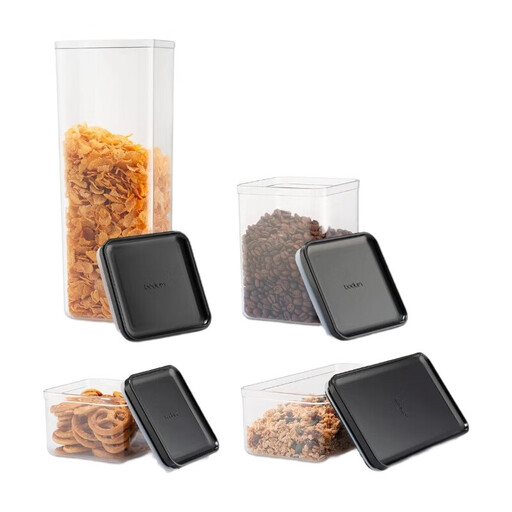
Why this choice suits this profile : This six-piece set offers several sizes, making it easy to start organising a cupboard without buying lots of separate items. The BPA-free transparent plastic specified in the product details is lightweight and lets you identify ingredients quickly.
The four capacities prevent you from filling a large jar with a small quantity. The airtight lids also reduce the risk of accidental opening.
Six pieces, several sizes, transparent bodies and cleaning stated as dishwasher safe.
Why this choice suits this profile : Its textured borosilicate glass, decorative handles and acacia lid make it a natural fit for a kitchen where storage containers are kept on display on the worktop.
The silicone seal works with a close-fitting lid rather than serving as a merely decorative element. At 750 ml, the jar also remains reasonably easy to lift once full.
Borosilicate glass, food-grade silicone seal, acacia lid and capacity suited to dry foods.
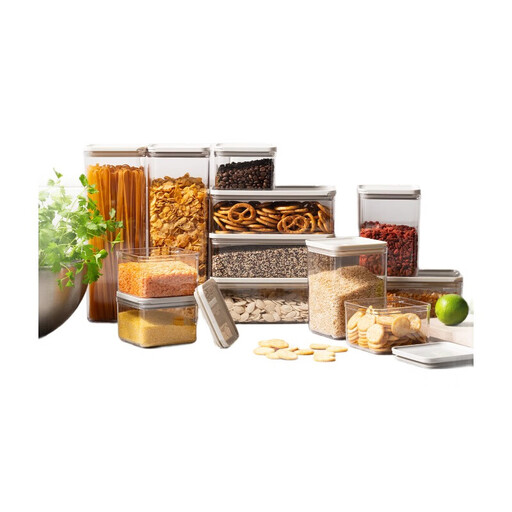
Why this choice suits this profile : With twelve pieces ranging from 0.5 to 2.6 l, this set is ideal for households that buy in bulk or want a coordinated food storage collection.
The range of sizes prevents you from using an oversized container for every ingredient. The silicone-sealed lids and stackable design are well suited to a busy, frequently used pantry.
Twelve jars, four capacities, transparent bodies, lids specified as BPA-free and cleaning stated as dishwasher safe.
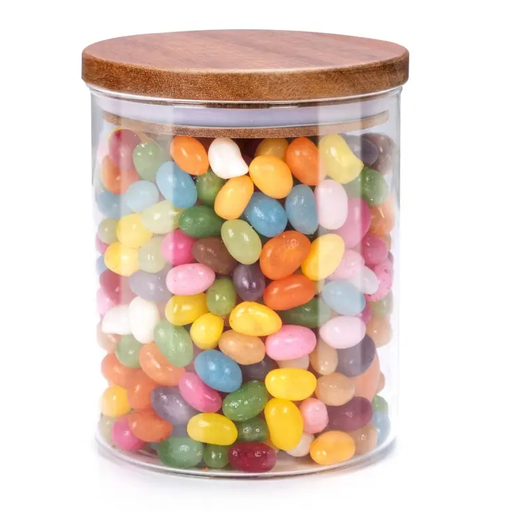
Why this choice suits this profile : Its compact 600 ml size is ideal for spices, seeds, biscuits or small quantities, without taking up too much room on a shelf or worktop.
Its practical capacity reduces the risk of ending up with a container that is difficult to move. The acacia lid should be wiped clean and kept away from prolonged exposure to moisture.
600 ml capacity, transparent glass, acacia lid and closure described as airtight.
We have put together a complete, real-time-updated list of products that fully meet these strict selection criteria and European safety regulations.
To extend the life of your food storage containers, adopt a few simple habits:
Wooden lids should generally be washed by hand. Avoid sudden temperature changes with glass jars, and do not pour boiling liquid into a container that is not designed for it.
Airtight jars are mainly suitable for dry foods: pasta, rice, flour, sugar, cereals, coffee, tea, dried fruit, nuts and biscuits. They are not a substitute for a container specifically designed to store liquids, hot foods or carbonated contents.
Glass offers good visibility and generally does not retain odours, but it is heavier and more fragile. Transparent plastic is lighter and more resistant to knocks. The right choice therefore depends on where you will keep the jar, how often you handle it and the food-contact information supplied with the product.
There is no universal lifespan. It depends on the material, how often the jar is washed and how frequently it is handled. Replace any cracked jar or distorted lid. To maintain an effective seal, dry it thoroughly before putting the lid back in place.