
Livraison le jour même ou le lendemain

Qualité garantie

Débloquez vos offres de bienvenue: Livraison GRATUITE | Jusqu'à -80 % | 30 jours d'essai gratuits à JoyPlus
Téléchargez l'application
A good food storage container can be a game-changer in your kitchen: it keeps food fresh, simplifies meal prep, and reduces waste. Yet, the market is saturated with products and often-disappointing promises. A lid that leaks in your bag, plastic stained for life by the first tomato sauce, a container that cracks in the freezer... You probably know these frustrations all too well.
As the Head of Product Recommendations at Joybuy, my role is to help you navigate this jungle. Let's break down the pitfalls to avoid and the criteria that truly matter, so you can make an informed choice that fits your needs.
Before you buy, it's crucial to recognise the design flaws that can turn a good deal into a nightmare after just a few months.
To avoid disappointment, focus on these key technical points that guarantee the quality and longevity of your food storage container.
The choice of material dictates everything: its use, durability, and maintenance.
A truly airtight food container relies on a winning combination: a removable silicone gasket (for easy cleaning) that fits the rim perfectly, and a sturdy 4-clip locking system that distributes pressure evenly. This design is what prevents leaks and ensures optimal food preservation.
Always check the pictograms on the packaging. A container might be dishwasher-safe, but sometimes only on the top rack. For the microwave, you often need to remove the lid or open the steam vent. The ultimate in versatility? A single container you can use to store, reheat, and serve directly at the table.
Rather than an endless list, we've selected models that cater to specific user profiles, applying the quality criteria we've just discussed.

Why it's the perfect match: Ideal for prepping your lunches for the week. Its borosilicate glass body lets you go straight from the fridge to the microwave to reheat your meal at the office, without altering the taste of your food. The 630ml size is perfect for a single serving.
The glass won't stain or retain any odours, even from the most stubborn saucy dishes. Its clip-locking system is designed to be reliable and prevent nasty surprises in your bag.
Healthy and ultra-heat-resistant material (oven-safe without the lid). Maximum versatility: freezer, microwave, and dishwasher safe.

Why it's the perfect match: This set of food storage containers made from 316 stainless steel is the all-purpose solution for storing leftovers, prepping salads, or packing a picnic. With its different sizes (600ml, 1100ml, 2200ml), it adapts to all of the family's needs. Stainless steel is a guarantee of longevity and hygiene.
Unlike plastic, stainless steel doesn't warp, crack, or retain any odours whatsoever. It's a durable investment that will save you from buying new containers every year.
Ultra-corrosion-resistant and virtually unbreakable material. The containers are stackable for optimised storage and maximum space-saving in your cupboards.
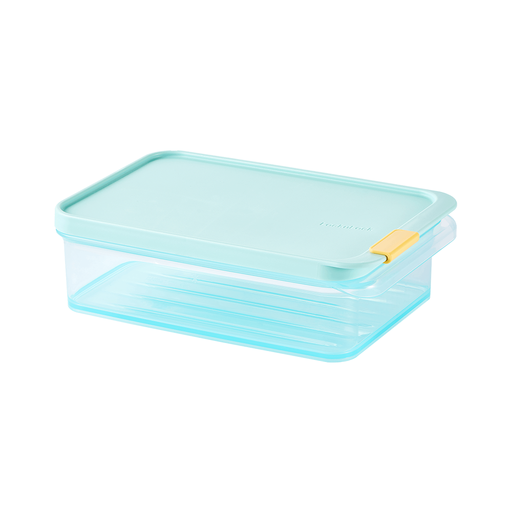
Why it's the perfect match: For the pros of a perfectly organised freezer. This model is specially designed for freezer storage, with a modular design that ensures stable and optimised stacking. A nice touch? The label clips, perfect for identifying the contents and freezing date.
It avoids the trap of conventional plastics that become brittle and crack in the cold. Its material is specially formulated to remain flexible and withstand freezing.
Modular stacking system for maximum space-saving. BPA-free material specifically designed for freezing.
Explore our full selection of products that meet our quality criteria and food safety standards.
Examine the lid: it must have a flexible silicone gasket and a multi-point locking system (usually 4 clips). The foolproof trick: fill it halfway with water, close it, and shake it over the sink. Not a single drop should escape.
Absolutely not! This is a classic trap. Only borosilicate glass is designed to withstand thermal shock (going from cold to hot). Regular soda-lime glass could shatter. Always check for this specification before putting a container in the oven, and never forget to remove its plastic lid.
It's very simple: wash your containers after each use. A quick tip for plastic: rinsing with cold water immediately after use, before washing with hot water, helps prevent stains (like tomato sauce) from setting in. Also, remember to remove the silicone gasket from time to time for a thorough cleaning. Finally, let all parts air-dry completely before storing them to prevent bad odours.