
Livraison le jour même ou le lendemain

Qualité garantie

Débloquez vos offres de bienvenue: Livraison GRATUITE | Jusqu'à -80 % | 30 jours d'essai gratuits à JoyPlus
Téléchargez l'application
Keeping your food fresh longer and your kitchen organized isn't a luxury—it's a necessity. Yet, choosing the right food storage container can quickly become a headache. Between marketing promises and hidden flaws, buyer's remorse is always just around the corner. As the head of product recommendations at Joybuy, my mission is to help you see clearly and find the solutions that truly meet your needs.
Before you even start comparing models, let's review the classic mistakes that turn a good deal into a disappointment and a waste of money.
To avoid falling into these traps, here are the technical points that really make a difference.
The choice of material is crucial for use, durability, and safety.
A good airtight glass jar or a reliable plastic container depends on its lid. The most effective systems combine a removable silicone gasket (for easy cleaning) and a robust locking mechanism, such as clips that snap onto all four sides of the container. This is what ensures a truly airtight and liquid-tight seal, essential for storing dry goods as well as saucy dishes.
A good storage container should make your life easier. Check if the models are stackable (with or without lids) to optimize space in your refrigerator and cabinets. If you're considering a set, analyze the different capacities offered to ensure they match your habits: individual portions, family meal leftovers, storing flour or cereal, etc.
To illustrate these criteria in practice, here are some products that have passed our tests, suited for different profiles.

Why we chose it: This set is the perfect ally for *meal prep*. Its two sizes (1040 ml and 370 ml) are designed for storing main dishes and sides. The borosilicate glass allows you to go directly from the fridge to the microwave to heat up your lunch at the office, hassle-free.
The glass is indeed borosilicate, which eliminates any risk of breakage from thermal shock. The clip-on lids guarantee a 100% reliable seal, tough enough for bumpy commutes.
A complete and versatile set that covers all your meal prep needs, with materials that are built to last and safe for daily use.
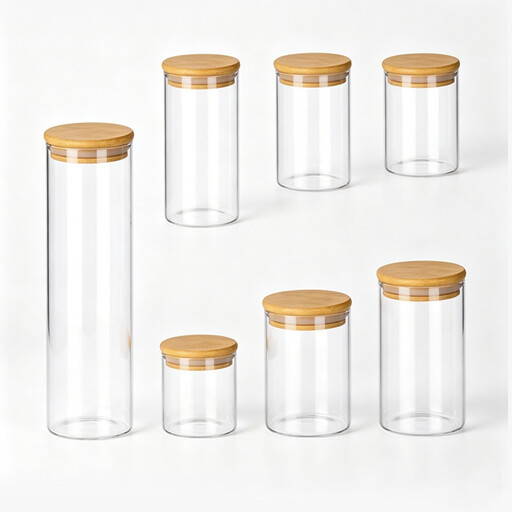
Why we chose it: Ideal for bringing order to your pantry and for **storing dry goods**. The set offers 7 different sizes to store everything: pasta, rice, legumes, coffee, or biscuits. The transparent glass body lets you identify the contents at a glance, and the wood-effect lids add a welcome decorative touch.
It solves the problem of mismatched sizes by offering a wide range of capacities, from a small spice pot to a large spaghetti jar. The silicone gasket provides excellent protection against moisture.
An all-in-one solution that is both practical and aesthetic, transforming a messy pantry into an organized and harmonious space.
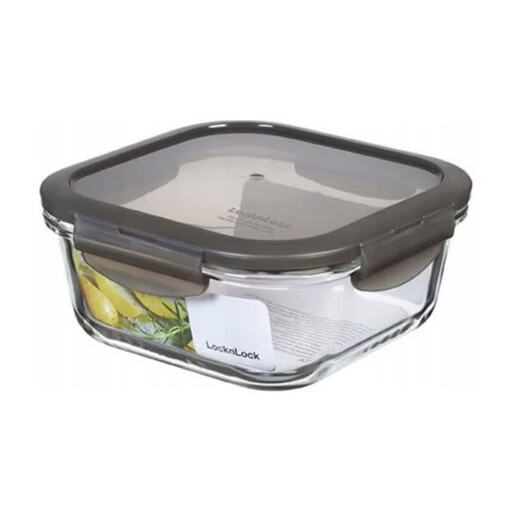
Why we chose it: This is the Swiss Army knife of food storage containers. Its 750 ml size is perfect for leftovers, an individual gratin, or a packed salad. Made from borosilicate glass, it goes everywhere: freezer, oven (without lid), microwave, and dishwasher.
It checks all the quality boxes: borosilicate glass resistant to 400°C, a 4-clip locking system, and a silicone gasket for a foolproof seal. It's the exact opposite of a flimsy, leaky container.
Absolute versatility. A single container to freeze, cook, store, transport, and serve. An investment that quickly pays for itself in daily use.
We have curated a complete list of products that meet these quality criteria and current safety standards.
Yes, but under one essential condition: it must be made of borosilicate glass. This type of glass is designed to withstand thermal shock. A standard glass container, on the other hand, is likely to shatter. Always remember to remove the lid before putting it in the microwave or oven and to check the manufacturer's instructions.
This is a common problem, especially with garlic, onion, or curry. Here's a tip: soak the lid and its gasket (if removable) in a mixture of warm water and white vinegar or baking soda for a few hours. Letting it air dry, ideally in the sun, also helps to neutralize any lingering odours.
The "BPA-free" label guarantees that the plastic does not contain Bisphenol A, an endocrine disruptor whose use is highly regulated for food containers. This is an essential safety guarantee. However, for reheating food (especially fatty or acidic foods), glass is still considered the most neutral and safest material. If you use plastic in the microwave, always check that the manufacturer explicitly authorizes it.