
Livraison le jour même ou le lendemain

Qualité garantie

Débloquez vos offres de bienvenue: Livraison GRATUITE | Jusqu'à -80 % | 30 jours d'essai gratuits à JoyPlus
Téléchargez l'application
Prepping your meals in advance, or meal prep, is an excellent habit. But the experience is quickly ruined by a lunch box leaking in your bag or a container that holds onto the stubborn smell of yesterday's dish. Choosing the right food storage container isn't just about aesthetics; it's a smart investment for healthier, more cost-effective meals and flawless organisation.
The problem? The market is flooded with marketing promises that don't always hold up to the rigours of daily use. Before you make your choice, here are the most common pitfalls to avoid so you don't regret your purchase.
airtight lunch container depends on the design of its seal and locking system, far more than a simple claim on the packaging.compartmentalised bento box is an excellent idea, provided the dividers are actually sealed. Nothing is more disappointing than a meal where the crunch of your fresh vegetables is ruined by a neighbouring sauce that decided to overflow.To make an informed decision, you need to focus on the technical criteria that truly make a difference.
The choice of material has a direct impact on the durability, food safety, and daily usability of your container.
A truly airtight lunch container can be identified by two crucial details:
For fans of meal prep (preparing meals in advance), modularity is key. A food container set with different sizes allows you to handle various portion sizes. For complete on-the-go meals, the compartmentalised bento box remains the ideal solution for separating different elements of a dish and preserving their textures.
Rather than searching for THE perfect container, the goal is to find the one that truly fits your lifestyle.

Why we chose it: This comprehensive set is perfect for organising your weekly *meal prep*. The borosilicate glass goes straight from the freezer to the office microwave without transferring flavours or leaving stubborn sauce stains.
The high-quality glass won't degrade or trap any odours. The robust clip-on lids ensure a reliable seal, even during transit.
A 10-piece food container set (in two different sizes) for maximum flexibility. Dishwasher, microwave, and freezer safe.

Why we chose it: For those seeking an unbreakable and durable alternative to plastic and glass. The 316 stainless steel offers superior corrosion resistance, making it a top-tier choice for all foods, even acidic ones (dressings, tomatoes, etc.).
Stainless steel is a perfectly inert material: it doesn't retain stains or odours, ensuring impeccable hygiene and flavour neutrality for the long haul.
A set of 3 very practical sizes (600 ml, 1100 ml, 2200 ml) that are stackable for optimised storage. Ultra-durable **316 stainless steel** material, freezer and dishwasher safe.
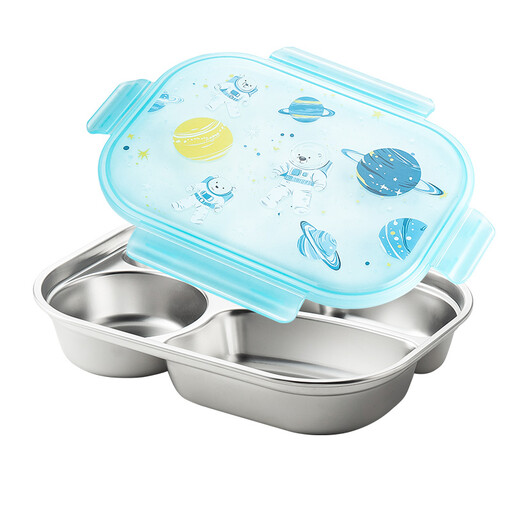
Why we chose it: The perfect solution for packing a complete, balanced meal without the foods mixing. Ideal for complex salads, dishes with multiple sides, or varied snacks for kids.
Its 4 fixed compartments solve the classic problem of mixed flavours and textures, a common flaw in boxes with leaky, removable dividers.
A compartmentalised bento box made of 316 stainless steel, which is both durable and easy to clean. Its patterned lid also makes it a clever option to encourage kids to eat a variety of foods.
Discover our full selection of food containers that meet our quality criteria and current safety standards.
The test is simple: fill the container halfway with water, close it securely, and shake it vigorously over a sink. No leaks? That's a good sign. When buying, always prioritise models with a thick silicone seal and four locking clips.
No, never. Metal in a microwave can cause electrical arcs and irreversibly damage the appliance. To reheat the contents of a stainless steel food container, transfer the food to a suitable plate. You can also opt for gentle reheating in a water bath (bain-marie) or a conventional oven if the model is compatible (always check the instructions).
The best habit is to wash the container and its lid immediately after use. If an odour lingers (especially with plastic), let the container soak for a few hours in a mixture of hot water and baking soda. It's incredibly effective. Also, remember to remove the silicone seal to clean it separately, as that's often where residue hides.