
Livraison le jour même ou le lendemain

Qualité garantie

Débloquez vos offres de bienvenue: Livraison GRATUITE | Jusqu'à -80 % | 30 jours d'essai gratuits à JoyPlus
Téléchargez l'application
A foldable all-terrain electric bike can accompany you on city commutes, forest trails, weekend rides, or journeys that combine car and bike. But a flattering photo and a promising range claim aren't enough to make the right choice.
Before placing an order, three common pitfalls keep cropping up:
Range should be treated as an estimate, not a guaranteed distance. To choose a long-range e-bike, check the following:
In France, an electrically assisted pedal cycle that falls under the e-bike category must comply with the regulatory limits on assistance, including a maximum nominal power of 250 W and assistance cutting out at 25 km/h, depending on the model's configuration. The CE mark and compliance with EN 15194 are details to look for on the product page. However, they do not replace the need to read the manual or follow the Highway Code.
The Yadea Rover claims a range of 90 to 120 km. This figure should be considered in light of the assistance mode selected and the type of route. For daily trips, it's better to keep a margin rather than running the battery to its limit.
An electric bike with suspension shouldn't be chosen simply because it has a suspended fork. Check whether the fork is adjustable or lockable: locking it helps reduce unnecessary movement on tarmac roads.
20 × 4 inch tyres on an electric bike with 20 x 4 inch tyres offer a large contact patch and filter out small bumps more effectively. They perform well on compacted paths, gravel tracks and some loose surfaces. On the downside, they are heavier to accelerate and take up more space once the bike is folded.
For mainly urban use, narrower tyres can be more manoeuvrable. For switching between city streets and rough trails, the all-terrain format is a good compromise, provided you adjust the pressure according to load and surface.
Hydraulic brakes offer progressive control and remain consistent when the bike is loaded or used on a descent. However, do check the price of brake pads, the availability of spare parts, and whether there's a workshop near you that can carry out maintenance.
A drivetrain such as Shimano 7-speed lets you adjust your effort on gentle slopes, when pulling away and on moderate climbs. An electric bike with Shimano 7-speed still depends on the motor's torque, the total weight and the gradient. If your routes are often hilly, also look into the type of motor and its position.
Finally, the folding mechanism should be assessed in real-world conditions:
An aluminium alloy frame can help keep the weight down. However, a model with wide tyres, a removable battery and hydraulic brakes will often be heavier than a standard urban folding e-bike.
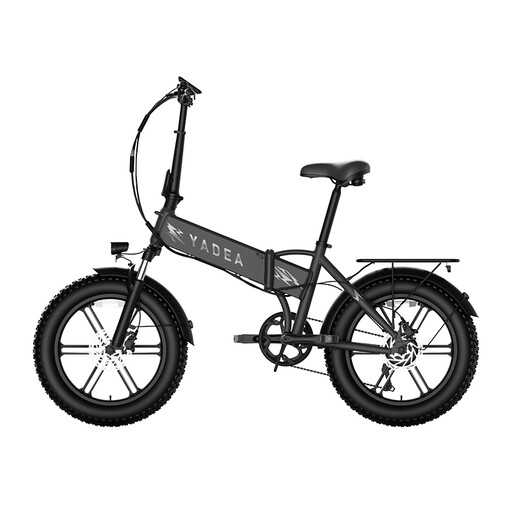
Why this choice suits this profile: Its foldable design, 20 × 4 inch tyres and Shimano 7-speed drivetrain make it ideal for anyone wanting a single bike for the city, trails and occasional storage in a car.
The product page mentions a lockable suspension fork, hydraulic disc brakes and a removable battery. This information lets you check for features often missing from basic folding bikes.
Claimed range of 90 to 120 km, USB-C port, NFC unlocking and CE compliance with reference to EN 15194.
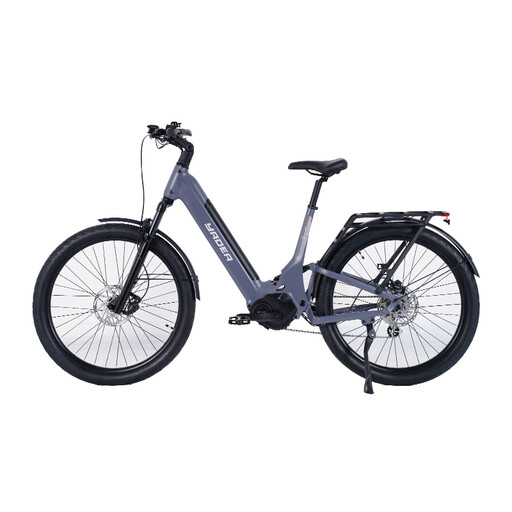
Why this choice suits this profile: For daily commutes, long rides and country roads, this setup focuses on comfort thanks to a lockable front suspension and a central air shock absorber.
The product page clearly distinguishes the fork from the central shock absorber, rather than just mentioning suspension without further detail. The Tektro hydraulic brakes are also specified.
Ananda mid-drive motor, Shimano 8-speed drivetrain, 27.5 × 2.4 inch tyres and stated compliance with EN 15194 and EN 50604 standards.
Why this choice suits this profile: Travellers and users who switch between tracks, cobbled streets and rough paths can rely on the wide tyres and full folding design, as long as they account for the stated total weight of 31.9 kg.
The weight and package dimensions are listed on the product page. This means you can check compatibility with your boot and your carrying capacity before ordering.
Foldable aluminium alloy frame, high-torque rear motor, lockable fork and hydraulic disc brakes.
We've put together a comprehensive, real-time updated list of products that meet these demanding criteria and European safety regulations.
A bike delivered partly assembled will usually require you to fit the handlebars, front wheel, pedals and battery. Before your first ride:
To extend the bike's lifespan, clean the frame with a damp cloth, lubricate the chain regularly and keep an eye on the brake pads, cables, screws and hinges. The battery should be stored in a dry place at a temperature between 0 and 40 °C, according to the information provided.
Running costs aren't limited to electricity: you also need to budget for maintenance, tyres, brake pads and the eventual replacement of the battery in the medium term. Fat bike tyres often cost more than those on a standard urban bike. It's best to factor this expense into your budget from the start.
Yes, provided its weight, folding system and range match your journey. On stairs or public transport, a very heavy model can quickly become a nuisance despite its folding frame. Also check its width when folded.
A claimed range of 90 to 120 km can vary depending on terrain, assistance level, wind, load, temperature and tyre pressure. For daily use, keep a reserve and charge the battery before longer rides.
Country of origin alone isn't enough to judge a bike. Instead, look at the stated compliance, the identity of the responsible party established in the European Union, the warranty, the availability of spare parts and the maintenance options. These are the factors that will have the biggest impact on the bike's long-term ease of use.