
Livraison le jour même ou le lendemain

Qualité garantie

Débloquez vos offres de bienvenue: Livraison GRATUITE | Jusqu'à -80 % | 30 jours d'essai gratuits à JoyPlus
Téléchargez l'application
Dreaming of a do-it-all bike that takes you to the office during the week and on backcountry trails over the weekend? The electric fat bike might just be the answer. It combines the ruggedness of a mountain bike, the incredible comfort of its oversized tyres, and the welcome boost of an electric motor. Ideal for riding on sand, forest paths, or simply taming city cobblestones with rock-solid stability, this bike stands out for both its style and its capabilities.
The catch? The market is flooded with models featuring a wide range of specs, making it easy to get lost. As the Head of Product Recommendations at Joybuy, my role is to do the legwork for you. The goal: to give you clear, practical insights to find the model that truly fits your needs, without drowning you in technical jargon. This guide covers the essential buying criteria and our selection of the best models for 2026.
Before you take the plunge, it's essential to understand a few technical points that will shape your experience and the use of your future bike.
For an electric bike to be legally considered an Electrically Assisted Pedal Cycle (EAPC or VAE in French) and be ridden on public roads without registration or special insurance, it must follow three golden rules:
A model that meets these criteria is a road-legal fat bike. More powerful bikes are classified as mopeds (speed pedelecs) or are restricted to use on private land. This is a critical point to check depending on your intended use!
Range is often the deciding factor. It depends on the battery's capacity (measured in Amp-hours, Ah), but also on the terrain, your weight, and the level of assistance you use. For mixed city/leisure use, aim for a battery of at least 13?Ah to avoid range anxiety.
Choosing an electric bike with a removable battery is a real everyday advantage. You can easily charge it at home or the office without having to bring the entire bike inside. It's also a significant security benefit: when you park the bike outside, you take the battery with you.
The real appeal of an electric fat-tyre bike is, of course, the comfort and grip it provides. Its wide tyres (usually 4 inches or more) smooth out road imperfections and allow for adventures on soft surfaces like sand or snow. For supreme comfort, especially on rugged trails, a full-suspension model (front fork and rear shock) makes a huge difference.
When it comes to safety, one point is non-negotiable: braking. A fat bike is much heavier than a standard bicycle, which demands brakes that are up to the task. Hydraulic disc brakes are therefore the clear choice. They offer far superior stopping power and modulation compared to mechanical disc brakes, ensuring safe, controlled stops in all conditions.
Here are a few models that stand out for their features and suitability for users in France.

Why it stands out: The Mangosteen FT03 is the perfect example of an all-terrain electric bike that is just as comfortable in the city as it is in the great outdoors. Its dual suspension and extra-wide 4.5-inch tyres make it a formidable machine for absorbing shocks, whether on trails or rough city streets.
Advantages:
Who is it for? For those seeking a robust and comfortable adventurer, ready to accompany them on daily commutes as well as weekend explorations in the forest or on country lanes.
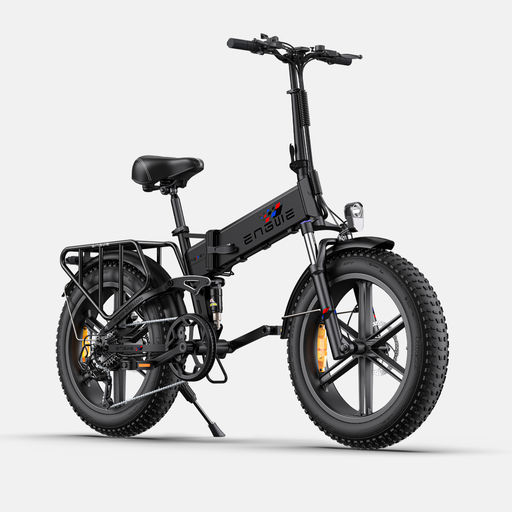
Why it stands out: The Engwe Engine X tackles a major problem for city dwellers: lack of space. Its folding frame allows it to be easily stored in a flat, an office, or the boot of a car, without sacrificing any of the benefits of a true EAPC fat bike.
Advantages:
Who is it for? The ideal companion for urbanites who want a high-performance bike without sacrificing living space, or for those who love to take their ride on holiday.
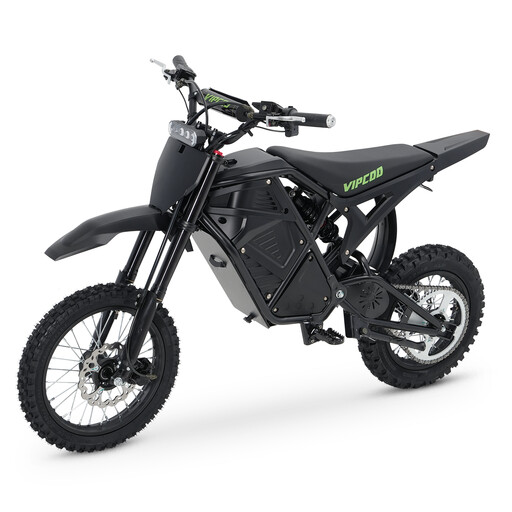
Why it stands out: The VIPCOO H3 plays in a different league. This is not an EAPC, but a true electric motocross bike built for pure off-road performance. Its power far exceeds the legal limits for road use.
Important: Please note, this powerhouse is not road-legal. Its use is strictly limited to private land and dedicated tracks.
Advantages:
Who is it for? Reserved for motorsports enthusiasts and thrill-seekers who have private land or access to tracks to unleash the full potential of this racing machine.
Not completely sold on the models in our selection? Are you looking for a different design, longer range, or other specific features? Many other options are available, and the convenience of a removable battery remains a highly sought-after feature for many users.
? Discover our complete collection of electric bikes with removable batteries to find the model that's right for you.https://www.joybuy.fr/explore/velo-electrique-batterie-amovible/cTif6bll
1. What is the real-world range of an electric fat bike? The range advertised by manufacturers is always calculated under ideal conditions (flat terrain, light rider, minimal assistance...). In real-world conditions, it varies greatly depending on your weight, the terrain's incline, the temperature, and especially the level of assistance you use. For a model with a 13 to 18?Ah battery, you can reasonably expect 50 to 80?km in mixed use.
2. Is an electric fat bike difficult to pedal without assistance? Yes, and this is a point that shouldn't be underestimated. Between the bike's weight (often over 30?kg) and the significant friction from the large tyres, pedalling without assistance requires a substantial effort, especially uphill. The assistance is therefore not a gimmick; it's almost essential for enjoyable daily use.
3. Can I ride any electric fat bike on the road in France? Absolutely not, and this is the most important point to check before buying. To ride legally on public roads (including cycle paths), your electric fat bike must be an EAPC, meaning it must respect the 250W motor limit and have assistance that cuts out at 25?km/h. Any more powerful model is considered a moped, is banned from cycle paths, and must be registered and insured as such, or is simply restricted to use on private land.