
Livraison le jour même ou le lendemain

Qualité garantie

Débloquez vos offres de bienvenue: Livraison GRATUITE | Jusqu'à -80 % | 30 jours d'essai gratuits à JoyPlus
Téléchargez l'application
Whether you're a weekend DIYer assembling flat-pack furniture, a tech enthusiast building your own PC tower, or a seasoned repair pro bringing electronics back to life, the electric screwdriver has become an indispensable ally. Its promise: to screw faster, more precisely, and with less elbow grease. The only catch is that the market is flooded with models, and it's easy to make a poor choice. As the Head of Product Selection at Joybuy, my mission is to cut through the noise for you.
Before falling for a sleek design or a long-winded spec sheet, beware of these costly rookie mistakes.
To ensure you make the right decision, three technical criteria must be scrutinised. These are what separate a gadget from a truly versatile DIY tool.
Torque is the rotational force of the device. It is THE number one criterion to check to ensure the tool matches your intended use.
A good cordless screwdriver should let you finish your project without running out of juice.
The bits are the point of contact with the screw. Their quality is non-negotiable.
To illustrate these criteria in action, here are a few models that check all the boxes, tailored for different user profiles.
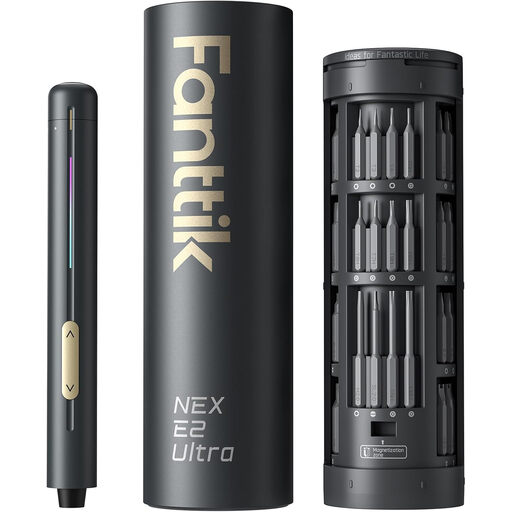
Why we chose it: Perfect for those who disassemble smartphones, laptops, or game consoles. Its surgical precision is its greatest strength.
It avoids the unsuitable torque trap with its 5 adjustable torque levels (from 0.05 to 0.6 N.m), allowing for millimetre-perfect tightening without risking damage to fragile components.
Comes with 50 S2 steel bits and an 800 mAh battery for excellent runtime. The magnetic storage case is a real bonus to keep everything organised.
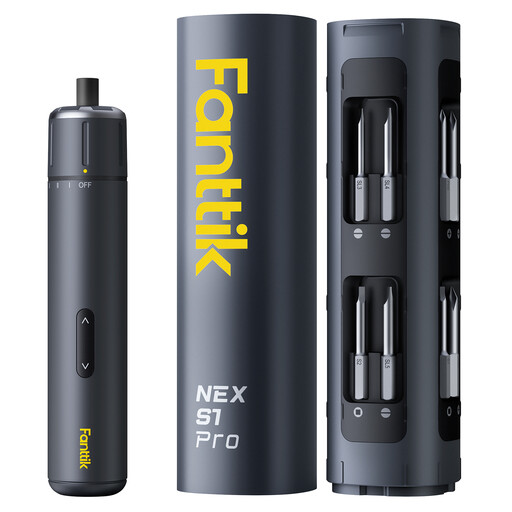
Why we chose it: The perfect tool for assembling furniture, building a gaming PC, and handling small home repairs that require a bit more punch.
It beats the battery life trap! Its 2000 mAh battery can handle up to 340 screws on a single charge. The USB-C port makes recharging a breeze.
Powerful torque with 3 settings (up to 6 N.m electric, 8 N.m manual) and 16 S2 steel bits ensure rock-solid versatility.
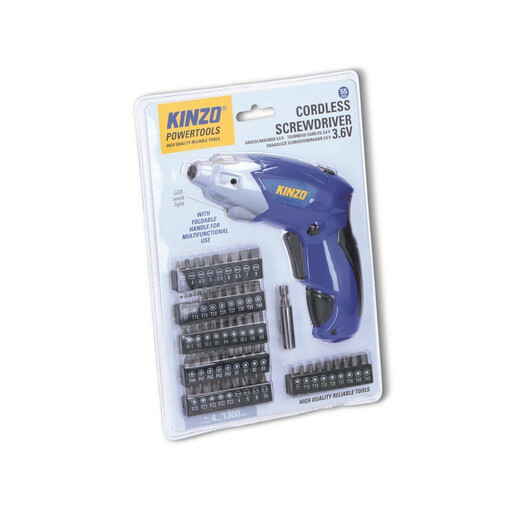
Why we chose it: The all-in-one solution for those just starting with DIY who want a complete kit without breaking the bank.
It avoids the "incomplete kit" trap by including a 54-piece bit set, featuring flathead, Phillips, Pozidriv, Torx, Allen, and even security bits.
Unbeatable value for money. The wide variety of bits prepares you for almost any household screwing task, so you won't need to make another purchase.
We have curated a complete selection of products that meet our demanding selection criteria and safety standards.
An electric screwdriver is typically more compact, lighter, and designed for precision or assembly tasks that require moderate torque. A drill/driver (often called a power drill) is more powerful, heavier, and can also be used for drilling. For furniture assembly and electronics repair, an electric screwdriver is often more suitable and manageable.
Most electric screwdrivers use a standard 1/4-inch (6.35?mm) hex chuck, making them compatible with the majority of bits on the market. Precision models, however, often use a smaller 5/32-inch (4?mm) format. Always check your tool's chuck size before buying an additional bit set.
To extend the life of the lithium-ion battery, avoid letting it discharge completely. It's also recommended not to leave it permanently plugged in after it's fully charged. To preserve its long-term performance, store it in a dry place at room temperature.