
Livraison le jour même ou le lendemain

Qualité garantie

Débloquez vos offres de bienvenue: Livraison GRATUITE | Jusqu'à -80 % | 30 jours d'essai gratuits à JoyPlus
Téléchargez l'application
A kit can look complete in the picture, then prove impractical the moment you start your first repair. Bits that wear out quickly, poorly thought-out storage, or limited compatibility with your power screwdriver – several pitfalls can turn a bargain into a recurring expense.
So when choosing among screwdriver kits and precision bits, it pays to look beyond the piece count. The material, dimensions, drive type and intended use matter far more than a long list of accessories.
A 50- or 100-piece set isn't necessarily suited to your needs. Some duplicates just take up space, while the sizes you actually need may be missing. For an electronics repair kit, check above all for small Phillips, flathead, Torx and hex bits.
For automotive work or furniture assembly, the priorities change: metric sockets, extension bars, larger Torx bits and a ratchet become essential.
A lost or misidentified bit slows down every job. A good case should hold each piece securely in place and clearly show the sizes. Magnetic bits can also make handling small screws easier, but a magnet will never make up for a poorly machined drive.
A precision bit isn't automatically compatible with an impact driver. The manufacturer's instructions must specify the permitted uses. On small devices, too much torque can damage the thread or the casing. Conversely, a low-power electric screwdriver won't be suitable for driving large screws or assembling heavy furniture.
S2 steel bits are common for precision screwdriving work. This material is generally chosen for its hardness and impact resistance, but lifespan also depends on the machining, surface treatment and conditions of use.
For sockets and mechanical accessories, chrome-vanadium steel is very widespread. It suits operations that demand more torque, particularly on a car, motorbike, bicycle or various household equipment. Simply stating "steel" is too vague to seriously compare two sets.
A 1/4-inch hexagonal shank is a common format for bit holders, drill-drivers and some ratchet screwdrivers. For DIY and repair tools, however, check each element:
For a screwdriver intended for a laptop, go for short, precise bits and a handle that offers good manual control. Electronic devices rarely need the power of a mechanical tool.
A compact electric screwdriver is handy for powering through multiple screws, but its settings must match the task. The Fanttik models featured here offer different torque levels. A low setting will be preferable for small components, while a more powerful model will be better suited to furniture, casings and tougher assemblies.
Before you start, seat the bit fully into the screw head, keep the tool aligned with the axis, and stop as soon as the screw is properly tightened. Wearing safety glasses is recommended for work that could produce flying debris.

Why this choice suits this profile: This set brings together common Torx and hex bits in a compact case, handy for small household jobs and DIY projects.
The sizes are grouped in a dedicated storage case and the 1/4-inch hex shanks make them compatible with many bit holders.
S2 steel, claimed CNC machining, black oxide treatment and magnetic design.
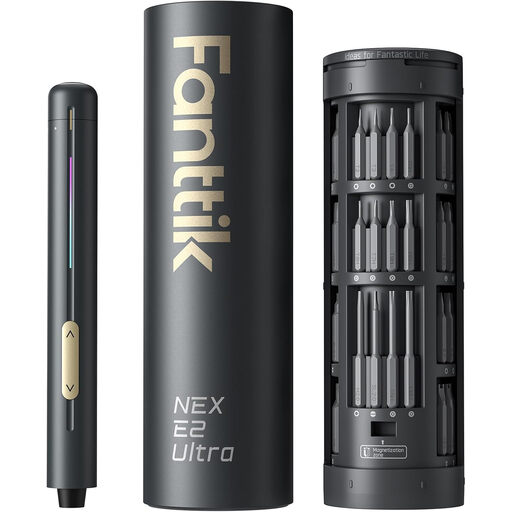
Why this choice suits this profile: Its compact size and graduated settings suit people who regularly maintain phones, cameras, laptops or small appliances.
The five torque settings prevent you from applying the same power to fragile components every time. It remains intended for small repairs.
Claimed torque up to 0.6 N·m, 50 magnetic S2 bits, USB-C charging and magnetic storage.
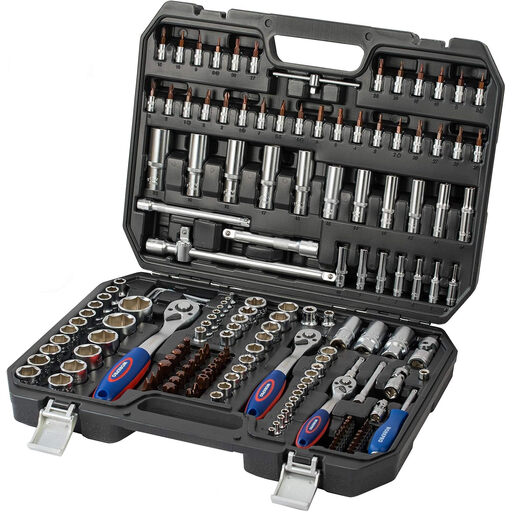
Why this choice suits this profile: This case is aimed at mechanics, automotive repairers and anyone who wants sockets, bits and ratchets all in one box.
Sizes are marked on the sockets and in the case. The three ratchets, extension bars and universal joints cover several drive sizes.
Chrome-vanadium steel, S2 bits, metric sockets, Torx drives and 72-tooth ratchets, according to the product sheet.
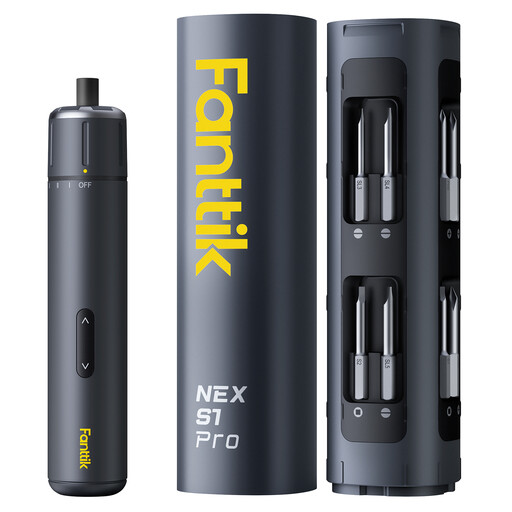
Why this choice suits this profile: Its higher torque is suitable for furniture assembly, certain household tasks and maintenance of casings or desktop computers.
The three torque settings prevent you from always working at maximum power, while the 1/4-inch format makes bit changes easy.
Claimed maximum torque of 6 N·m, 2,000 mAh battery, LED light and 16 S2 bits.
We've put together a comprehensive list, updated in real time, of products that meet these demanding selection criteria and European safety standards.
After each use, wipe the bits with a dry cloth and avoid leaving them in a damp environment. A bit with a rounded or cracked tip, or one that shows excessive play, should be replaced. Store small pieces in their compartment to prevent metal-on-metal impact.
For a rechargeable screwdriver, use the cable and charging method specified by the manufacturer. How often you need to recharge depends on the torque applied, the number of screws and the battery capacity. Regular use at low torque doesn't stress the tool in the same way as repeated high-power tightening.
A set containing small Phillips, flathead, Torx and hex bits will generally be the most suitable. An electric screwdriver with adjustable torque can speed up disassembly, but loosening and final tightening should remain controlled to avoid damaging the screws or chassis.
Yes. They can hold a small screw on the end of the bit and make work in a tight space easier. Their effectiveness depends, however, on the strength of the magnet and the weight of the screw. Always check that the magnetisation won't interfere with the component you're handling.
Lifespan varies according to the material, frequency of use, torque applied and the quality of the screws. With moderate use and proper storage, a bit can remain usable for a long time. For heavy work, check regularly for wear rather than relying solely on the longevity promise printed on the packaging.