
Livraison le jour même ou le lendemain

Qualité garantie

Débloquez vos offres de bienvenue: Livraison GRATUITE | Jusqu'à -80 % | 30 jours d'essai gratuits à JoyPlus
Téléchargez l'application
Is assembling that flat-pack furniture taking forever?? Does swapping a PC component feel like a test of patience with a manual screwdriver?? Rest assured, it's a situation every DIYer knows well. For many household tasks, driving and removing screws by hand can quickly become a chore.
A cordless electric screwdriver is the ideal solution to save time, increase comfort, and improve precision. More compact and agile than a drill/driver, it's the perfect tool for furniture assembly, electronics repair, or small everyday jobs.
This guide is designed to help you cut through the noise of countless options and find the tool that truly meets your needs, without getting lost in marketing jargon.
Before diving into our selection, here are the key points to consider to make the right choice.
Torque, measured in Newton-metres (N.m), is the tool's rotational force. High torque allows you to drive screws into dense materials, but it can also damage fragile screws or surfaces (like PC circuit boards or softwood panels).
The secret?? Opt for a screwdriver with adjustable torque. This is the key to maximum versatility, allowing you to switch from an electric precision screwdriver for electronics to a more robust tool for furniture assembly.
The main appeal of a battery-powered screwdriver is, of course, its freedom of movement. Battery life is indicated by its capacity in milliampere-hours (mAh). A capacity of 1500 to 2000?mAh is a good benchmark, sufficient for most home projects.
Also, be sure to check the charging system. A USB Type-C port has become the most convenient standard, allowing you to recharge your tool with the same cable as your smartphone or tablet.
A good electric screwdriver kit will always come with a wide variety of bits (flathead, Phillips, Torx, etc.) to handle any situation. The quality of their steel (such as S2 steel) is a mark of durability.
Don't overlook ergonomics, which are crucial. A lightweight and compact screwdriver will be much more comfortable to use over long periods, especially for delicate tasks or reaching tight spaces.
Here are a few models that stand out from the crowd for their features and suitability for specific use cases.
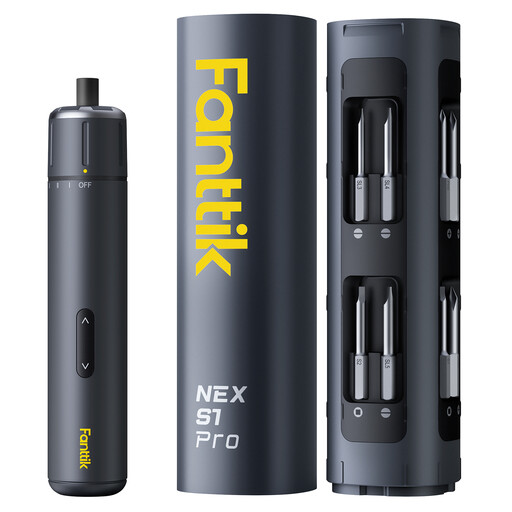
Why it stands out?: The Fanttik S1 Pro boasts a stunning magnetic aluminium alloy case with an exemplary finish. It's all about control, with three precise torque settings, making it an excellent screwdriver for PC building and other sensitive electronics.
Key Features?:
Who is it for?? Ideal for tech enthusiasts, PC builders, and anyone looking for a tool that combines controlled performance with an elegant design for assembling modern furniture.
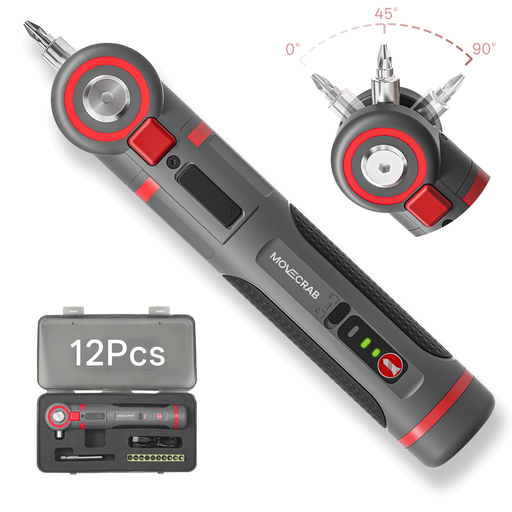
Why it stands out?: Its masterstroke?? A pivoting head that adjusts to 0°, 45°, and 90°. This modularity makes it the ultimate weapon for driving screws in corners and tight spaces where a conventional screwdriver is useless.
Key Features?:
Who is it for?? Perfect for assembling flat-pack furniture, where screws are often awkwardly placed. It's the tool of choice for DIYers who prioritise versatility and the ability to get into tight spaces.
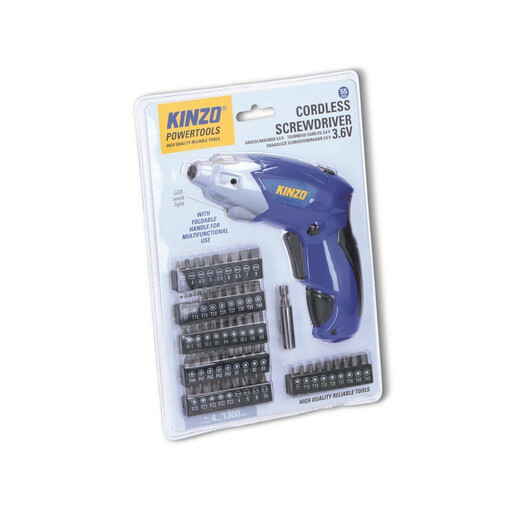
Why it stands out?: What's striking about this Kinzo model is its comprehensive electric screwdriver kit. With 54 bits, it covers nearly every screw you might encounter, including security formats like Torx TR.
Key Features?:
Who is it for?? Recommended for occasional DIYers who want a complete and budget-friendly solution. It's the perfect tool to be prepared for any eventuality without breaking the bank.
Our selection is just a glimpse of what's available. If you have specific requirements or simply want to compare other models, plenty of alternatives exist.
Explore our full category of electric screwdrivers to discover other tools suited for every project and budget.
To put it simply: the electric screwdriver is the tool for precision and delicate assemblies (furniture, electronics), thanks to its compact size and moderate torque. The compact drill/driver plays in a different league: more powerful and heavier, it can also drill and is designed for more demanding jobs (carpentry, fastening into walls, etc.).
Absolutely not! In fact, that's a common mistake. Too much torque can strip the screw head or damage the material you're working on. That's why an adjustable-torque screwdriver is the smartest solution: it allows you to match the force to the task and protect your materials, whether it's a motherboard screw or a furniture fastener.
Yes, and it's actually the ideal tool for it! The only condition: choose an electric precision screwdriver with a very low torque setting (around 1.5?N.m or less) to avoid damaging fragile components on the motherboard or case. The Fanttik S1 Pro, for example, is perfectly suited for this purpose.