
Livraison le jour même ou le lendemain

Qualité garantie

Débloquez vos offres de bienvenue: Livraison GRATUITE | Jusqu'à -80 % | 30 jours d'essai gratuits à JoyPlus
Téléchargez l'application
An electric multicooker can replace several appliances in a small kitchen: a multifunction electric skillet, electric saucepan, steamer, or hot pot. However, some models quickly become frustrating to use, especially when the genuinely usable capacity, cleaning requirements, or temperature control have not been properly assessed.
Before you buy, three potential pitfalls deserve your attention.
For a couple or student, a capacity of 2 L to 3.5 L is generally sufficient for preparing noodles, eggs, vegetables, soup, or a complete meal. For a family of 4 to 6, a 5 L pot provides greater flexibility, especially for hot pot meals or shared dishes.
However, keep in mind that total capacity does not always correspond to the volume that can actually be used. The IAGREEA model, for example, lists a total capacity of 3.5 L but a nominal capacity of 2.5 L. This difference is significant: it leaves enough room to limit splashing and prevent spills.
You should also measure the space available on your countertop. Side handles, the lid, and a detachable power cord can increase the appliance’s overall footprint.
For everyday use, a power rating of 1,000 W to 1,500 W is suitable for most multifunction cooking appliances. Higher power speeds up preheating, but it is only genuinely useful when heat regulation is sufficiently precise.
At a minimum, look for:
An electric slow cooker is designed to distribute gentle heat over an extended period. By contrast, a non-stick electric skillet needs to reach higher temperatures to sear food effectively. These two uses therefore require somewhat different controls.
An interior food-grade PTFE non-stick coating, when clearly stated in the product specifications, simplifies cleaning and helps prevent food from sticking. Ideally, use wooden, silicone, or heat-resistant plastic utensils. You should also avoid cutting food directly in the cooking pot.
For use in France, check compatibility with the 220–240 V electrical network and make sure the appliance comes with sufficiently clear instructions. The heated base must never be immersed in water. Unplug the appliance before moving or cleaning it, then wait until it has cooled down. The glass lid should also be handled carefully after high-temperature cooking: thermal shock could cause it to crack.
The models below address different requirements: limited space, family meals, more precise control, or regular use. The specifications listed are those provided in the available product descriptions.
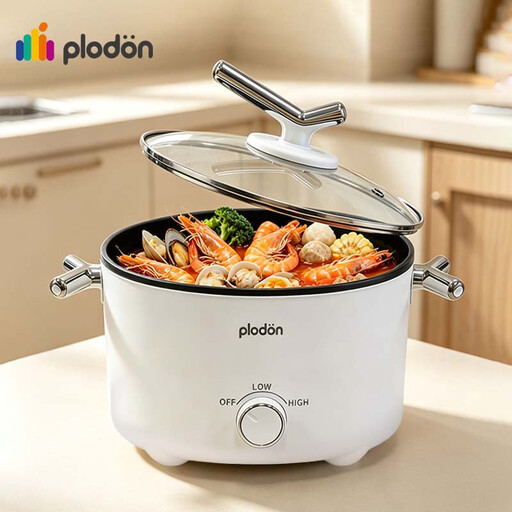
Why this model fits the brief: Its compact format is well suited to students, couples, and smaller kitchens. It delivers 1,000 W, offers two heat settings, and comes with a detachable power cord.
Its smaller capacity reduces the risk of choosing an appliance that is oversized for one person. The manufacturer recommends not exceeding two-thirds of the volume.
Non-stick cooking pot, transparent lid, insulated handles, and overheating protection stated in the description.
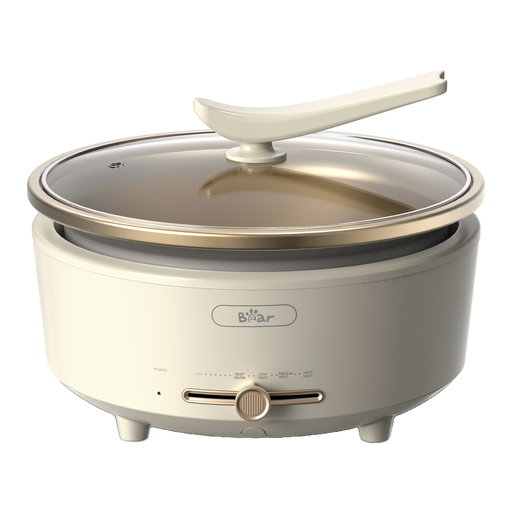
Why this model fits the brief: With its 5 L capacity, it is aimed at families and meals shared with several people. It can simmer, slow-cook, prepare hot pot, and make dishes with sauce.
Progressive power adjustment avoids restricting you to a handful of preset modes. The product description also mentions protection against dry heating.
1,500 W of power, transparent glass lid, non-stick coating, and detachable cord for easier storage.
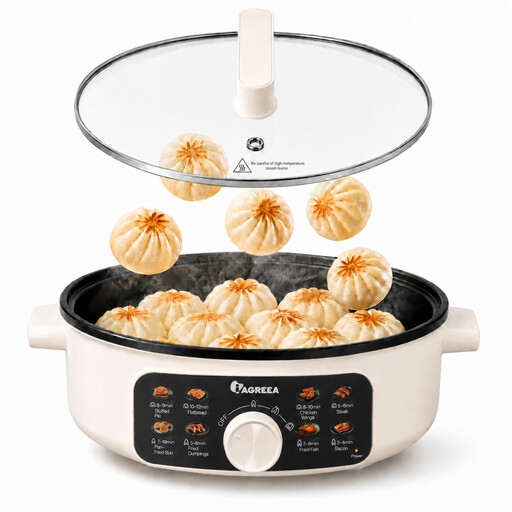
Why this model fits the brief: It combines skillet cooking, steaming, simmering, grilling, and hot pot functionality in a format advertised for 2 to 6 people. Its eight programmes include settings for dumplings, steak, fish, and bacon.
The product sheet distinguishes between the 2.5 L nominal capacity and the 3.5 L total capacity. This clarification helps you adjust portions instead of relying solely on the headline figure.
1,500 W, three heat settings, a 60 mm-deep cooking pot, glass lid, and advertised PTFE non-stick interior coating.
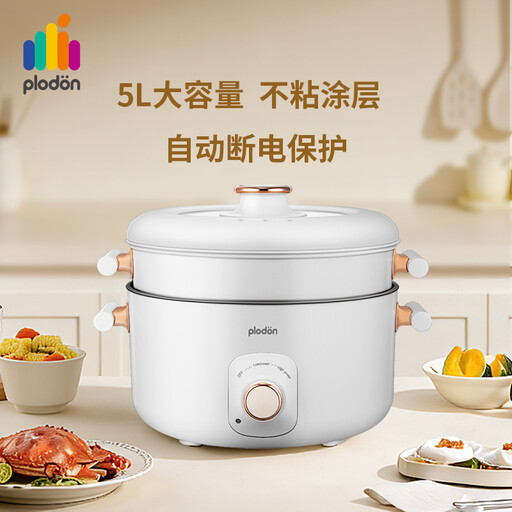
Why this model fits the brief: Its 5 L cooking pot and removable steamer basket suit families who want to cook vegetables, starches, or steamed foods at the same time.
The removable basket provides a genuine steaming function beyond simple boiling. It must be stored separately, so plan for additional cupboard space.
1,200 W, two power settings, steaming, simmering, light frying, and rapid boiling according to the description.
Explore a regularly updated selection of versatile appliances, with specifications to compare based on your cooking habits and the space available in your kitchen.
To keep electricity consumption under control, prepare several portions in a single session and avoid leaving the appliance heating while empty. A 1,500 W model used for 20 minutes theoretically consumes around 0.5 kWh, excluding preheating and temperature-regulation phases. The final cost depends on the electricity rate specified in your contract.
Wait for the cooking pot to cool before cleaning it, then use a soft sponge. If the cord is detachable, remove it before washing. Never immerse the heated base and regularly check the condition of the coating. A pot that is increasingly prone to sticking, a crack, or a damaged cable should prompt you to stop using the appliance immediately.
It can handle some of the functions of a cooktop: boiling, simmering, light searing, steaming, or preparing hot pot. However, it cannot replace a cooktop in every situation, particularly when cooking large quantities or recipes that require highly precise temperatures.
A 5 L pot provides more room for a family meal, but its usable volume remains lower than its total capacity. For six people, consult the manufacturer’s recommendations and avoid filling the pot to the maximum, especially when preparing liquid-based dishes.
Use non-metal utensils, avoid thermal shock, never heat the pot while empty, and clean it without abrasive products. Store the appliance in a dry place and do not place heavy objects on its glass lid.