
Livraison le jour même ou le lendemain

Qualité garantie

Débloquez vos offres de bienvenue: Livraison GRATUITE | Jusqu'à -80 % | 30 jours d'essai gratuits à JoyPlus
Téléchargez l'application
An electric multicooker can replace several appliances in a small kitchen: a rice cooker, slow cooker, electric pressure cooker or steamer. But the spec sheets often list a long string of functions without mentioning the details that really matter day to day.
Before you place your order, keep three pitfalls in mind:
For a single person or a student, a 1 to 2 litre pot is usually enough for noodles, soup, rice or a portion of stew. A 4 litre appliance will suit a household of three or four people better. Models with 5 to 8 litres are more suited to families and batch cooking.
Don't confuse total capacity with the amount you can actually use. When pressure cooking, the level must never go above the "MAX" mark. With foods that swell or foam, the limit may be even lower. The manufacturer's instructions are the reference you should follow.
Measured in watts, power affects how quickly the temperature rises, but it doesn't determine the cooking time on its own. The shape of the pot, heat distribution and the programme you select also play a part.
A simple low/high setting may be enough on a small electric pot. If you like to vary your recipes, choose a model with an adjustable temperature or several power levels. That way you can sear ingredients, simmer a dish or keep food warm with greater precision.
A non-stick pot is easy to clean, but it can't handle metal utensils or abrasive sponges. Stainless steel generally stands up well to repeated use, though there's a greater risk of food sticking if the recipe lacks fat or liquid.
Also check:
With an electric pressure cooker, never try to open the lid until the pressure has fully released. The steam can cause serious burns. Like any heating appliance, the multicooker must never be submerged in water.
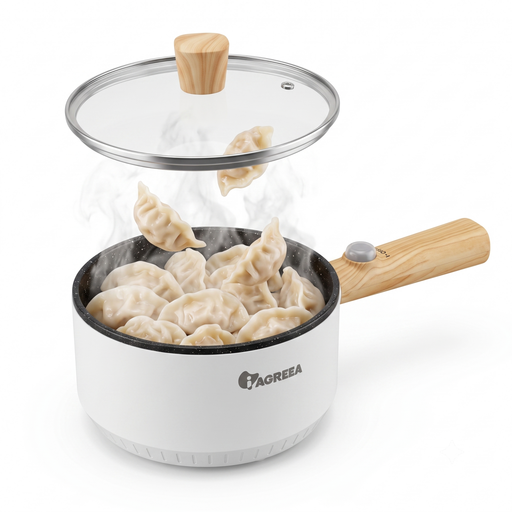
Why this choice suits this profile: With its 1.2 litre pot, this model is ideal for a single person, a student or a small kitchen. It lets you cook noodles, soup, porridge or a portion of vegetables without taking over your worktop.
Its capacity matches single-person use: you're not paying for a large pot that would sit underused. The detachable cord also makes storage simpler.
1,000 W power, two power levels, non-stick coating and overheat protection.
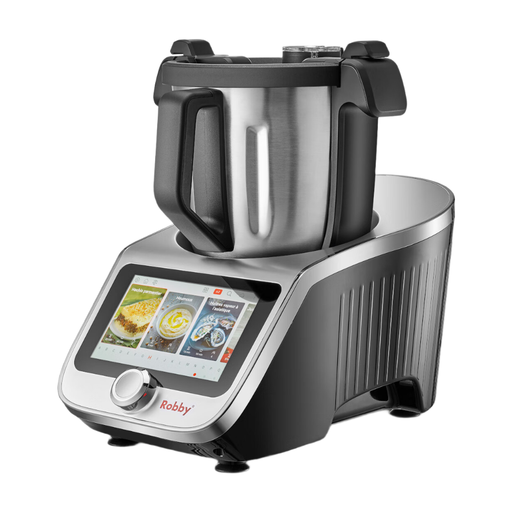
Why this choice suits this profile: This multifunction cooking robot is aimed at households that want to follow guided recipes, knead, chop, weigh and cook with a single appliance.
The spec sheet clearly distinguishes the volumes: total bowl 4.5 litres, usable capacity 3 litres, 7-inch screen and eight automatic programmes.
Built-in scales, adjustable temperature from 37 to 130 °C, built-in recipes, Wi-Fi connectivity and dishwasher-safe accessories.
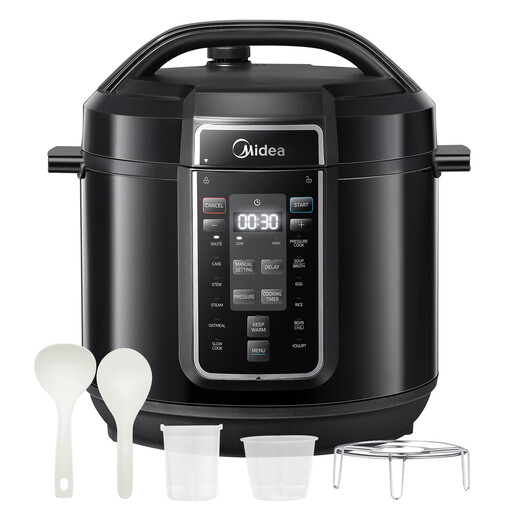
Why this choice suits this profile: With its 8 litre pot and various cooking modes, this appliance is ideal for large quantities, family cooking and batch meal prep.
The instructions clearly state the fill limits and the steam release guidelines. These must be followed carefully when pressure cooking.
Nine functions, twelve preset menus, delayed start up to 24 hours and keep-warm function for up to 12 hours.
We've selected a full, regularly updated range of products that meet these exacting criteria, while also taking European safety regulations into account.
It's best to stay nearby, especially during steaming, frying or pressure release. Never block the steam vent. Before moving or cleaning the appliance, unplug it and wait until it has cooled down sufficiently.
It depends on how often you use it, how well you look after it and the condition of the coating. Check the pot, seal, lid and valve regularly. A scratched non-stick pot or a worn seal should be replaced in line with the manufacturer's recommendations.
The consumption varies depending on the power, the cooking time and the programme you select. A quick cook on high power may use more electricity in the moment, whereas a slow-cook mode runs for longer but at a lower power. To compare two appliances, look at their wattage, the average recipe times and the quantities you usually prepare.