
Livraison le jour même ou le lendemain

Qualité garantie

Débloquez vos offres de bienvenue: Livraison GRATUITE | Jusqu'à -80 % | 30 jours d'essai gratuits à JoyPlus
Téléchargez l'application
Preparing your own ground meat for juicy burgers, rich lasagnas, or homemade sausages is the secret to flavourful cooking. A good electric meat grinder can be a game-changer, but the market is a jungle of models with often-exaggerated claims. How can you tell a reliable appliance from a gadget that will just gather dust in the back of a cupboard?
As a product expert at Joybuy, my mission is to help you see things more clearly. Let's cut through the marketing jargon and get straight to the point: here are the pitfalls to avoid and the real criteria for making the right choice.
On paper, many appliances seem perfect. In practice, it's often a different story. Here are the 3 deal-breakers that can turn a good buy into a hassle.
To invest in an appliance that will last, focus on these key technical points.
Rather than focusing on the maximum number, look for the nominal power, which is typically between 300 and 800W for effective home use. A copper motor is a sign of durability and better heat management compared to aluminum motors. A "reverse" function is also a real plus: it allows you to easily clear blockages of meat without having to take everything apart.
Be uncompromising on the quality of materials. For parts that come into contact with food, prioritise:
A good grinder is much more than just a machine for making hamburger patties. Check the included accessories to assess its versatility. The most useful are:
Every kitchen has different needs. Here are a few recommended options, each suited to a specific user profile.
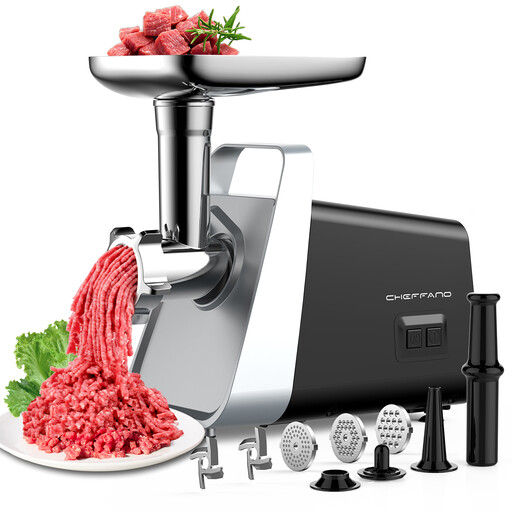
Why it stands out: Designed for those who are serious about charcuterie, this model focuses entirely on grinding and stuffing performance. Perfect for making sausages, merguez, or kibbeh in batches.
Its dedicated accessories (sausage stuffer, kibbeh kit) are robust and genuinely functional. A far cry from the useless gadgets that end up at the bottom of a drawer.
Its powerful copper motor and 3 stainless steel grinding plates allow you to achieve the perfect texture, from the finest to the coarsest grind.

Why it stands out: This is the Swiss Army knife for families looking for a do-it-all appliance. Its large bowl and two speeds allow you to grind meat, but also prepare purées, sauces, and other vegetable-based dishes.
No more plastic that scratches and retains odours! Its large 2-litre thick glass bowl is hygienic, durable, and easy to clean.
Its large capacity and stacked 304 stainless steel blades ensure a perfectly uniform chop, even when the bowl is full.
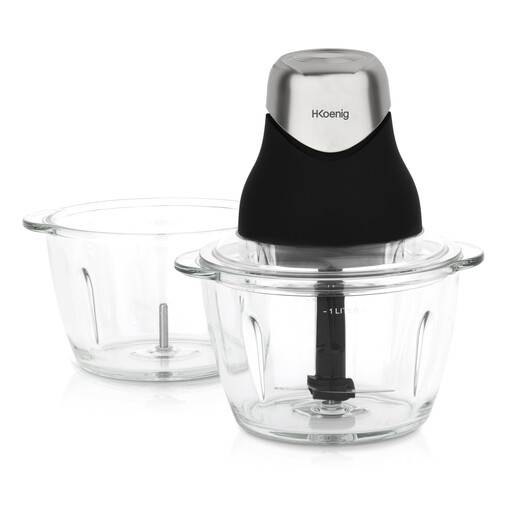
Why it stands out: Perfect for small kitchens or meals for one or two. It chops garlic, onions, herbs, or just the right amount of meat for one or two people in seconds.
No over-the-top marketing promises: its 320W power is perfectly calibrated for its 500ml bowl. The result: formidable efficiency for small quantities.
It comes with two graduated glass bowls. A real time-saver that means you don't have to clean everything between each ingredient.
Explore our full selection of grinders that meet our quality charter and European safety standards.
For regular home use (grinding a few kilos of meat per month), a nominal power between 300 and 700W is more than sufficient. This power allows you to process most meats (beef, pork, poultry) without straining the motor. Models advertising over 1000W often indicate a peak power, which is unnecessary for non-professional use.
It depends on the materials. Stainless steel parts and glass bowls are generally dishwasher-safe. However, die-cast aluminum parts should never be put in the dishwasher, as harsh detergents can cause them to oxidise and turn black. When in doubt, always consult the manufacturer's manual. The motor body itself should never be submerged in water.
Yes, many models are multifunctional choppers. "Food processor" style grinders with a bowl can easily mix vegetables, nuts, herbs, or prepare purées. Traditional grinders with an auger can also grind firm vegetables (carrots, celery) or even fish, provided they are cut into suitably sized pieces.