
Livraison le jour même ou le lendemain

Qualité garantie

Débloquez vos offres de bienvenue: Livraison GRATUITE | Jusqu'à -80 % | 30 jours d'essai gratuits à JoyPlus
Téléchargez l'application
Making homemade burgers, meatballs, sausages or kibbeh is so much easier with an electric meat grinder. But with all the power ratings on the spec sheet, the endless list of accessories and the promises of versatility, it’s easy to get confused. To avoid disappointment, focus on build quality, real-world performance and how easy it is to clean.
The wattage shown on the box can be a peak value or a so-called ‘locked’ power rating, which doesn’t necessarily reflect how the appliance performs during continuous use. A model advertised at 1,300 or 2,000 W won’t automatically handle every quantity you throw at it.
For home use, look instead at:
A meat grinder that comes with three grinding plates, a sausage filler and a kibbeh attachment can look incredibly versatile. But only if those extras actually match the way you cook. Fine, medium and coarse plates let you adjust the texture, but they also mean more cleaning and more storage space.
If you mostly chop vegetables, herbs or small quantities, a compact food chopper may be all you need. For more varied preparations, a multifunction chopper, a food processor or a blender with a chopping attachment could be a better fit.
Meat residue can get trapped in the auger, the plate or the feed tube. Before you order, check that the parts come apart easily, that they are dishwasher-safe and that the motor block can be wiped clean without ever being submerged.
The blades are sharp: always unplug the appliance before disassembling it and use only the pusher supplied. Fingers and makeshift utensils have no place inside the feed tube.
Think about power in relation to how often you’ll use the grinder. For the occasional weekend batch of burgers or meatballs, a compact domestic model will usually do the job. For larger quantities or regular sausage-making, go for a sturdier build, a generously sized tray and a reverse or pulse control.
The term professional electric meat grinder sometimes pops up in search results, but it doesn’t necessarily mean the appliance is designed for commercial use. Check the manual, the maximum permitted capacity and the warranty terms before you decide.
Stainless steel plates are valued for their resistance to corrosion and their neutral effect on food. Pay most attention to the hole diameter: a fine plate gives a smoother texture, while a coarse plate keeps more of the meat’s grain.
For a sausage maker or an integrated sausage filler, check the diameter of the nozzles and how they attach. A kibbeh kit can be fun for trying new recipes, but it won’t replace a proper grinding plate for everyday mincing.
A large tray and a bulky motor can quickly take over your worktop, especially in a typical British kitchen where every centimetre counts. Measure the space you have, including the height needed to fit and remove the accessories.
On the other hand, a small bowl of 500 ml to 1.5 l is better for occasional jobs: vegetables, sauces, baby food or small portions.
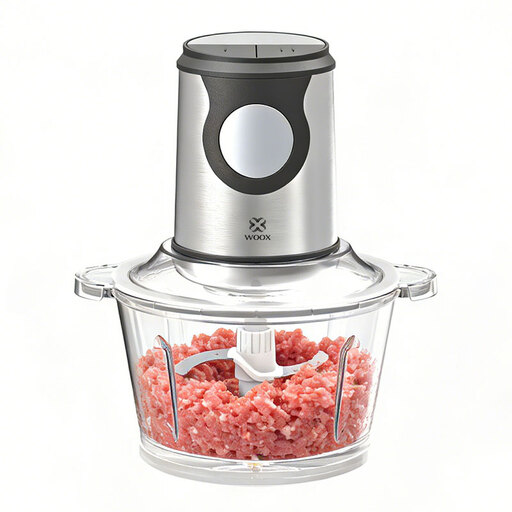
Why this suits this profile: Its 1.5 l glass bowl and stainless steel blades are ideal for family-sized portions of meat, fruit and vegetables, without needing a bulky appliance.
Its compact size saves worktop space and stops you paying for a whole set of sausage-making accessories that you won’t use for occasional mincing.
1.5 l glass bowl, stainless steel blades and a chopping function suitable for different foods.
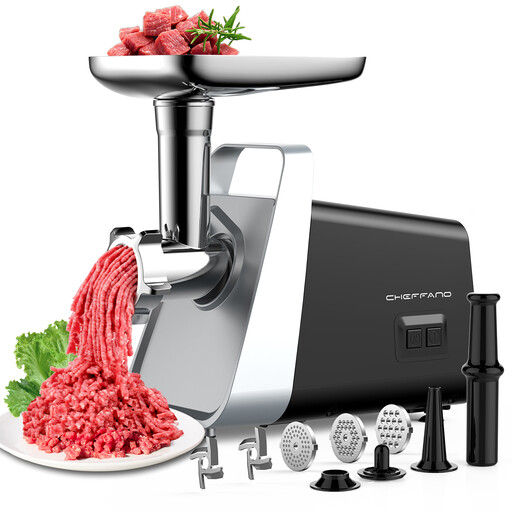
Why this suits this profile: If you regularly make burgers, stuffings, sausages or kibbeh, you get three plates, two blades and dedicated accessories.
The on/off/pulse controls and the different plates let you adjust the result, rather than being stuck with a single texture.
Motor rated at 2,000 W, three plates, two blades, sausage tube and kibbeh attachment.
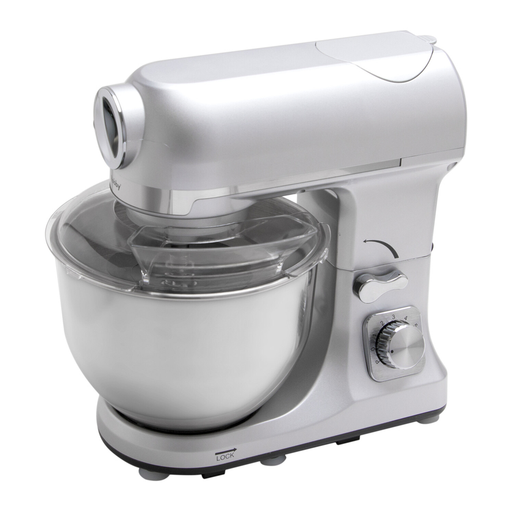
Why this suits this profile: This stand mixer with a meat grinder attachment is for households that want to knead, whisk, blend and prepare meat with a single appliance.
The advertised functions are backed by clearly identified accessories: three metal plates, a sausage tube and a 1.5 l glass blender.
5 l stainless steel bowl, six speeds with pulse, planetary mixing action and accessories for making fresh pasta.
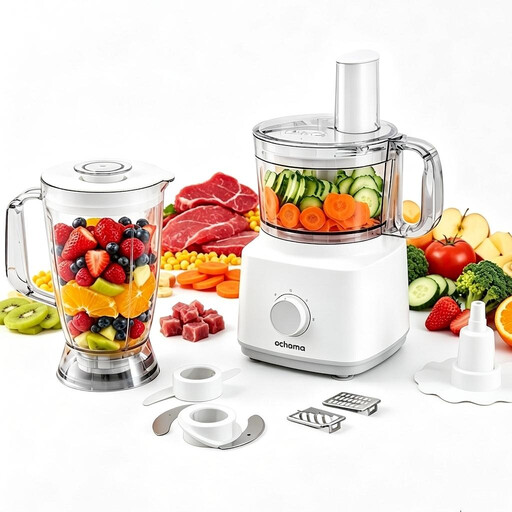
Why this suits this profile: It’s ideal for households that switch between mincing meat, chopping vegetables, grating, slicing and making sauces.
Its detachable parts and 1.8 l capacity make it easy to move from one task to the next without cluttering your kitchen with multiple gadgets.
Blender, grinder, vegetable chopper, grater and slicer functions all in one appliance rated at 750 W.
We’ve put together a full, real-time selection of products that meet these strict criteria and European safety standards.
Cut the meat into pieces that fit the diameter of the feed tube, then remove any bones, very tough parts and excess cartilage. Work in short bursts rather than letting the motor run continuously. If it jams, switch the appliance off and use the reverse function only if the manual allows it.
After each use, take apart the parts that come into contact with food, rinse them quickly and dry them thoroughly. Clean the motor block with a damp cloth. Also check the manufacturer’s recommendations for the dishwasher: some metal parts need to be washed by hand.
For a few batches a week, the advertised wattage shouldn’t be your only consideration. A reverse function, sturdy parts, good stability and the right capacity are just as important. If you plan to mince large quantities, check the limits stated in the manual.
Yes, some models come with a bowl and blades suited to vegetables, fruit, sauces and purées. Just stick to the list of permitted foods, avoid anything too hard and clean the appliance thoroughly between uses.
The consumption depends on the motor’s power and how long you use it. An appliance that runs for only a few minutes per batch will have a minimal impact on your energy bill. To keep consumption even lower, prepare your ingredients in advance, avoid long cycles and choose a model that’s genuinely suited to the quantities you usually prepare.