
Livraison le jour même ou le lendemain

Qualité garantie

Débloquez vos offres de bienvenue: Livraison GRATUITE | Jusqu'à -80 % | 30 jours d'essai gratuits à JoyPlus
Téléchargez l'application
There's nothing like a glass of freshly squeezed orange or lemon juice to start the day off right. However, choosing the right citrus juicer can quickly become a real headache. Faced with an avalanche of models, it's easy to fall for marketing ploys and end up with a disappointing appliance. Our mission: to help you see things more clearly and identify the criteria that truly matter for a device you'll enjoy using every day.
Before you dive in, let's debunk the false promises that flood the market. Focusing on the right criteria will prevent you from relegating your new appliance to the back of a cupboard after just two uses.
electric citrus juicer, this is a classic mistake. Efficiency depends far more on the engineering of the cone and the rotation mechanism than on the watts displayed on the label. A well-designed 20 to 60-watt appliance will extract just as much juice, if not more, than a poorly optimised 100-watt model, while often being much quieter.easy-to-clean citrus juicer should be disassembled in seconds and have dishwasher-safe parts.To avoid making a mistake, focus on three technical features that make a real difference.
The heart of the machine is its extraction system. Here are the points to watch for:
automatic citrus juicer should also be able to tackle grapefruits. Having two cones of different sizes ensures a perfect fit for all citrus fruits, from small limes to large oranges.The quality of the materials has a direct impact on the lifespan and hygiene of your appliance.
stainless steel juicer: Stainless steel is the preferred material for parts that come into contact with the juice (spout, filter, body). It is resistant to the acidity of citrus fruits, does not retain odours, and offers foolproof durability.For hassle-free daily use, practical details make all the difference.
There's an ideal citrus juicer for every user. Here is a selection designed for different profiles, based on the performance and practicality criteria we've just detailed.
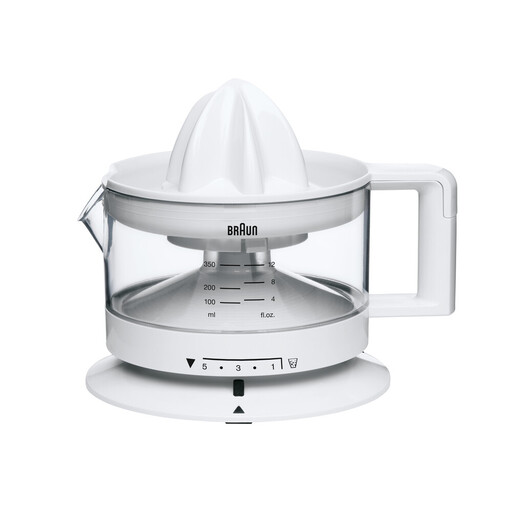
Why it's a good fit: Ideal for those seeking simplicity and reliability. It gets straight to the point with smart, no-frills features like pulp control and an automatic start. Perfect for a fresh morning juice without any fuss.
It doesn't rely on high wattage (20W), but on an efficient design with bi-directional rotation. Its few parts are very easy to remove and clean, delivering on the promise of simple maintenance.
Adjustable pulp control directly on the pitcher and alternating rotation for optimised yield.
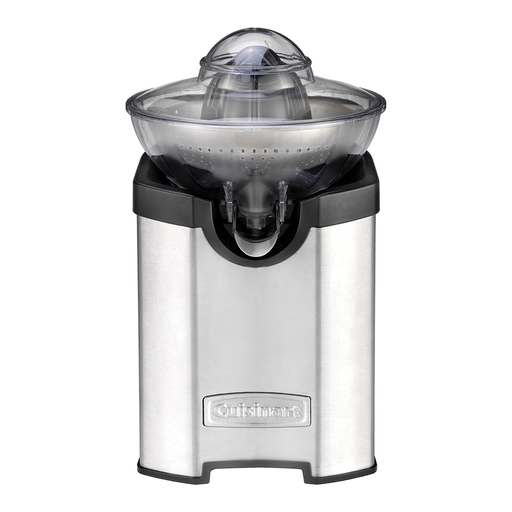
Why it's a good fit: Designed for efficiency, its "Quick Press" lid allows for fast, effortless juicing—a major asset for busy mornings. Its robust design and stainless steel filter are built for heavy use.
It solves the cleaning problem with simple removable parts and a durable stainless steel filter. Its design is focused on speed of execution, not just raw power.
"Quick Press" lid for rapid extraction and an effective anti-drip system for clean serving.
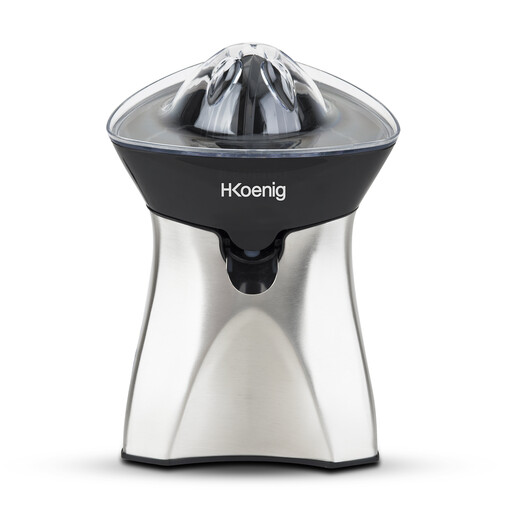
Why it's a good fit: For those who appreciate beautiful objects and longevity. Its full stainless steel body gives it an elegant look and foolproof durability. This is an appliance made to last and to be seen.
It sidesteps the trap of low-quality materials with its widespread use of stainless steel. This design ensures it won't stain and will stand the test of time, justifying a long-term investment.
Stainless steel body for superior durability and hygiene, and two interchangeable cones to fit all citrus fruits.
Our editorial team has tested and compiled a complete selection of products that meet our strict selection criteria and European safety standards.
A power rating between 20 to 60 watts is more than sufficient for home use. The efficiency of an orange juice extractor depends less on raw power and more on the engineering of the cone, its speed, and its direction of rotation. A well-designed model in this power range will offer excellent yield without being an energy hog.
For a quick clean-up, rinse the removable parts (cone, filter, reservoir) under warm water immediately after use to prevent pulp from drying. Most recent models feature dishwasher-safe components, which greatly simplifies maintenance. The motor block itself should never be submerged; a simple wipe with a damp cloth is all it needs.
Absolutely, and for several key reasons. A stainless steel juicer is more durable because it better resists impacts and the acidity of fruits. It is also more hygienic: stainless steel is a non-porous surface that prevents bacterial growth and does not retain odours or stains. Although it may sometimes have a higher initial cost, it is a wise investment for anyone looking for a reliable, long-term appliance.