Start by thinking about the ingredients you’ll actually use: choose a citrus juicer for citrus fruit, a centrifugal juicer if speed is your priority for everyday fruit and veg, or a slow juicer if you want to try a wider range of recipes. If you already own a food processor, check that a compatible attachment can extract the juice you want. Ease of cleaning, noise and each model’s limitations matter more than general claims about vitamins.
Which option suits each use?
For fans of a variety of fruit and vegetable juices
You want to switch between fruit, vegetables, herbs and ginger. A slow juicer is worth considering for this variety, according to UFC-Que Choisir. However, check which ingredients the exact model accepts and what attachments it comes with, particularly for nuts and seeds.
For those who want to make juice quickly
You mainly use everyday fruit and veg and want to minimise chopping. A centrifugal juicer with a wide feed chute may suit this priority; however, UFC-Que Choisir notes that this type of appliance is generally noisy.
For households that mainly juice citrus fruit
If you only make drinks with oranges, lemons and grapefruit, a citrus juicer means you won’t be paying for a multi-purpose appliance with functions you won’t use. It isn’t designed for making apple or carrot juice.
What sets these appliances apart?
When comparing juicers for home use, start with the ingredients they can handle, then consider how much time preparing and cleaning will take in your routine.
Citrus juicer
Choose this if: you mainly make juice from oranges, lemons or other citrus fruit.
Limitation: this dedicated appliance can’t process other fruit and vegetables.
Centrifugal juicer
Choose this if: you want to juice compatible fruit and vegetables quickly.
Bear in mind: UFC-Que Choisir describes this type of appliance as generally noisy.
Slow juicer
Choose this if: you want to explore recipes that also include vegetables or herbs, subject to the model’s instructions.
Bear in mind: juicing takes longer, and cleaning may involve several steps.
Food processor with a juicing attachment
Consider this if: you already own a food processor and can find a compatible attachment designed for juicing.
Limitation: the ingredients it can handle and the results depend on the food processor and attachment; blending doesn’t necessarily extract juice.
| What to consider |
What to check |
What matters to shoppers |
| Range of ingredients |
Check the list of permitted ingredients, and whether you need particular filters or attachments for herbs, fibrous ingredients and nuts or seeds. |
If I want to make more than the usual fruit juices, I need to know what the appliance can really handle. Around 33% of consumers would prioritise this versatility. |
| Everyday cleaning |
Check how the filter and containers come apart, and which parts are specifically listed as dishwasher-safe. |
If I make juice often, I want to be able to clean the parts after each use without disrupting my routine. This ease of cleaning would come first for around 27% of consumers. |
| Preparation speed |
Check the size of the feed chute and the model’s instructions on chopping and continuous use. |
When I’m short on time, I’d rather make juice from everyday fruit and veg quickly, even if the appliance is noisier. Speed would be the main priority for around 20% of consumers. |
| Citrus juice only |
Check which sizes of citrus fruit the appliance accepts, which cones are included and how much storage space it needs. |
If I only juice citrus fruit, I don’t need functions designed for other ingredients. Around 20% of consumers would prioritise this simplicity. |
Mistakes to avoid
-
Choosing a slow juicer based solely on claims about vitamins
In laboratory analyses published in 2017, UFC-Que Choisir found no significant difference in vitamin and antioxidant levels between the tested juices made with slow juicers and centrifugal juicers. So this result doesn’t help you choose between these appliances for your recipes.
Instead, decide based on the ingredients you plan to use, the noise level and how much cleaning you’re prepared to do.
-
Assuming a wide feed chute means the appliance can handle anything
A wide opening may mean less chopping for some foods, but it doesn’t tell you whether the model can handle hard stones, herbs or nuts and seeds.
Check the instructions for each ingredient you plan to use and follow the preparation guidance.
-
Underestimating the cleaning needed after each use
You may need to take apart the filter, pulp container and other parts. UFC-Que Choisir includes taking apart, emptying and cleaning the appliance in its assessment of how easy it is to use.
Check the steps in the instructions and identify exactly which parts are dishwasher-safe.
Remember to allow time for the parts to dry after taking them apart.
-
Buying a multi-purpose appliance when you only juice oranges
A citrus juicer suits a routine centred on citrus fruit. The extra functions of a slow or centrifugal juicer are only useful if you’ll use them in your recipes.
Make a list of the drinks you actually prepare before choosing between a dedicated appliance and a more versatile model.
Brands worth comparing
Magimix
The Juice Expert range combines several functions, depending on the model, for those who want to make different types of drinks with one appliance.
- Magimix says the Juice Expert 3 comes with a juice filter, a citrus press and the Extra Press attachment.
- Check which attachments come with the version you’re considering and its cleaning instructions. The Juice Expert 3’s features don’t automatically apply to the whole range.
Moulinex
The brand offers citrus juicers, centrifugal juicers and slow juicers; the specific model determines which functions are available.
- Moulinex lists a 75 mm feed chute and two speeds for the Easy Fruit JU585G31 centrifugal juicer.
- Cleaning features and permitted ingredients vary by model, so check its instructions rather than assuming they’re the same across the brand.
Philips
The Viva and Avance centrifugal juicer ranges include models with different sizes and features.
- Philips lists a 1.5 L capacity for the Viva HR1832/00 and 2 L for the Avance HR1921/20; these figures apply to those specific models.
- Before comparing how much space a model will take up in your kitchen and how easy it is to clean, check the accessories and cleaning instructions for the model you’ve chosen.
Kuvings
The range includes vertical slow juicers and attachments for different types of preparation.
- Kuvings lists an 82 mm feed opening for its juicers; check the dimensions and attachments for the model you’re considering.
- A wide feed opening alone doesn’t tell you which ingredients a model can handle or how easy it is to clean.
Appliances for your recipes
These appliances suit three different needs: making a variety of juices with a slow juicer, quickly preparing fruit and vegetable juices with a centrifugal juicer, or juicing citrus fruit only. Compare the instructions and cleaning requirements for the model that suits your recipes.
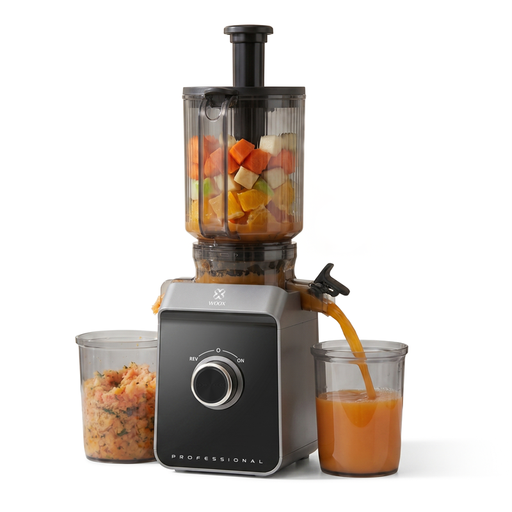 Image unavailable
WOOX MX0289 Filter Free Pro, 150 W slow juicer
Worth considering if you want to make a variety of fruit and vegetable juices with a wide-opening slow juicer.
The product name lists a power rating of 150 W. For celery and parsley, the instructions say to cut ingredients into 3 to 4 cm pieces. Continuous use is limited to 10 minutes, followed by a 20-minute rest.
Before choosing this appliance for ease of cleaning, check the washing instructions for its parts in the model’s manual.
View on Joybuy
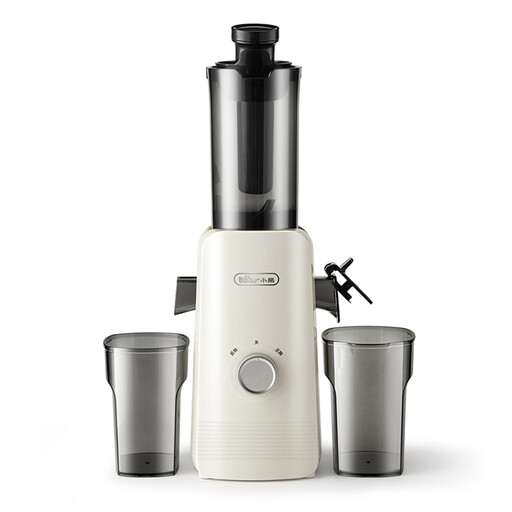 Image unavailable
Bear YZJ-F01D6, 80 mm slow juicer, 1 L
For everyday fruit and vegetable juices, its 80 mm opening may mean less chopping if the ingredients fit.
The product name lists a 1 L capacity. Larger foods need to be cut up and fed in gradually; continuous use is limited to 15 minutes.
If you plan to use herbs or nuts and seeds, check the model’s instructions for compatibility and any attachments required.
View on Joybuy
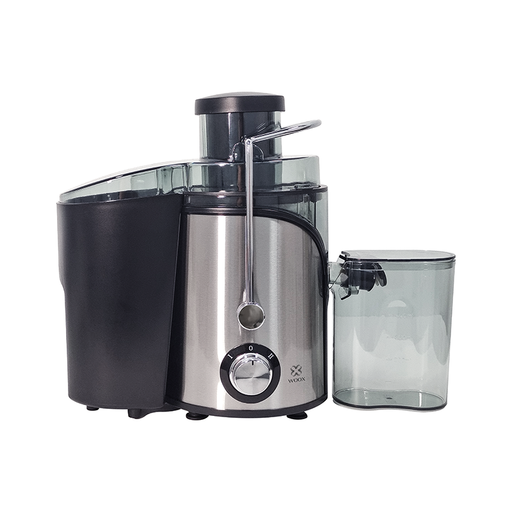 Image unavailable
WOOX, black 600 W centrifugal juicer with a 3-inch feed chute
For quickly making juice from everyday fruit and vegetables when speed is your priority.
The product name lists a power rating of 600 W and a 3-inch feed chute. The instructions limit continuous use to 2 minutes, followed by at least 2 minutes to cool down before using it again.
A wide feed chute doesn’t mean you can skip the ingredient preparation instructions; check the cleaning steps in the manual too.
View on Joybuy
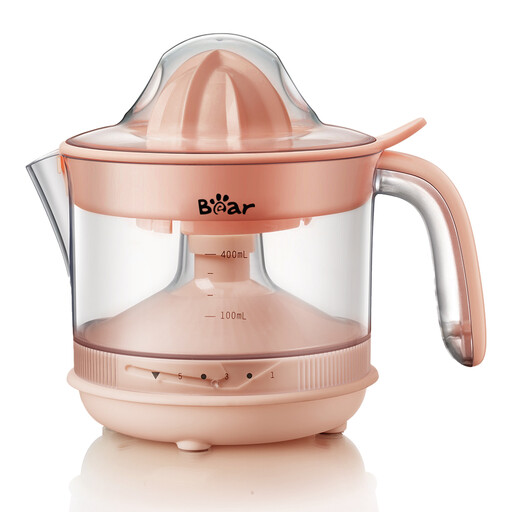 Image unavailable
Bear CZJ-A04B1 electric citrus juicer
For a routine centred on oranges, lemons and other citrus fruit, without the need to make vegetable juice.
The product details list a power rating of 30 W and a capacity of 400 ml. Before choosing this model, check which container this capacity refers to and what the five advertised settings control.
View on Joybuy
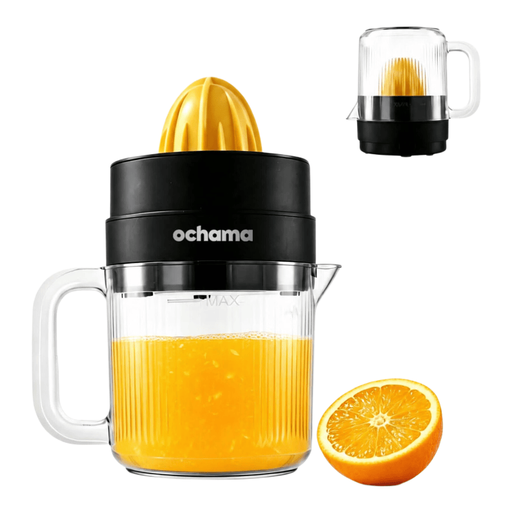 Image unavailable
ochama, 30 W electric citrus juicer
For juicing citrus fruit at home with a dedicated appliance rather than a multi-purpose slow juicer.
The product name lists a power rating of 30 W and pulp separation. Before deciding how much you can make in one go, check the capacity of the exact model’s container.
View on Joybuy
Frequently asked questions
Does a slow juicer preserve more vitamins than a centrifugal juicer?
Laboratory analyses published by UFC-Que Choisir in 2017 found no significant difference in vitamin and antioxidant levels between the juices tested using these two types of appliance. When choosing one, focus instead on the ingredients it can handle and the practicalities of using it.
Which appliance should I choose for herbs, celery or almonds?
A slow juicer is worth considering if you want to use a wider range of ingredients: UFC-Que Choisir describes this type of appliance as suitable for a wide variety of juices. However, check the exact model’s instructions for celery and herbs, and which attachments you need for almond-based preparations. Slow juicers don’t all have the same functions.
How can I find a juicer that’s easier to clean?
Check how the filter comes apart, how to empty the pulp container and which parts the manual says are dishwasher-safe. UFC-Que Choisir includes dismantling and cleaning in its assessment process; a feature described as convenient doesn’t replace reading the instructions for your particular model.
Who should I contact if an appliance bought in France breaks down or doesn’t match its description?
If you bought goods from a trader in France as a private individual, contact the seller to find out whether the statutory guarantee of conformity applies. The DGCCRF explains that this compulsory guarantee covers new, second-hand and refurbished goods. Keep your proof of purchase and the product description.


