
Livraison le jour même ou le lendemain

Qualité garantie

Débloquez vos offres de bienvenue: Livraison GRATUITE | Jusqu'à -80 % | 30 jours d'essai gratuits à JoyPlus
Téléchargez l'application
Whether you're a student, an artist, or a creative hobbyist, the right drawing pen can elevate your work… or turn it into a real headache. Bleeding ink, a tip that frays after a few scribbles, disappointing colour… we’ve all been there. The market is flooded with tempting promises, but let's be clear: not all pens are created equal. Before you fill your basket, it's essential to learn how to see through the marketing traps and invest in a tool that will truly go the distance.
As a product expert for Joybuy, I'm here to separate fact from fiction for you. Here are the red flags to watch out for and the criteria that really matter when choosing the perfect pen for your projects.
Attractive packaging is nice. High performance is better. Here are three common disappointments and, more importantly, how to avoid them.
To make sure you never go wrong again, focus on these three technical characteristics. They define the quality and purpose of a pen.
The shape of the tip determines the line's appearance. There's a perfect tip for every task:
The ink is the soul of the pen. There are two main types:
To lighten your pencil case without sacrificing creativity, the dual-tip marker is a fantastic solution. It often combines a fine tip with a brush or chisel tip, allowing you to switch from precise writing to highlighting or drawing in the blink of an eye. A real space-saver and efficiency booster.
Rather than a simple list, here are our targeted recommendations by user profile, based on the objective criteria we've just covered.
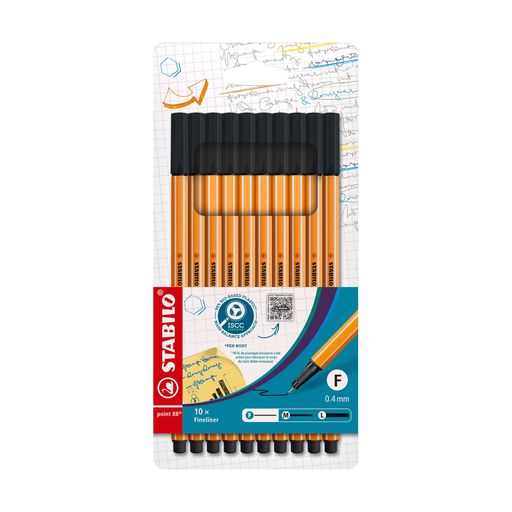
Why we chose it: The gold standard for students and *bullet journal* enthusiasts. Its 0.4 mm fine tip is perfect for structuring notes, creating clear study guides, or annotating documents with precision.
Its tip is metal-encased, which protects it from wear and breakage, even when using a ruler. The water-based ink is formulated to not bleed through standard weight paper (80-90g/m?).
Proven reliability and durability. Its barrel is made from 96% bio-based plastic, a strong point for eco-consciousness.
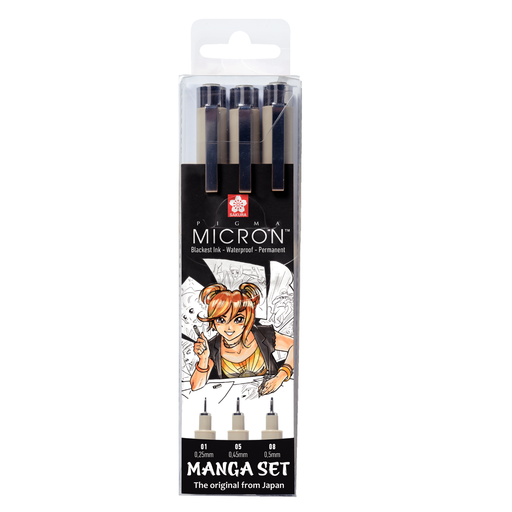
Why we chose it: The essential tool for manga artists, illustrators, and architects. This set brings together the essential tip sizes for inking, from the finest details to the boldest outlines.
Its pigment-based Pigma ink is archival quality: it doesn't bleed through paper (even thin paper), doesn't smear with water (ideal for mixed media), and resists fading. The tips are designed for professional, intensive use.
Professional-grade, permanent, and fade-resistant ink. The set of multiple sizes offers maximum versatility for varying line work.
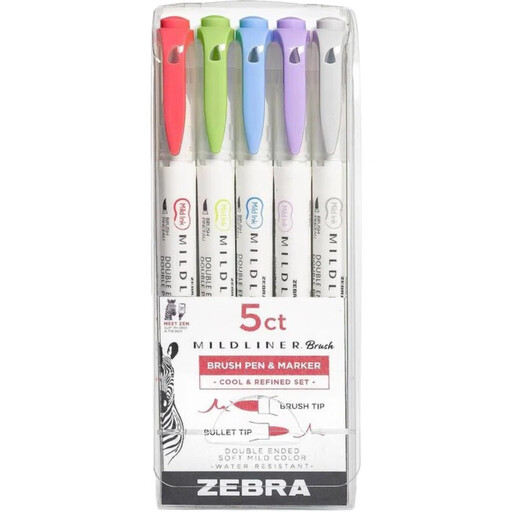
Why we chose it: Ideal for those who want both a highlighter and a fine pen. Its dual tip (one chisel and one fine) offers incredible versatility for journaling, lettering, or simply adding a soft touch of colour to your notes.
Its colours are intentionally soft and pastel, a far cry from sometimes aggressive "fluorescent" shades. The water-based ink doesn't bleed and ensures a smooth finish, perfect for layering colours without damaging the paper.
The dual tip (chisel and fine) makes it an ultra-practical 2-in-1 tool. Its unique palette of soft colours is highly sought-after for creating a calming visual effect.
We've put together a complete selection of pens and markers that meet our quality standards and the expectations of creative minds.
The golden rule: always recap your pens tightly after each use until you hear that satisfying "click". For optimal storage, keep your pens horizontally. This allows the ink to distribute evenly and keep the tip continuously saturated.
Water-based ink is perfect for everyday use (writing, colouring) because it's odourless and generally doesn't bleed through good quality paper. Pigment-based ink, on the other hand, contains fine, solid colour particles. Once dry, it becomes permanent, water-resistant, and light-resistant. This is what makes it essential for artworks, archival documents, or technical drawings.
Yes, but it's the result of a good combination of three things: the quality of the pen (its ink), the quality of the paper (its weight and texture), and how you use it (the pressure you apply). A quality water-based pen on paper that is at least 90 g/m? is already a great combination. For a near-absolute guarantee, pigment-based ink on paper designed for drawing or manga remains the go-to solution.