
Livraison le jour même ou le lendemain

Qualité garantie

Débloquez vos offres de bienvenue: Livraison GRATUITE | Jusqu'à -80 % | 30 jours d'essai gratuits à JoyPlus
Téléchargez l'application
Whether you're a hand lettering enthusiast, an adult colouring fan, or an illustrator looking for new tools, choosing a brush pen can quickly become overwhelming. With a multitude of inks, tips, and brands available, it's hard to know where to start. This guide is here to walk you through the key criteria and present our top picks, helping you find the brush pen set that will bring your creative projects to life.
Before diving into our selection, let's review the features that set one brush pen apart from another. Here are the key points to consider to make the right choice.
Ink doesn't just determine the colour; it also influences how your pen performs on paper and other surfaces.
watercolour brush pen mimics the look of traditional watercolours. The ink can be reworked with a wet brush, even after it has dried. It's the top choice for illustration, bullet journaling, and fine art.calligraphy pen is often preferred for archival-quality work.acrylic marker combines the opacity and coverage of acrylic paint with the simplicity of a pen. It can be used on a multitude of surfaces (paper, wood, metal, canvas, glass) and is perfect for arts and crafts or for adding finishing touches to both light and dark materials.The tip is the soul of a brush pen. Its flexibility directly impacts the variation in your strokes.
hand lettering and modern calligraphy.line art marker work.We've selected a few gems for you, each suited for specific creative uses.
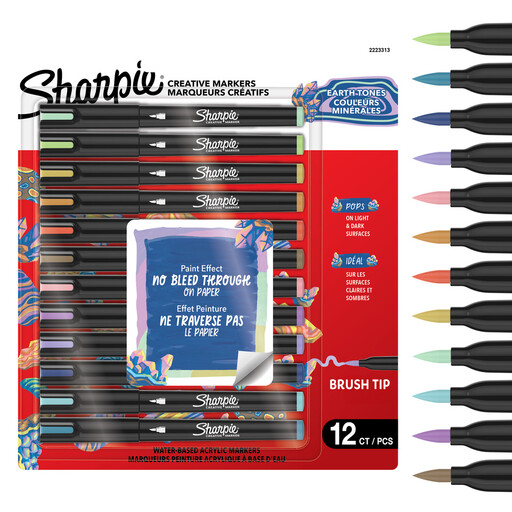
Why we love it: This set delivers all the richness of opaque acrylic paint in a ready-to-use marker format. Its water-based ink requires no priming and provides a smooth, opaque finish on a wide variety of surfaces.
Pros:
Who is it for? Ideal for arts and crafts enthusiasts, artists working on various media, and adult colouring fans, especially for those popular mystery colouring books with black backgrounds.
See the Sharpie Acrylic Marker Set
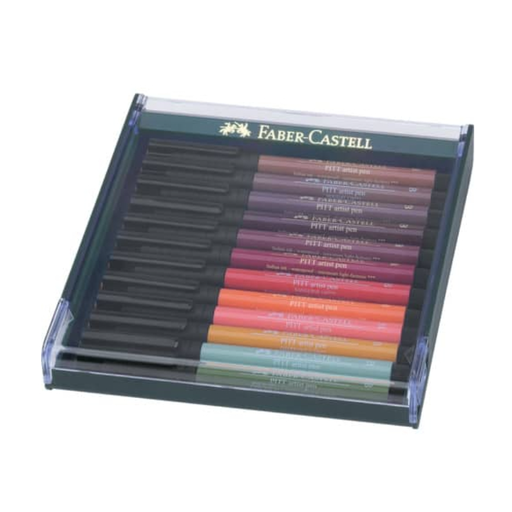
Why we love it: Faber-Castell's Pitt Artist Pens are a true staple among professional artists. They feature high-quality pigmented India ink, ensuring outstanding lightfastness and water resistance once dry.
Pros:
Who is it for? Perfect for illustrators, comic artists, calligraphers, and any artist looking for a reliable, archival-quality drawing marker.
See the Faber-Castell Pitt Artist Pen Set
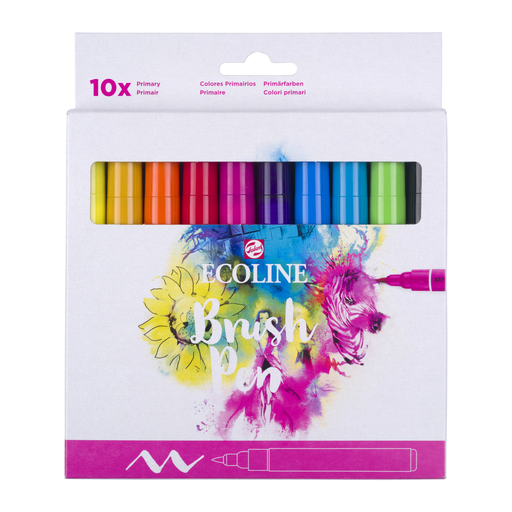
Why we love it: This brush pen set brings the brilliance and fluidity of Ecoline liquid watercolours into an ultra-convenient pen format. The dye-based ink delivers transparent, luminous colours, perfect for blends and gradients.
Pros:
hand lettering, watercolour-style drawing, and on-the-go sketching.Who is it for? Recommended for watercolourists, colourful calligraphy enthusiasts, and illustrators who love to play with the transparency and fluidity of a watercolour brush pen.
Every creative project is unique. If you haven't found your perfect match in our selection, know that a much wider range of pens and markers awaits you. Feel free to explore other tip types, colour palettes, and ink formulations to find the tool that will bring your ideas to life.
Discover Our Entire Collection of Brush Pens
1. What is the difference between a brush pen and a regular marker? The main difference lies in the tip! A regular marker has a rigid tip (fine, medium, or chisel) that produces a line of consistent thickness. In contrast, a brush pen has a long, tapered, and flexible tip that mimics a real paintbrush. It allows you to create lines of varying thickness simply by adjusting the pressure and angle.
2. How do I prevent my brush pens from drying out? To extend the life of your pens, the first rule is to always cap them tightly after each use. Most manufacturers also recommend storing them horizontally. This allows the ink to distribute evenly, preventing the tip from drying out or, conversely, becoming oversaturated.
3. Can you use a brush pen for calligraphy? Yes, and it's one of its most popular uses! The brush pen is the tool of choice for modern calligraphy and hand lettering. Its flexible tip is perfect for creating the thick downstrokes and thin upstrokes that define this art form. For beginners, a calligraphy pen with a slightly firmer tip will make it easier to get the hang of and control your strokes.