Anyone serving an afternoon snack without a machine
If you want to make an individual cup of filter coffee without a dedicated appliance, Terres de Café’s Coffee Drip Bag is designed for this brewing method. It is not a pyramid bag.


To serve decaf coffee with an afternoon snack, choose based on the equipment you have rather than the word ‘bag’ alone. An individual filter bag can be prepared without a machine, an ESE soft pod requires a compatible machine, and instant coffee is made directly in the cup. These formats are not pyramid bags. Also check for the ‘decaffeinated’ label and the preparation instructions. If a pod is described as compostable, check which disposal route is specified.
If you want to make an individual cup of filter coffee without a dedicated appliance, Terres de Café’s Coffee Drip Bag is designed for this brewing method. It is not a pyramid bag.
A pre-portioned soft pod could be a good choice if your machine accepts the ESE standard. Carte Noire offers its Décaféiné N°5 in this format, for use with a compatible machine.
Instant coffee lets you choose how much powder to use when serving. NESCAFÉ and Auchan give different preparation instructions depending on the product, so check the instructions for your chosen coffee before making it for your afternoon snack.
For an afternoon snack, first distinguish between the three preparation methods. They require different equipment and offer different levels of control over the amount you use.
Choose this if: you want to make a cup of filter coffee without a machine. Terres de Café offers a decaf Coffee Drip Bag.
Bear in mind: the filter bag hangs over the cup and should not be confused with a pyramid bag.
Choose this if: you have an ESE-compatible machine and prefer your coffee to be pre-portioned.
Bear in mind: the pod cannot be brewed directly in a cup. You’ll need a compatible machine to use it.
Choose this if: you want to make your coffee in the cup and adjust the amount of powder to suit different preferences.
Bear in mind: this is neither a brew-in-the-cup bag nor filter coffee.
| What to consider | What to check | Who is it for? |
|---|---|---|
| Format and equipment | Check the stated preparation method. For a soft pod, make sure your machine accepts the ESE standard. | I want to be able to make a cup using the equipment I already have, without accidentally buying a pod designed for a machine. Around 33% of consumers rank this compatibility as their top priority. |
| ‘Decaffeinated’ label | Check the product name and category. ‘Decaffeinated’ does not mean completely caffeine-free. | If I’m looking to limit my caffeine intake with an afternoon snack, I need to understand what the label on the product means. This is a priority for around 25% of consumers. |
| Amount per cup | Read the product-specific instructions for the amount of coffee and water to use. A pre-portioned serving and instant coffee powder cannot be adjusted in the same way. | I want to be able to change the amount of coffee to suit the person I’m serving. Around 25% of consumers prioritise this flexibility when preparing their coffee. |
| Packaging and waste | If a pod is described as compostable, check the type of composting it is suitable for and your local collection guidance. | For individual portions, I want to know what to do with the packaging and pods after my afternoon snack. Around 17% of consumers prioritise what happens to the product at the end of its life. |
In France, the DGCCRF sets a limit of 0.1 g of caffeine per 100 g of decaffeinated coffee. For coffee extracts covered by the decree of 26 October 2001, Légifrance states that the ‘decaffeinated’ label requires an anhydrous caffeine content of no more than 0.3% of the dry matter derived from coffee. These two figures apply to different product categories, so they cannot be used to work out the caffeine content of a particular cup.
Terres de Café’s Coffee Drip Bag can be prepared without a machine, while Carte Noire’s ESE soft pod requires a compatible machine. Neither format is a pyramid bag.
Before choosing a flavour, read the preparation instructions. If the product is a pod, check that it is ESE-compatible.
The DGCCRF and the decree on coffee extracts published by Légifrance set limits on residual caffeine for products labelled ‘decaffeinated’; they do not require the complete absence of caffeine.
Check the coffee category and label. If you need to follow a strict individual restriction, don’t infer the caffeine content of a cup from the word ‘decaffeinated’ alone.
Carte Noire states that its Décaféiné N°5 soft pod is intended for industrial composting and should not be put in home compost, the garden or the natural environment.
Check the instructions for the product you’ve bought and your local authority’s guidance before choosing a disposal method.
The brand offers Coffee Drip Bags, including a decaf option, for making an individual cup of filter coffee.
Its Décaféiné N°5 is available in ESE soft pods, each containing 7 g of ground coffee.
NESCAFÉ offers Spécial Filtre Décaféiné instant coffee, which you can make directly in a cup.
The retailer offers decaf instant coffee in a 100 g jar, with an advertised intensity of 6/10 for this product.
These two options are made in a cup: one is decaf coffee in a jar, while the other is decaf café au lait in sticks. If you’re looking for coffee to brew in a pyramid bag or individual filter bag, neither format meets that requirement.
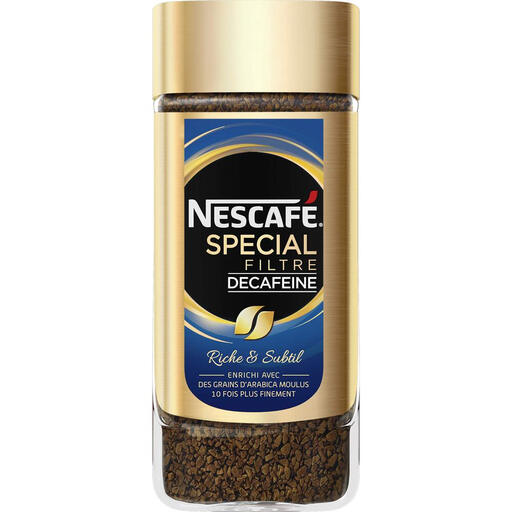 Image unavailable
A decaf option to make in the cup if you prefer to measure out the powder yourself. It comes in a 100 g jar; it is not a pyramid bag.
‘Decaffeinated’ does not mean completely caffeine-free.
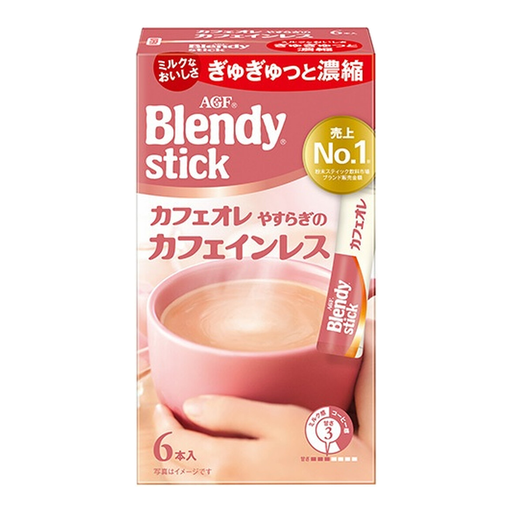 Image unavailable
Decaf café au lait in individual portions, made in a cup rather than brewed as filter coffee. The pack contains 6 sticks.
This drink contains powdered cream, sugar and sweeteners, among other ingredients. If you have a milk allergy or intolerance, check the full labelling before buying: the information about dairy ingredients and allergens is contradictory.
No: ‘decaffeinated’ does not mean ‘caffeine-free’. The DGCCRF sets a limit of 0.1 g per 100 g of decaffeinated coffee. For coffee extracts covered by the decree of 26 October 2001, Légifrance gives a limit of 0.3% anhydrous caffeine in the dry matter derived from coffee. These limits do not tell you the caffeine content of a specific cup.
No. Carte Noire’s Décaféiné N°5 soft pod is designed for an ESE-compatible machine. If you don’t have one, choose a format with instructions for preparing it without an appliance.
Follow the instructions for your chosen product, then adjust the amount to taste. For its Spécial Filtre Décaféiné, NESCAFÉ recommends one teaspoon per 100 ml of hot water. For its decaf instant coffee, Auchan recommends one to two teaspoons per cup.
Not necessarily. Carte Noire says its Décaféiné N°5 soft pods are intended for industrial composting and should not go in home compost or the garden. Check the instructions for the product you’ve bought and the collection options offered by your local authority.