When choosing decaf coffee for an older person, start with their caffeine tolerance, taste preferences and the equipment they already use: ground coffee for a suitable coffee maker, instant coffee for a cup, or coffee pads or capsules for a compatible machine. Decaf can still be part of the enjoyment of drinking coffee, but it does not meet nutritional needs associated with ageing. Anses also notes that the effects of caffeine vary depending on factors including a person’s health and certain medicines.
Who is this choice for?
People mindful of their caffeine tolerance
Those who want to keep up their coffee habit while reducing their caffeine intake. If they have symptoms, a medical condition or are taking medication, the right amount will depend on the individual. Anses notes that caffeine’s effects vary according to these factors.
Family members and carers who prepare the coffee
They’re looking for a format that fits into everyday routines and works with the equipment available: instant coffee for a cup, ground coffee for a coffee maker, or pads for a compatible machine. Handling hot water is another consideration.
People who enjoy a daily cup of coffee
They compare the type of beans, the stated intensity and the preparation method to find a cup they enjoy, without treating coffee as a source of nutritional support.
What should you look for?
First, check whether the aim is to reduce caffeine. Then choose a flavour the person enjoys and a format they can realistically prepare. For an older person, these coffee-related considerations are no substitute for looking at their diet as a whole.
| Consideration |
What to check |
Who it matters to |
| Reducing caffeine |
Look for the word “decaf” and, if needed, check the product information for details of any caffeine remaining. Ask for advice if there are relevant symptoms or medication. |
If I react to caffeine, I want to keep the coffee ritual without assuming decaf is completely caffeine-free. Around 42% of consumers are said to put this consideration at the top of their list. |
| Taste and blend |
Check the type of beans, the coffee format and the stated intensity, which indicates the flavour profile rather than the amount of caffeine remaining. |
For a cup I’ll enjoy regularly, I look for a familiar flavour profile before choosing a large pack. This is said to be the main priority for around 33% of consumers. |
| Preparation and format |
Check the equipment available, whether the coffee pads or capsules are compatible, and what the preparation involves, particularly when handling hot water. |
If I’m making coffee for someone else, I want a format that works with the machine they already have and suits what they can manage. Around 25% of consumers are said to prioritise ease of preparation. |
Things not to confuse
-
Assuming “decaf” means “caffeine-free”
A small amount of caffeine may remain. Anses says its effects can vary depending on a person’s health and certain medicines, so it’s worth paying particular attention if they experience symptoms.
Choose decaf to reduce caffeine, but don’t assume it contains none at all. If the person has a medical condition, is taking medication or has relevant symptoms, ask a healthcare professional or pharmacist what level of consumption is suitable.
-
Taking intensity to mean caffeine content
Auchan and Carrefour list intensity ratings of 5 and 7 respectively for some ground coffee products. These flavour ratings don’t tell you how much caffeine remains or whether the coffee offers any nutritional benefit.
Use the intensity rating to guide your choice of flavour, then check the “decaf” label and information for the specific product separately.
-
Relying on coffee to meet nutritional needs
The French High Council for Public Health highlights the importance of preventing malnutrition and sarcopenia in older people. An enjoyable cup of coffee is no substitute for eating enough or getting support when eating becomes difficult.
Keep decaf as an enjoyable drink. Weight loss, reduced appetite or difficulty eating call for medical or dietary advice, rather than simply changing coffee.
-
Buying coffee pads without checking the machine
Instant coffee, ground coffee, pads and capsules all need to be prepared differently. A format that looks convenient may not be practical if it doesn’t work with the machine or is difficult to handle.
Check the machine system and preparation method, and consider whether the person may need help handling hot water.
Depending on the format, you may also need a suitable machine or filters.
Brands to compare
These examples showcase different formats and stated flavour profiles. Choose a specific product to suit the taste you’re looking for and the equipment available, rather than assuming a brand offers nutritional benefits.
Carte Noire
Carrefour describes Carte Noire decaf ground coffee as 100% Arabica, with a stated intensity of 7, in a 2 × 250 g pack.
- Worth considering if the person uses ground coffee and enjoys a more pronounced stated intensity.
- The intensity rating doesn’t indicate how much caffeine remains or whether the product is nutritionally suitable.
NESCAFÉ
NESCAFÉ describes Spécial Filtre Décaféiné as an instant coffee made with Arabica and Robusta beans and decaffeinated using water.
- For this product, the brand recommends preparing a cup with one teaspoon per 100 ml of hot water.
- This preparation involves handling hot water and may not recreate the ritual of making filter coffee.
Jacobs Douwe Egberts Professional
The professional range includes Senseo Decaf, made with Arabica and Robusta in soft coffee pads, particularly for shared settings.
- The listed pack of 10 × 40 coffee pads may suit an organisation that uses this system.
- A compatible machine is required, and this pack has different practical considerations from a small pack for home use.
Carrefour
Carrefour’s Extra brand includes 100% Arabica decaf ground coffee in a 250 g pack.
- This gives you a small-pack option to consider if you’re looking for ground coffee.
- The type of beans alone isn’t enough to predict whether the person will enjoy the taste.
E.Leclerc / Eco+
E.Leclerc offers Eco+ decaf ground coffee in a 250 g pack.
- Worth comparing with other decaf ground coffees if the person already uses a suitable coffee maker.
- Ground coffee isn’t a direct substitute for instant coffee, a coffee pad or a capsule in everyday preparation.
Auchan
Auchan offers 100% Arabica decaf ground coffees with a stated intensity of 5. One Bio product is labelled “decaffeinated without solvents”.
- Information about the beans, intensity and decaffeination process can help you compare products to suit the person’s preferences.
- The “without solvents” claim on the Bio product doesn’t, by itself, demonstrate a medical or nutritional advantage.
Decaf coffee available on Joybuy
These products include an option for making coffee in a cup and several types of coffee pads or capsules. To choose between them, start with the equipment the person already uses and check that the format is compatible.
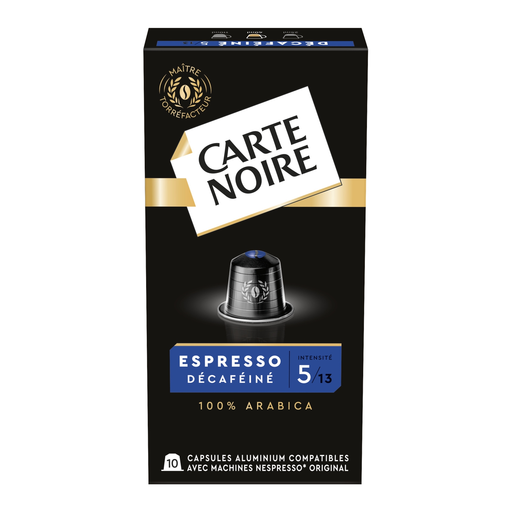 Image unavailable
Carte Noire Espresso decaf no. 5, 10 aluminium capsules
Worth considering if the person already uses a machine that’s compatible with the capsules specified for this product.
Decaf espresso; box of 10 aluminium capsules. Check the exact machine system before buying.
View on Joybuy
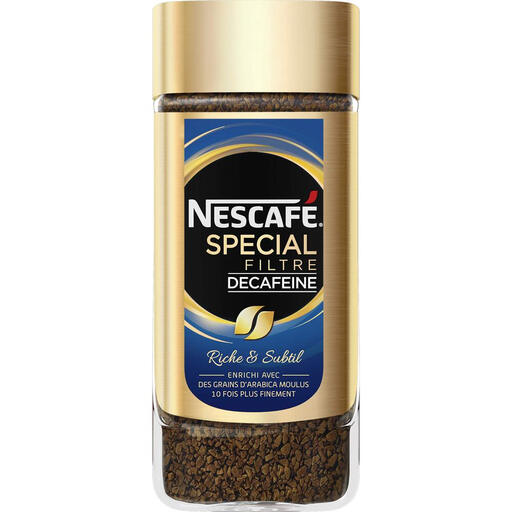 Image unavailable
NESCAFÉ Filter Coffee decaf, 100 g
Instant coffee is suitable for making in a cup if the person can handle hot water, either independently or with help.
Decaf coffee in a 100 g pack.
View on Joybuy
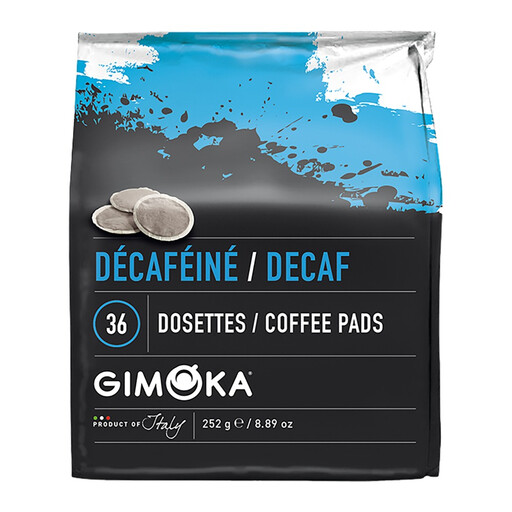 Image unavailable
GIMOKA decaf, Senseo-compatible, 36 coffee pads, 252 g
Worth considering if a compatible Senseo machine is already part of the person’s coffee-making routine.
Decaf coffee pads; 36 pads, 252 g. Check compatibility with the machine model being used.
View on Joybuy
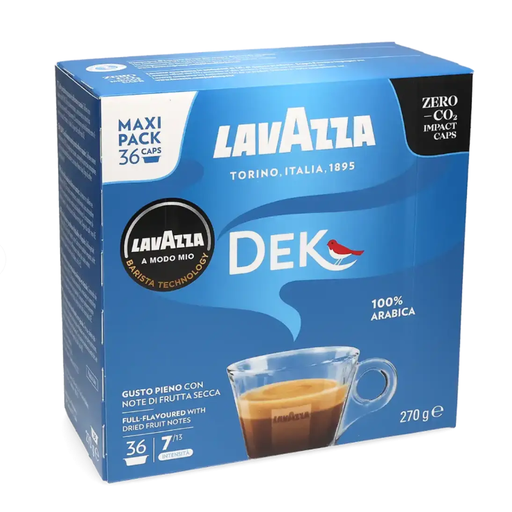 Image unavailable
Lavazza A Modo Mio Decaf, 36 capsules
Choose this capsule option only if the machine being used is compatible with the A Modo Mio system.
Decaf coffee; pack of 36 capsules.
View on Joybuy
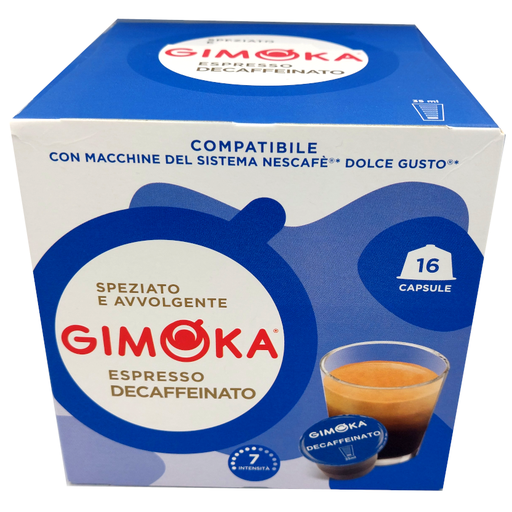 Image unavailable
GIMOKA Espresso decaf, Dolce Gusto-compatible, 16 capsules, 112 g
This format is for someone who already makes coffee with a compatible Dolce Gusto machine.
Decaf espresso; 16 capsules, 112 g. Check compatibility with the machine before buying.
View on Joybuy
Frequently asked questions
Does decaf coffee contain no caffeine at all?
No, a small amount may remain. NESCAFÉ says its stated process greatly reduces caffeine, but that doesn’t mean you can assume all decaf products are completely caffeine-free. Anyone who is particularly sensitive should bear this in mind when choosing.
Can decaf help prevent malnutrition in an older person?
No, decaf is no substitute for a sufficient diet or appropriate support. The French High Council for Public Health highlights the importance of preventing malnutrition and sarcopenia in older people. Coffee can still be an enjoyable part of the day, but it shouldn’t be treated as a solution to these needs.
Which format takes the least preparation?
Instant coffee can be made straight in a cup, provided the person can handle hot water safely. Ground coffee needs a suitable coffee maker and filter, while coffee pads and capsules need a compatible machine.
Should older people prioritise coffee labelled “without solvents”?
Not on the assumption that it offers a medical or nutritional benefit. This label appears on an Auchan Bio product and may suit someone who has a preference about the decaffeination process. Check that the label appears on the specific product you’re considering.


