Households looking for an easy way to make coffee
A capsule or pod machine saves you from measuring and tamping coffee for every cup. Before choosing, check which format the model accepts and whether it works with the consumables you want to buy.


If you make coffee at home regularly, start by considering how much preparation you’re happy to do and what kind of coffee you want to use: capsules or pods mean less preparation, a portafilter lets you use ground coffee, while a grinder lets you start with whole beans. Check the consumable format before choosing a single-serve machine. A portafilter or grinder will need more maintenance. UFC-Que Choisir also notes that the cost per cup and noise can influence your choice of grinder, depending on how often you use it and the model.
How often you drink coffee matters, but so does how much time you’re willing to spend preparing and maintaining your machine.
A capsule or pod machine saves you from measuring and tamping coffee for every cup. Before choosing, check which format the model accepts and whether it works with the consumables you want to buy.
A bean-to-cup machine is worth comparing with single-serve machines if you’re happy to spend time cleaning and descaling it. UFC-Que Choisir notes that coffee made from beans may cost less per cup, although that isn’t the only factor a household should consider.
A portafilter machine is a good fit if you’re happy to measure the coffee and clean the parts you use. E.S.E. pods are another option, but only if the manual for the specific model confirms they’re compatible, as it does for the De'Longhi Dedica Style EC685.W EX:4.
Start by comparing your coffee-making routine and the type of coffee you want to use. Then consider the tasks you’ll repeat for every cup and the maintenance involved.
| Consideration | What to check | Think about your needs |
|---|---|---|
| Running costs | Compare the cost of the coffees you actually make and how often you use the machine with the cost of buying and maintaining it. UFC-Que Choisir notes that a grinder may offer a lower cost per cup than single-serve portions. | We make several coffees regularly, so the long-term cost of consumables matters just as much as the price of the machine. |
| Ease of use and space | Consider how many steps are involved, whether you can make one or two cups, and the exact dimensions of the machine. Senseo says the Original+ makes one or two cups; Nespresso describes the Vertuo Pop as compact. | In the morning, I want to make coffee without measuring or tamping, while still leaving enough room on the worktop. |
| Compatibility | Check the exact name of the capsules or pods the machine accepts, and make sure they match the products you plan to buy. For a portafilter, check separately whether it works with ground coffee and E.S.E. pods. | I already have a type of coffee or pod in mind, so the version I choose needs to be genuinely compatible with it. |
| Maintenance and noise | Read the manual to find out what cleaning and descaling are required. If noise matters, look for comparable measurements for the model: UFC-Que Choisir assesses the noise level and vibrations of the machines it tests. | If someone sleeps or works near the kitchen, I want to check how noisy the grinder is before choosing a bean-to-cup machine. |
| Packaging and recycling | Check what packaging comes with single-serve coffee. In France, ADEME advises putting aluminium or plastic capsules in the recycling collection for paper and packaging. Options for paper capsules depend on the local collection or composting facilities available. | I prefer to consider the packaging used for every coffee and make sure I can follow the right recycling guidance at home. |
Vertuo and Nespresso Original capsules are not interchangeable. If you go by the brand name alone, you could end up buying capsules that won’t work with your machine.
Make a note of the system specified for the exact model, then check the products you usually buy and what they’ll cost for your coffee consumption.
A bean-to-cup machine needs regular rinsing, cleaning and descaling, even if it has automatic functions. Parts that come into contact with milk also need cleaning.
Check the manual to see which parts can be removed and what needs to be cleaned after the drinks you make most often.
The noise from grinding may matter if the kitchen is near a bedroom or workspace. UFC-Que Choisir measures noise and assesses vibration as part of its espresso machine testing process.
If this is a deal-breaker for you, look for comparable noise measurements for the model you’re considering, or try it before you buy.
The fact that some portafilter machines work with E.S.E. pods doesn’t mean they also accept soft pods or capsules.
Check the manual for the exact model and version instead of relying on the word ‘pod’ alone.
These examples highlight the differences between types of coffee machine. The features mentioned apply to the named models, not necessarily to every product from each brand.
The Vertuo Pop is presented as a compact capsule machine that’s simple to use.
The Original+ is an example of an everyday machine that uses soft pods and can make one or two cups.
The Dedica Style EC685.W EX:4 is an example of a portafilter machine for anyone who wants a more hands-on approach to making coffee.
The EP2220/10 is an example of an automatic bean-to-cup machine for households that want to adjust the grind and maintain the machine regularly.
These models represent three ways to make your everyday coffee: with beans, Senseo pods or Nespresso capsules. Compare their coffee systems and the maintenance involved before choosing a model.
 Image unavailable
For making coffee from whole beans regularly with an automatic machine. This model, reference EP2230/10, has a built-in grinder and the LatteGo system. Remember to clean the parts used for milk-based drinks.
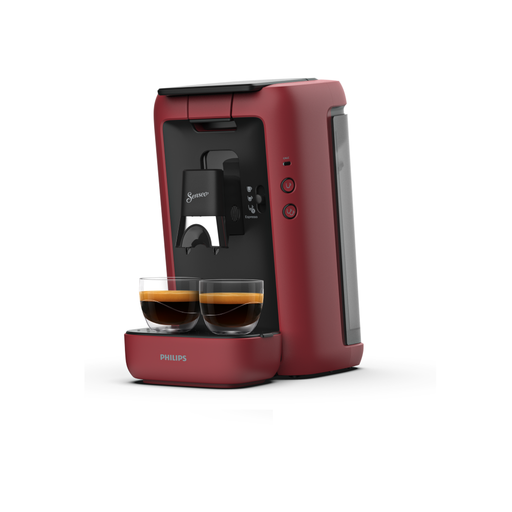 Image unavailable
For a coffee routine using soft pods, with no grinding or tamping. Check which pods are compatible with the CSA260/91 and include descaling in your machine’s maintenance routine.
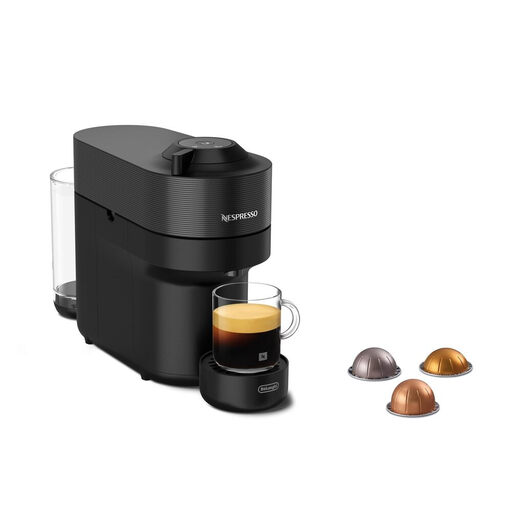 Image unavailable
For making coffee with capsules and minimal effort. Nespresso says the Vertuo Pop offers five cup sizes. This model uses the Vertuo system, not Nespresso Original capsules.
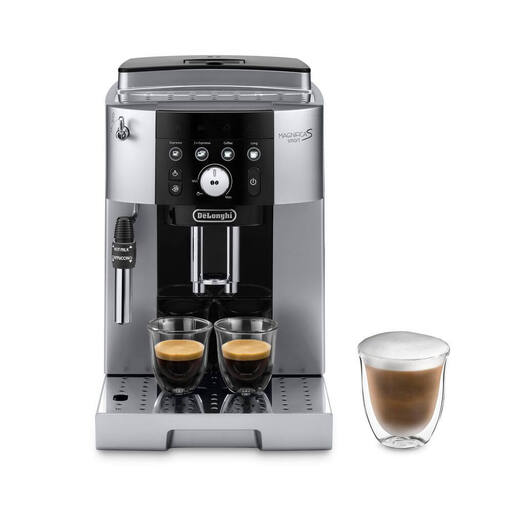 Image unavailable
For households that want to make coffee from whole beans using an automatic machine. It has a built-in grinder, so allow time for regular maintenance. If a quiet kitchen matters to you, check how noisy the model is while grinding.
 Image unavailable
For making coffee with capsules rather than measuring out ground coffee. Check that the capsules you want to use are compatible with the Nespresso Original system specified for this model.
No. Compatibility depends on the system the model is designed for. The Nespresso Vertuo Pop uses Vertuo capsules, which are not interchangeable with Nespresso Original capsules. Check the system before buying the machine or its capsules.
No. De'Longhi’s documentation confirms that the Dedica Style EC685.W EX:4 can use E.S.E. pods, but that doesn’t mean it accepts soft pods or rigid capsules. Check the manual for the exact version.
According to ADEME, aluminium or plastic capsules go in the recycling collection for paper and packaging. For paper capsules, check whether you can use a home compost bin, a community compost scheme or a food waste collection service in your area.
It should be disposed of through the collection scheme for waste electrical and electronic equipment. The Ministry for the Ecological Transition says you can take it to a collection point or recycling centre, return it to a retailer, or give it to a social and solidarity economy organisation.