
Livraison le jour même ou le lendemain

Qualité garantie

Débloquez vos offres de bienvenue: Livraison GRATUITE | Jusqu'à -80 % | 30 jours d'essai gratuits à JoyPlus
Téléchargez l'application
By the Joybuy editorial team, 26 August 2026
An overflowing closet, a messy wardrobe… it's a situation we all know too well. Between seasonal changeovers, a lack of space, and piles of clothes threatening to topple over, finding an effective storage solution quickly becomes essential. The problem? The market is saturated with options that look perfect in photos but prove disappointing in practice. Before you buy, it's crucial to know how to recognise the common traps to make the right choice.
This guide is here to help you see things more clearly and find the clothing storage box that truly meets your needs, without being fooled by marketing promises that are too good to be true.
Many storage boxes end up sagging, tearing, or simply not fitting the space you have. Here are the three main pitfalls to avoid:
For a durable and genuinely useful purchase, focus on a few technical points. These are the details that make all the difference between a purchase you'll regret and an organising solution that actually works.
The choice of material will depend on the location and use of your closet organiser.
Beyond the material, it's the box's design that determines its ease of use day-to-day.
Rather than an endless list, we have selected storage solutions for specific needs, based on the quality and practicality criteria we've just covered.
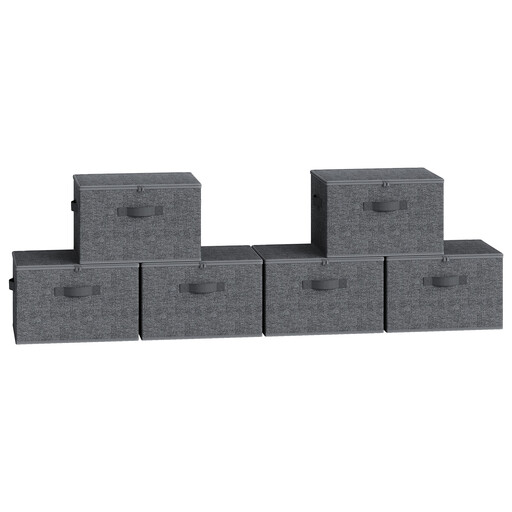
Why we chose it: This set of six boxes is a cost-effective and comprehensive solution for organising out-of-season clothes, bed linen, or children's belongings. Their 30L capacity per box and foldable design make them an excellent choice for major decluttering projects.
The structure is reinforced with 2 mm cardboard and an 80 g/m? non-woven fabric, which prevents it from sagging. The clear dimensions (**40x30x25cm**) allow you to plan your layout without any nasty surprises.
The set of 6 offers excellent value for money. The zipped lids and three handles per box (one front, two side) ensure extremely practical handling.
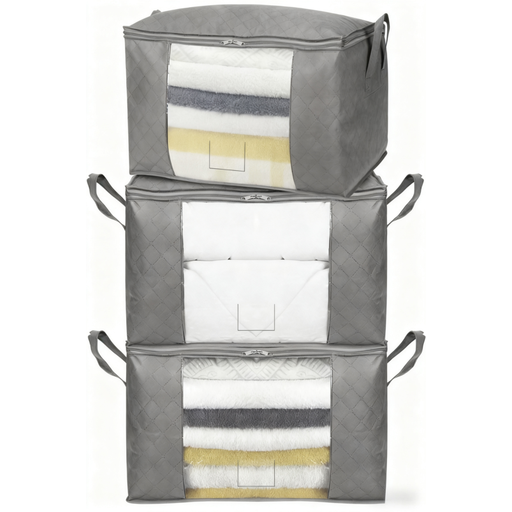
Why we chose it: Perfect for closet or wardrobe shelves. The clear window lets you identify the contents (jumpers, t-shirts, accessories) at a glance, without having to pull everything out. Its flexible structure allows it to adapt to various spaces.
The clear window solves the problem of impractical design. No more guessing what's inside! The quality polyester fabric and sturdy zippers promise better durability than entry-level options.
The immediate visibility of the contents. It's a precious time-saver for finding and putting away your things every day.
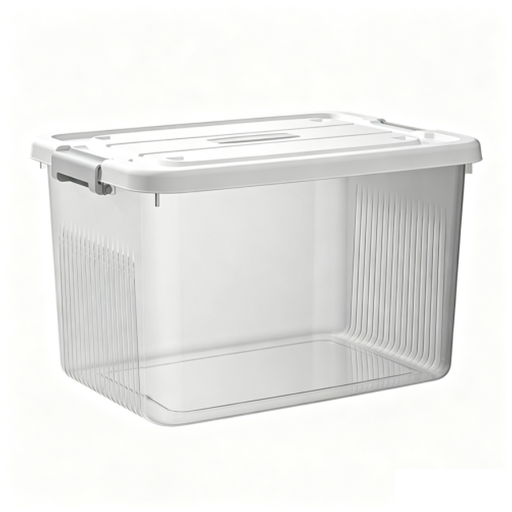
Why we chose it: For storing clothes or other goods in places like a cellar, attic, or garage, protection from moisture and dust is non-negotiable. This rigid plastic model is designed for stable stacking and maximum protection.
Its structure, made of 2.5 mm PP plastic with reinforcing ribs, guarantees rock-solid rigidity, eliminating any risk of sagging. The snap-on lid and stackable design are real assets for easy use.
Durability and protection. This is a solution designed to last and protect its contents in more demanding conditions than a typical closet.
The art of organisation doesn't stop at the wardrobe. Once your clothes are neatly organised, why not tackle your kitchen cupboards?
Discover our selection of practical and stylish containers, tested and approved by our experts to keep your food fresh.
The lifespan of a fabric box depends directly on its manufacturing quality. An entry-level model without reinforcements can lose its shape in less than six months with regular use. Conversely, a box with thick cardboard-reinforced walls and a dense fabric can last for several years if it is not overloaded and is handled with care.
The first step is to measure your space: the depth, width, and especially the height of your shelves. Then, compare these measurements with the product's dimensions. Also, think about what you will store inside. For bulky items like coats or duvets, opt for tall and deep boxes. For stacks of t-shirts or jumpers, medium-height boxes (around 25?cm) are often more practical.
A fabric box with a well-closed lid provides a physical barrier that limits access for moths and other insects. As fabric is still a permeable material, it is advisable to add natural repellents (cedar, lavender) inside for optimal protection. For a nearly airtight solution, plastic boxes with a sealed lid remain the safest choice.