
Livraison le jour même ou le lendemain

Qualité garantie

Débloquez vos offres de bienvenue: Livraison GRATUITE | Jusqu'à -80 % | 30 jours d'essai gratuits à JoyPlus
Téléchargez l'application
With clutter threatening to take over our spaces, the stackable plastic storage box seems like a miracle solution. Yet, impulse buys often end in disappointment: plastic that cracks at the first impact, wobbly stacks, and lids that no longer close. Before you invest, it's essential to read between the lines on product descriptions to focus on what truly makes a difference.
Our editorial mission? To help you sort through the options. We've analysed the most common mistakes and the criteria that really matter to guide you to the storage solution that will genuinely simplify your life.
The market is flooded with options, but they are far from equal. Beware of these three common flaws that turn a good intention into a purchase you'll regret.
To avoid these unpleasant surprises, examine a few key technical points. Here are the three criteria to scrutinise for a smart, long-lasting investment.
The type of plastic is the heart of the matter. Polypropylene (PP) is a reliable choice for its robustness, wear resistance, and flexibility, which prevents it from shattering on impact. Pay attention to the wall thickness (aim for at least 2.5?mm for good rigidity) and the presence of reinforcing ribs on the sides and base. These structural details dramatically increase load capacity and longevity, a crucial point for garage or cellar storage.
Stable stacking depends on a perfect fit between the lid and the base. Look closely at the lid: is it indented or does it have raised edges to seat and lock the base of the box above it? Some models go a step further with a non-slip base for maximum grip. This combination is what allows you to create perfectly straight and secure storage columns, whether for a closet organiser or for storing archives.
Choosing a set of transparent storage boxes saves you hours of searching. A single glance is all it takes to identify the contents without having to unpack everything. Also consider the usable volume. A large-capacity storage box will be ideal for duvets, off-season clothing, or DIY equipment, while more compact sizes are better suited for a plastic archive box or for sorting toys.
Every storage need is unique. Here are a few recommended options, selected for their design and suitability for specific user profiles.
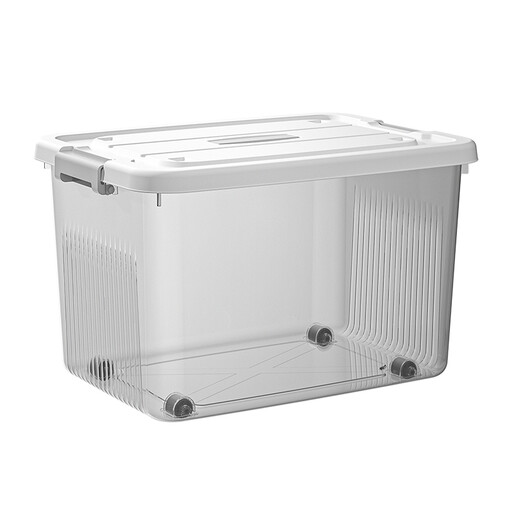
Why we chose it: The ultimate versatile and cost-effective solution for organising multiple spaces at once (closets, kids' rooms, offices). The set format is perfect for tackling a major decluttering project.
The PP structure with a 2.5 mm thickness and reinforcing ribs prevents cracks. The lid and base are designed for a stable and secure fit.
Excellent value for a set. The four transparent boxes allow you to create a visually consistent organisation system right from the start.
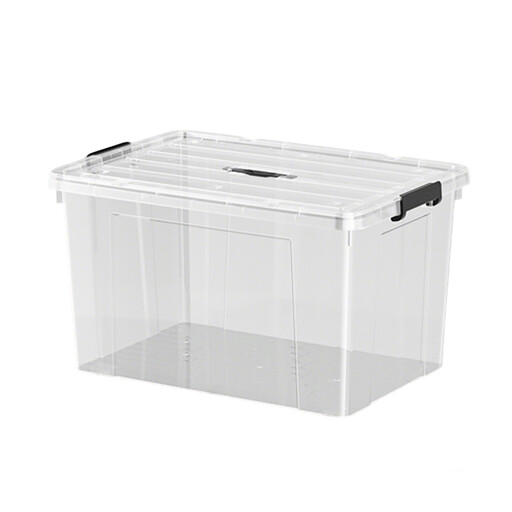
Why we chose it: Ideal for storing heavy or bulky items in demanding environments (garage, cellar, attic). Its large capacity is perfect for archives, tools, or seasonal equipment.
Its thick, reinforced design is specifically engineered to support heavy loads without warping. The clip-on lid ensures an effective seal against moisture and dust.
The large capacity combined with a robust structure makes it a reliable solution for long-term storage, effectively protecting your most valuable or bulky belongings.
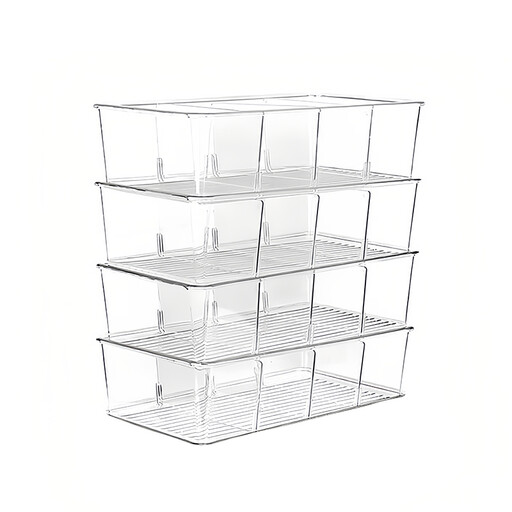
Why we chose it: The perfect solution for taming the small clutter that takes over desks, kitchen drawers, and bathroom cabinets. Ideal for tea bags, coffee pods, cosmetics, or office supplies.
It avoids the "catch-all" trap. The built-in compartments prevent small items from getting tangled, offering clear organisation and direct access—the opposite of the usual chaos.
The transparent PET material offers crystal-clear clarity for perfect visibility. Its open, compartmentalised design is made for immediate, everyday access.
We have selected a full range of products that meet our quality criteria and current safety standards.
1. How can I safely stack plastic storage boxes? The golden rule: always place the heaviest boxes at the bottom. Ensure each box is perfectly stable before adding another on top. Never exceed the maximum height recommended by the manufacturer and build your stack on a flat surface, away from high-traffic areas.
2. What is the difference between PP and PET plastic for storage boxes?Polypropylene (PP) is typically opaque or translucent. Highly resistant to impact, bending, and temperature fluctuations, it's perfect for large storage crates (garage, cellar). PET (polyethylene terephthalate), on the other hand, is often as clear as a water bottle. It is more rigid, making it an excellent choice for small organisers where visibility is key, such as in a kitchen or on a desk.
3. Can I store food in any plastic box? Absolutely not. You must check that the box is labelled "food-safe" or "BPA-free" (bisphenol A) if you plan to store food in it. Non-certified plastics can leach harmful substances into food. Therefore, reserve standard storage boxes for non-food use only.