
Same-day & Next-day Delivery

Quality Guaranteed

Unlock Your Welcome Offers: FREE Delivery | Up to 80% OFF | Free 30-day JoyPlus trial
Download the APP
Chocolate breakfast cereals are a firm favourite in many French households. But with chocolate cereals, chocolate granola and filled cereals all competing for attention, it can be difficult to know which recipe really suits your habits. An appealing pack is not enough to help you make the right choice.
Three pitfalls are particularly common when shopping:
To compare products properly, take the time to check the ingredients list, nutrition table and allergens shown on the packaging or product page.
Ingredients are listed in descending order by quantity. The first few ingredients therefore give you a good idea of the recipe: wheat, oats, rice, maize or other cereals. For chocolate granola, also check the proportion of wholegrain oats, chocolate chips and nuts.
For example, FUNKIE organic granola contains 57 % wholegrain oats, 5.7 % spelt flour and 5 % dark chocolate chips. Its recipe also includes chickpea flakes and sesame seeds. In nutritional terms, it provides 21 g of sugars and 4.2 g of fibre per 100 g.
Filled chocolate cereals focus more on texture and a soft centre. Trésor chocolate contains 25 g of sugars per 100 g, compared with 26 g for the chocolate-hazelnut version. This does not automatically make these products a poor choice: the information simply helps you place them in the context of an indulgent breakfast or occasional consumption.
Not all manufacturers use the same serving size. To compare several packs, start with the values per 100 g, then estimate the amount actually served at home.
Here are the main indicators to check:
When shown, the Nutri-Score can provide an additional point of reference. However, it does not replace checking the ingredients list and nutrition table.
Allergens should be checked carefully, especially in households with children. Depending on the recipe, the products featured here may contain gluten, milk, soya, nuts, peanuts or sesame.
After opening, reseal the bag carefully. Crunchy cereals quickly lose their crispness when exposed to moisture. FUNKIE granolas state that they should be kept chilled after opening. For the other products, the product page generally recommends storing them in a dry cupboard, away from heat and strong smells.
The following products were selected according to specific, verifiable criteria: composition, pack size, fibre and sugar content, chocolate content and allergens.
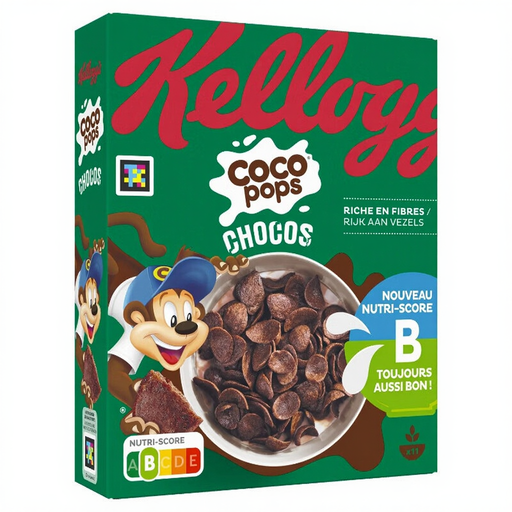
Why this product suits this profile : At 330 g, this pack lets you try chocolate cereals without committing straight away to a large family-size pack. Its wheat flour and cocoa recipe is ideal for households looking for a simple cereal to enjoy with milk.
The table lists 22 g of sugars and 6 g of fibre per 100 g. These concrete figures are more useful for comparison than relying solely on the appearance of the pack.
380 kcal, 2.2 g of fat and 10 g of protein per 100 g. The recipe contains wheat gluten.
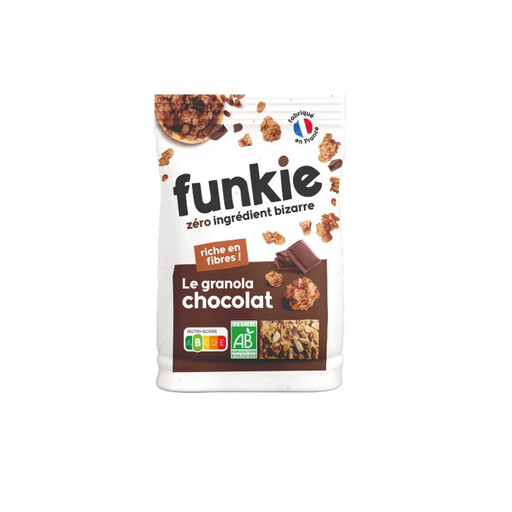
Why this product suits this profile : This product is aimed at adults and families looking for organic chocolate granola made with wholegrain oats, spelt, chickpeas, sesame and dark chocolate.
The proportion of cereals and chocolate chips is detailed, and the sugar content is clearly stated: 21 g per 100 g.
According to its product page, this is an organic product, with 4.2 g of fibre and just 0.03 g of salt per 100 g. Allergens : gluten and sesame.
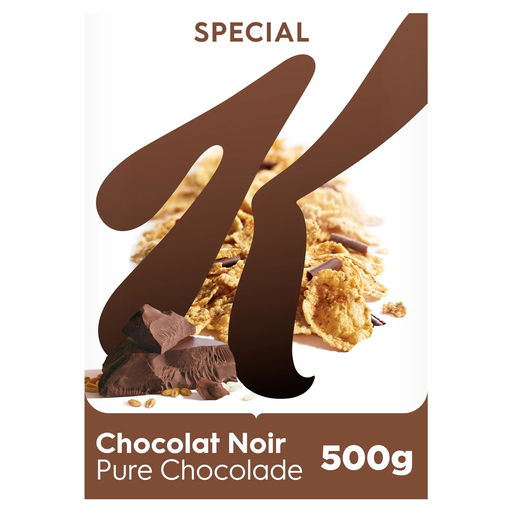
Why this product suits this profile : Its 500 g format is well suited to regular breakfasts. The blend of rice, wholegrain wheat, barley and dark chocolate is just as enjoyable with milk as with yoghurt or fruit.
The recipe specifies 32 % wholegrain wheat, 41 % rice, 4 % barley and 13 % dark chocolate. This means it can be assessed on more than just the word “chocolate”.
6 g of fibre and 17 g of sugars per 100 g, with iron and vitamins also listed. Contains gluten and milk; soya may be present in traces.
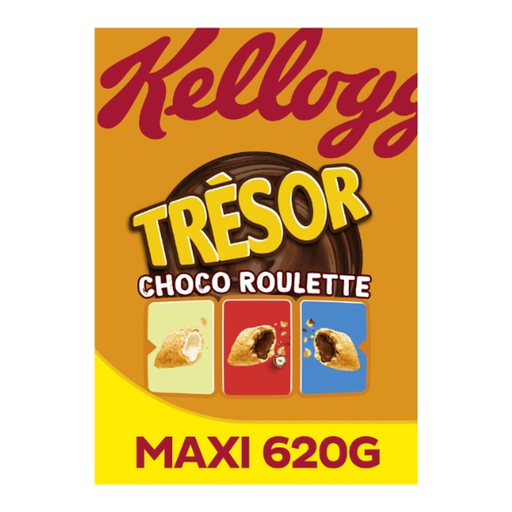
Why this product suits this profile : With their pillow shape and soft centre, these cereals are ideal for children and adults who enjoy an indulgent taste and the contrast between crunch and a soft filling, particularly with milk.
The product page quantifies the three types of chocolate: 2 % white chocolate, 2 % milk chocolate and 1.5 % dark chocolate. The sugar content is 26 g per 100 g.
Large 620 g format, 3.8 g of fibre and 447 kcal per 100 g. Contains gluten, milk, hazelnuts and soya.
We have put together a complete, real-time updated list of products that fully meet these strict selection criteria and European safety regulations.
Start by checking the allergens, serving size and sugar content per 100 g. Children’s cereals can be served with milk, yoghurt or fruit to add variety to breakfast. If they are eaten every day, also check the proportion of wholegrains and the amount of fibre.
Reseal the bag carefully or transfer its contents to an airtight container. Store it in a cool, dry place away from steam and heat sources. Check the packaging instructions: some granolas need to be refrigerated after opening.
A 250 to 375 g pack is suitable for trying a recipe or for occasional consumption. The 500 to 620 g formats are better suited to families or regular use. If everyone prefers a different recipe, several smaller packs can also prevent a large pack from going soft before it is finished.