What should you look for ?
Start with the ingredients list to identify wholegrains, then use the per-100 g values to compare recipes that suit your habits.
| What to check |
Look for |
Who is it for ? |
| Wholegrains and fibre |
Whether the ingredients explicitly describe the cereals as ‘wholegrain’, and the fibre content per 100 g. |
I want to know which cereals make up my breakfast, rather than relying on the word ‘muesli’ alone. Around 33 % of consumers prioritise checking for wholegrains and fibre. |
| Sugars and nutritional composition |
Sugars and fat per 100 g; if the pack displays a Nutri-Score, use it as an additional guide. |
If a recipe contains dried fruit or chocolate, I want to compare its nutritional composition before choosing one to suit my tastes. Around 25 % of consumers prioritise sugars and nutritional information. |
| Pack size and variety |
The net weight and whether you can serve the product as it is or use it as a base to add your own toppings throughout the week. |
For several breakfasts, I need a pack size that suits my household without having to serve the same recipe every day. Around 25 % of consumers put planning for the week first. |
| Allergens |
Allergens listed in the ingredients and any ‘may contain’ statements on the exact pack. |
Before choosing a mix of cereals, nuts or seeds, I need to check that it suits my household’s dietary requirements. For around 17 % of consumers, this is the main consideration. |
Products available on Joybuy
These products cover three ways to plan breakfasts for the week : serve a ready-made muesli, add your own toppings to oat flakes, or choose crunchy cereal. The oat flakes and Cruesli are not presented as plain muesli.
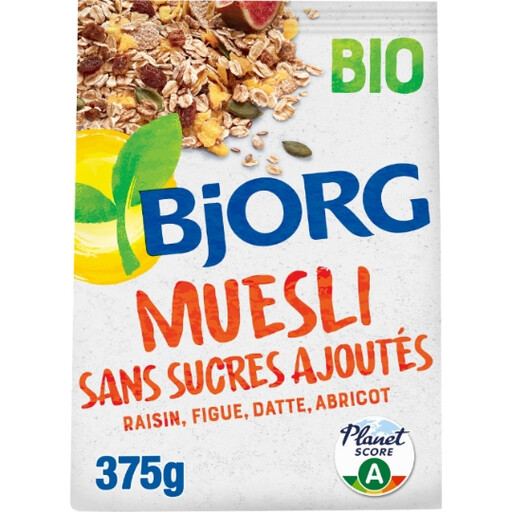 Image unavailable
BJORG Organic Muesli 375 g
A ready-made muesli to consider if you’d like to serve a recipe made with identified wholegrain oat, wheat and spelt flakes. The listing shows 10 g of fibre and 14 g of sugars per 100 g, so ‘no added sugars’ doesn’t mean ‘sugar-free’. It also flags gluten and possible traces of milk, nuts, sesame and soya : check the pack you receive.
View on Joybuy
 Image unavailable
BJORG Organic Oat Flakes 500 g
A base you can customise for the breakfasts you have planned, rather than a ready-made muesli mix. The listing describes wholegrain oat flakes and shows 11 g of fibre and 1.7 g of sugars per 100 g. It flags gluten : check the label on the pack you receive.
View on Joybuy
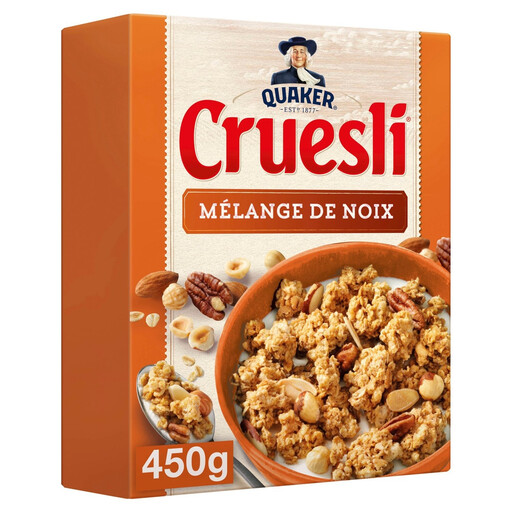 Image unavailable
QUAKER Cruesli Mixed Nuts Cereal Clusters 450 g
Crunchy cereal clusters to consider if this texture matters more to you than plain muesli. The listing shows 32 % wholegrain oats and 18 % wholegrain wheat, along with 10 g of fibre and 12 g of sugars per 100 g. The recipe contains gluten and several nuts ; check the ingredients and any ‘may contain’ statements on the pack you choose.
View on Joybuy
Frequently asked questions
How can you identify wholegrains in muesli ?
Look for the word ‘wholegrain’ alongside the cereals or flakes in the ingredients list for the specific product. For example, Carrefour’s listing for TERRES & CEREALES BIO muesli specifies wholegrain rye flakes, while the BJORG muesli listing describes wholegrain oat, wheat and spelt flakes.
Should you compare values per serving or per 100 g ?
When comparing two recipes, use the values per 100 g so you’re comparing their nutritional information on the same basis. The Directorate-General for Competition Policy, Consumer Affairs and Fraud Control states that nutritional declarations are given per 100 g or 100 ml to make comparisons easier. You can then check the portion you actually plan to serve.
Is Nutri-Score enough to help you choose a muesli ?
No : where displayed, Nutri-Score gives an indication of overall nutritional quality, as explained by the Department of Health. To check whether a recipe contains the wholegrains you’re looking for or an allergen you need to avoid, read the ingredients and labelling too.
Where can you check allergens before buying ?
Check the ingredients list and any ‘may contain’ statements on the exact pack. In France, the Directorate-General for Competition Policy, Consumer Affairs and Fraud Control reminds consumers that allergenic ingredients must be highlighted. The listing for BJORG Muesli 375 g flags gluten and possible traces of milk, nuts, sesame and soya, among other things.
How should you store opened muesli during the week ?
Follow the storage instructions on the pack you choose and reseal it as directed. For BJORG Organic Muesli 375 g, the Joybuy listing says to keep the product in a dry place and seal the pack tightly after opening.


