People preparing lunchboxes
If you want to take a piece with you without repacking the rest of the packet, look for confirmation that the pieces are individually wrapped. Also check the ingredients and allergens for the product you choose.


For lunchboxes or handing out chocolates without opening a shared packet, choose a format in which each piece is individually wrapped. For sharing at home during a late-night break, a box or large bag may be suitable if the number of pieces and the flavours work for everyone. In either case, compare the net quantity, sugars per 100 g, ingredients and allergens for the exact product.
If you want to take a piece with you without repacking the rest of the packet, look for confirmation that the pieces are individually wrapped. Also check the ingredients and allergens for the product you choose.
When sharing at home, the number of pieces, the flavours on offer and how they are protected matter just as much as the total packet weight.
To compare different recipes or formats, check the sugars per 100 g, the ingredients list and the allergens. Whether or not a Nutri-Score is shown does not replace checking this information.
First decide whether the chocolates need to travel separately or will be kept handy for sharing at home. Then check the packaging and label for each product.
| Consideration | What to check | Who it matters to |
|---|---|---|
| Portions to take out | Check that the pieces are individually wrapped and note how many there are; net weight alone does not tell you how the portions are packaged. | I want to pop a piece into a lunchbox without opening or repacking the whole packet. Around 42% of consumers prioritise portions that are ready to take out. |
| Sharing and variety | Compare the number of pieces and the flavours included, then check whether the pieces are individually wrapped or together in a bag. | For a break with others, I want enough chocolates and flavours that suit the group. Sharing and variety are the main priority for around 33% of consumers. |
| Ingredients and allergens | Check the sugars per 100 g, ingredients and allergens on the exact product packaging. | Before choosing between two packets, I mainly want to compare their ingredients and check for declared allergens. This is the priority for around 25% of consumers. |
According to Santé publique France and the DGCCRF, displaying a Nutri-Score is voluntary in France. Its absence alone does not tell you what the chocolate contains; the nutrition declaration required for prepacked foods is separate.
Compare the nutrition information per 100 g, then check the ingredients and allergens. If a Nutri-Score is shown for the product, treat it as an additional guide.
As described by Légifrance on 3 October 2026, the scope of the levy covers certain drinks and liquid preparations for drinks, subject to conditions, not a box of solid chocolates.
To compare chocolates, check their sugar content in the nutrition declaration rather than using this levy as a selection criterion.
A high net weight does not tell you how many pieces there are or how they are wrapped. The product listing for Auchan Gourmet 72% cocoa mini bars even gives conflicting information about whether the pieces are individually wrapped.
Check the number of pieces and look for a clear statement that they are individually wrapped. If the information is contradictory, check the packet before choosing it for a lunchbox.
A product listing may refer to a specific store: E.Leclerc, for example, asks customers to contact the relevant store about its P’TIT DELI x16 product.
Check the store, product and packaging before planning to buy it for a particular occasion.
Lindt’s range includes Mini Carrés EXCELLENCE Dark 70% and Dark 85% in a 154 g bag.
Carrefour stocks Kinder Chocolate bars in a pack of 24, with a net weight of 300 g.
Its online range includes separate categories for chocolate boxes, mini chocolates and chocolate bars.
The P’TIT DELI product contains 16 mini milk-filled chocolate bars, weighing 200 g in total.
Auchan stocks 200 g bags of Gourmet mini bars made with 72% cocoa dark chocolate.
The retailer offers chocolates and chocolate bars, with a range that may vary depending on the time of year.
This selection includes multipacks of bars, mini bars, chocolate bars and chocolate biscuits. For a lunchbox, distinguish between pieces that are stated to be individually wrapped and those for which the packaging still needs to be confirmed.
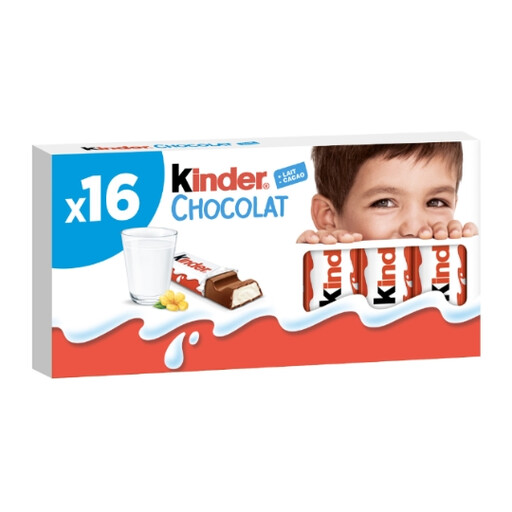 Image unavailable
Worth considering if you want to divide bars between several lunchboxes: this product is stated to be individually wrapped. The listing gives 53.3 g of sugars per 100 g and lists milk and soya; check these details on the packet you buy.
 Image unavailable
The mini bars are described as individually wrapped, which is useful when preparing portions to take out. Check the label for this flavour to compare sugars per 100 g and check the allergens, including milk, wheat and soya, listed on the product page.
 Image unavailable
Worth considering if chocolate biscuits suit your break, though these are not plain chocolates. The biscuits are described as individually wrapped. The listing states 40 g of sugars per 100 g and lists wheat, milk and soya; check the packaging for this product.
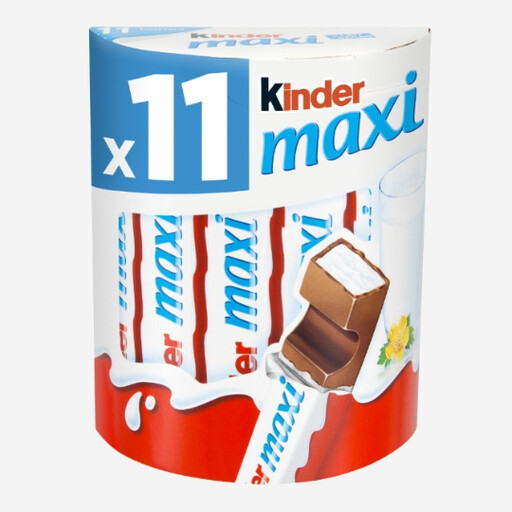 Image unavailable
The number of bars makes it easier to plan how to share them. If each bar needs to go into a lunchbox, check that it has its own wrapper. The listing gives 53.3 g of sugars per 100 g and lists milk and soya; check the product you buy.
 Image unavailable
This multipack of chocolate bars is worth considering for sharing at home or dividing up after opening. If you want to take a bar with you separately, check how it is packaged. The listing gives 52 g of sugars per 100 g and lists soya; confirm these details on the label.
No. According to Santé publique France and the DGCCRF, displaying a Nutri-Score is voluntary in France; it does not replace the nutrition declaration required for prepacked foods. Check the nutrition information, ingredients and allergens for the product you choose.
No. As described by Légifrance on 3 October 2026, the scope of the levy covers certain drinks and liquid preparations for drinks, subject to conditions. To compare two chocolates, check their sugar content on the nutrition label instead.
Compare the ‘of which sugars’ figure per 100 g: the DGCCRF explains that this makes it possible to compare nutrition information for products with different portion sizes. Then check the weight and number of pieces to understand what each pack contains.
Check the allergens highlighted in the ingredients list on the packet you buy. For example, for its specific product, Lindt France warns that its Mini Carrés EXCELLENCE Dark 70% and Dark 85% may contain milk, soya and nuts.
Not necessarily. The listing for Auchan Gourmet 72% cocoa mini bars gives conflicting information about individual wrapping. If you plan to put each piece in a lunchbox, check the packaging or ask for confirmation before buying.