Travellers keeping an eye on calories per serving
You want to compare the whole bar you plan to eat, rather than relying only on the nutritional values per 100 g.


When choosing a chocolate bar for breakfast at a hotel, first compare the calories in the portion you plan to eat, then check the sugars, ingredients and allergens. A protein bar may meet a different need from a small portion of chocolate, but it won’t automatically replace breakfast. If a Nutri-Score is shown, it can help with your checks, but it doesn’t tell you how much you’ll actually eat.
You want to compare the whole bar you plan to eat, rather than relying only on the nutritional values per 100 g.
You check the protein, the fibre where listed, and how the bar fits into your breakfast as a whole.
You need to check the allergens, possible traces and sweeteners in the exact recipe before putting a bar in your bag.
Start with the amount you’ll actually eat, then choose a type of bar based on the role you want it to play at breakfast.
| What matters to you | What to check | Who is it for? |
|---|---|---|
| Calories per serving | The calories per bar, its weight and the number of servings in the pack. | I want to know the energy in the amount I’ll eat, even if the pack contains several bars. Around 42% of consumers put calories per serving at the top of their list. |
| Its role at breakfast | The protein per bar and, for a meal-replacement bar, the serving instructions. | A simple chocolate treat isn’t what I’m looking for at this meal: around 33% of consumers prioritise the role the bar plays in their breakfast. |
| Ingredients and allergens | The ingredients list and any allergen or trace warnings on the exact product. | If I need to avoid certain ingredients, the recipe matters more than the calorie count; this is the main concern for around 17% of consumers. |
| Convenient to carry | The weight of each bar and the storage instructions on the packaging. | If I want to eat just one bar at the hotel without opening the whole pack, I prefer individually wrapped bars. This convenience is the main concern for around 8% of consumers. |
The Joyfuel Noir Noisette product listing states 0.6 g of sugars, but also 369 kcal per 100 g. So the sugar content alone doesn’t tell you how much energy the bar provides.
Compare the calories in the amount you’ll eat, and check the sugars and fat content too.
Pack sizes vary: product listings include, for example, a 45 g Inshape Nutrition bar and a 50 g Snickers bar. Values per 100 g don’t tell you directly what you’ll get from the amount you eat.
Check the suggested serving and its calorie count, then use the values per 100 g to compare products on an equal basis.
According to Santé publique France, producers display the Nutri-Score voluntarily. Its absence doesn’t tell you whether a bar is a good choice.
Check the nutritional information and ingredients list, whether or not the logo is shown.
The recipes mentioned contain different ingredients and trace warnings, particularly for milk, soya, peanuts and tree nuts.
Read the packaging for the flavour and size you’ve bought before eating it.
A chocolate bar with caramel and peanuts, also available as a 50 g single bar.
A range of wafers covered in milk chocolate, available in a variety of sizes.
A chocolate and caramel protein bar to compare with classic chocolate bars on a per-serving basis.
A range of chocolate protein bars with recipes that vary by flavour.
A chocolate protein bar that differs from a bar made mainly of chocolate.
These picks include a chocolate-coated fruit and nut bar, a chocolate and peanut protein bar, and small milk chocolate bars. Compare their serving sizes and recipes based on what you’d like to eat at the hotel.
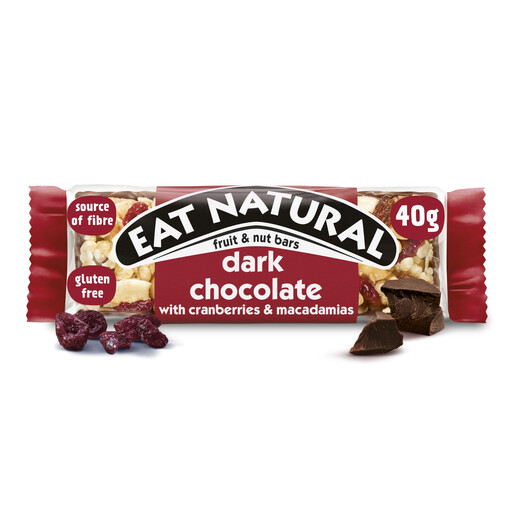 Image unavailable
Worth considering if you’re looking for a 40 g bar with fruit and nuts and dark chocolate, rather than a classic chocolate bar. The recipe contains soya and macadamia nuts, and may contain other tree nuts or peanuts. Check the packaging if you have an allergy.
 Image unavailable
This 55 g chocolate and peanut bar is for anyone who wants to check the protein per serving, without assuming it’s a complete breakfast. It contains milk, peanuts, soya, maltitol and sucralose; check the trace warnings on the packaging too.
 Image unavailable
This pack of milk chocolate bars is a good option if you want individually wrapped bars to take with you. To work out how many calories you’ll consume, check the values per bar on the packaging rather than assuming the small size means fewer calories. The product contains milk and soya.
To decide what to eat for breakfast, focus on the calories in the portion you plan to have; the values per 100 g let you compare products on an equal basis. EU food labelling rules require energy to be declared per 100 g and also allow it to be shown per serving under certain conditions.
Not automatically: a bar’s protein content alone doesn’t determine its role in a meal. If a bar is marketed as a meal replacement, read the product instructions. For example, Carrefour’s Gerlinéa listing recommends having two bars with a piece of fruit or a dairy product to replace a meal.
Before eating, read the ingredients list and trace warnings on the packaging for the exact product you’ve bought. Recipes vary: Snickers France lists peanuts and milk, among other ingredients, while KitKat France lists wheat and milk for its KitKat Milk Chocolate.
No. According to Santé publique France, producers display it voluntarily. It shouldn’t be confused with the nutrition declaration required for prepacked foods covered by EU rules. If it appears on the packaging, check the serving size and ingredients too.
No. The contribution described by BOFiP-Impôts applies to certain non-alcoholic drinks, including those with added sugars, not solid chocolate bars. When choosing a bar, check its nutritional information and ingredients list instead.