What should you check for your coffee break?
Start with how much you’ll actually eat, then check the sugar and ingredients in the format you’ve chosen.
| What matters to you |
What to check |
Who is this for? |
| Energy per portion |
Compare the kcal per 100 g with the weight of the bar, or use the kcal per portion if it matches the amount you’ll eat. |
I want to know the energy in the whole bar so I can have something with my coffee without eating a large bar. Around 45% of consumers put the amount of kcal they’ll eat at the centre of their choice. |
| Sugar and nutritional information |
Check the sugar per 100 g and per portion. Look at the Nutri-Score if it’s shown on the packaging, comparing products from a similar category. |
A small portion doesn’t meet my needs if I also want to compare sugar and other nutritional values. This is the priority for around 33% of consumers. |
| Format and ingredients |
Check the number of pieces, their weight, the ingredients list, allergens and any ‘may contain’ warnings. |
I’m looking for a clearly defined portion that’s easy to take with me, but I also need to be able to check the ingredients that matter to me. Around 22% of consumers prioritise this format or its suitability when making their choice. |
For a portion-size comparison, Carrefour’s product listing gives 10 milk chocolate bars weighing 21 g each, with 550 kcal per 100 g. That works out at around 116 kcal per bar. KitKat’s official product listing gives 213 kcal for its 41.5 g portion. These values apply to the portions specified for these products, not to every bar made by either brand.
Brands to compare
The details below apply to specific products; they don’t describe every bar sold under each brand.
KitKat
The milk chocolate-coated wafer considered here has a stated portion size of 41.5 g.
- KitKat’s official product listing gives 213 kcal and 19 g of sugar for this portion.
- The product contains wheat and milk, among other ingredients; its nutritional values don’t support a ‘light’ claim.
Snickers
The bar considered here combines peanuts, caramel and chocolate in a 50 g format.
- Snickers’ official product listing gives the values for the whole bar: 241 kcal and 26 g of sugar.
- It lists peanuts, milk, soya and egg, among other ingredients, and warns that it may contain hazelnut.
Twix
The 50 g product described by Joybuy combines biscuit, caramel and milk chocolate.
- Its product listing gives 488 kcal and 47 g of sugar per 100 g, making it possible to compare its composition on this basis.
- A 50 g bar works out at around 244 kcal, so make sure you compare a whole bar with the portions of other products.
Mars
Mars Protein is the 50 g chocolate and caramel product considered here.
- Its 50 g format gives you a clearly defined portion to compare with the packaging information.
- The word ‘Protein’ doesn’t tell you how much energy it contains. Carrefour’s product listing flags milk, soya, egg and gluten-containing barley.
Carrefour
The product considered here contains 10 milk chocolate bars weighing 21 g each.
- Based on the 550 kcal per 100 g given by Carrefour, a 21 g bar contains around 116 kcal.
- The amount per piece reflects the format; it doesn’t show that the recipe is ‘light’. Also check the allergens and ‘may contain’ warnings on the pack.
Marque Repère / E.Leclerc
Grainea dark chocolate is a chocolate cereal bar, not a traditional chocolate bar.
- E.Leclerc’s product listing gives six bars for 126 g and 401 kcal per 100 g, which works out at around 84 kcal per 21 g bar.
- It also gives 27 g of sugar per 100 g and notes that the displayed Nutri-Score D is based on the previous calculation method.
Formats to consider on Joybuy
These products give you two chocolate wafer formats to consider, as well as a fruit and nut bar with dark chocolate. First choose the category that suits you, then compare the portion you’ll eat with the information on its packaging.
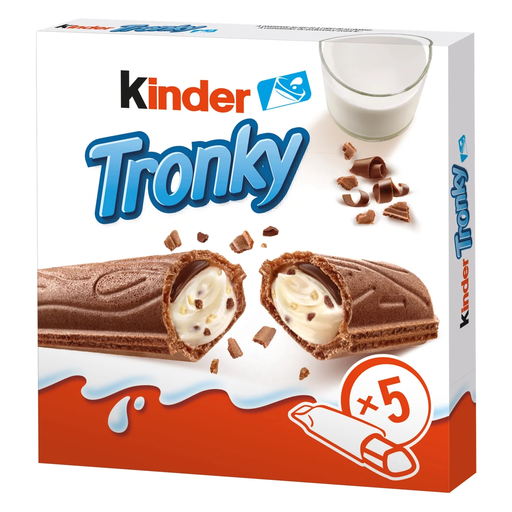 Image unavailable
Kinder Tronky chocolate wafers, 90 g
Worth considering if you prefer a small chocolate wafer with your coffee. The 90 g pack is described as containing five pieces. Check the energy in the piece you’ll eat, along with the allergens in this variety, particularly if gluten, milk, soya or hazelnuts are a concern for you.
View on Joybuy
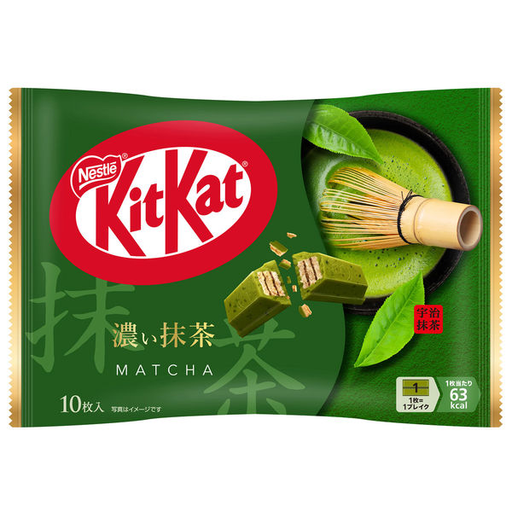 Image unavailable
Kit Kat Mini Rich Matcha Otona Amasa 113 g
This pack of small pieces may suit you if you’d like to portion out your break one piece at a time and enjoy matcha. The pack is described as containing ten pieces. Compare the energy for the number you’ll actually eat, and check the ingredients, particularly if gluten, soya or milk are a concern for you.
View on Joybuy
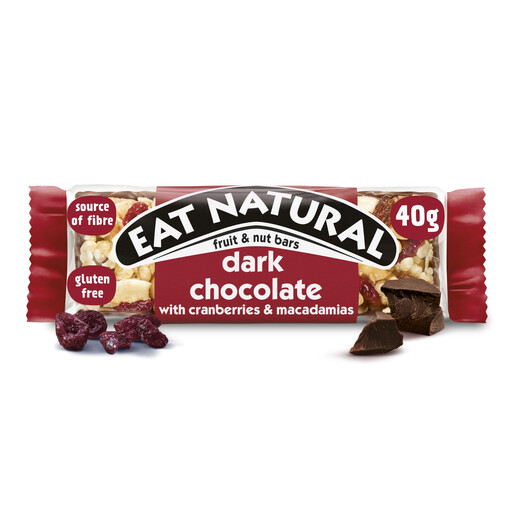 Image unavailable
Eat Natural Cranberry Dark Chocolate 40 g
Worth considering if you’re looking for a fruit and nut bar with dark chocolate rather than a traditional chocolate bar. The bar weighs 40 g. If the amount you eat during your break is still your priority, compare the energy in the whole bar with that of the smaller wafers. Check the ingredients and any warnings about soya, tree nuts and peanuts.
View on Joybuy
Frequently asked questions
Does the French tax on sugary drinks apply to chocolate bars?
No. The levy described by Légifrance applies to drinks and liquid preparations for drinks intended for human consumption, not to solid chocolate bars. If sugar matters to you, check the amount shown on the bar’s label instead.
Does every chocolate bar sold in France have to display the Nutri-Score?
No. Under the EU labelling rules outlined by Your Europe, pre-packed foods must generally carry a nutrition declaration. The French decree of 14 March 2025 describes the Nutri-Score as additional information recommended by the government, rather than a statement that is generally compulsory on every bar.
How do you work out the kcal in a bar from the values per 100 g?
Multiply the kcal per 100 g by the bar’s weight in grams, then divide by 100. Using the 550 kcal per 100 g and 21 g pieces listed by Carrefour for the product considered here, the calculation gives 115.5 kcal, or around 116 kcal per bar. Check the weight of the piece on the pack you buy.
Can a small bar be described as ‘light’?
Its small size alone isn’t enough to justify that description. It may contain fewer kcal per piece than a larger bar without its recipe being presented as lower in energy than a comparable product. So when choosing what to have on your break, distinguish the portion weight from the nutritional information for the recipe.


