
Same-day & Next-day Delivery

Quality Guaranteed

Unlock Your Welcome Offers: FREE Delivery | Up to 80% OFF | Free 30-day JoyPlus trial
Download the APP
Your battery dying mid-trip when GPS is vital, the kids' tablet shutting off in the middle of their favourite cartoon... Keeping your devices charged in the car is no longer a luxury; it's a necessity. Yet, choosing a car charger often turns into a headache. Drowning in promises of power and technical jargon, it's easy to buy a model that charges at a snail's pace or fails after just a few weeks.
As the head of product recommendations at Joybuy, my mission is to help you see things more clearly. Let's forget the marketing talk and focus on the facts. Here are the two most common pitfalls to avoid and the essential criteria for making the right choice, with full confidence.
Pitfall #1: Advertised power is often misleading. A charger might proudly announce "100W," but this power is often the combined total of all its ports. The result: if you plug in two devices, the power is divided and becomes insufficient for a truly fast charge. Even worse, some low-end models don't distribute power intelligently, leaving your most power-hungry device in the lurch.
Pitfall #2: Incompatible fast-charging protocols. Buying a powerful charger is no guarantee of a fast charge. For the magic to happen, your device (smartphone, tablet) and your charger must speak the same technical "language." The two main ones are Power Delivery (PD), adopted by Apple and most recent Android devices, and Quick Charge (QC). A QC charger will never deliver full speed to an iPhone, and vice versa.
To avoid making the wrong choice again, focus on these three key points. They determine the real performance and lifespan of your future USB car adapter.
Power, expressed in watts (W), determines the charging speed. For a fast charge worthy of the name, aim for at least 20W per device.
A good modern charger will often offer both, or at least one powerful PD port, for maximum compatibility. An effective fast car charger is, above all, one that is suited to your device.
The choice of ports depends on your devices... and those of your passengers.
A dual USB car charger with one USB-A and one USB-C port offers excellent versatility. If you travel with family or a lot of gear, models with three or four ports are available. However, be sure to check the actual power delivered to each port when they are all in use.
A low-quality charger can damage your devices' batteries or even pose a risk to your vehicle. Make sure the product has:
Rather than drowning you in dozens of options, we've selected reliable models and matched them with clear user profiles.
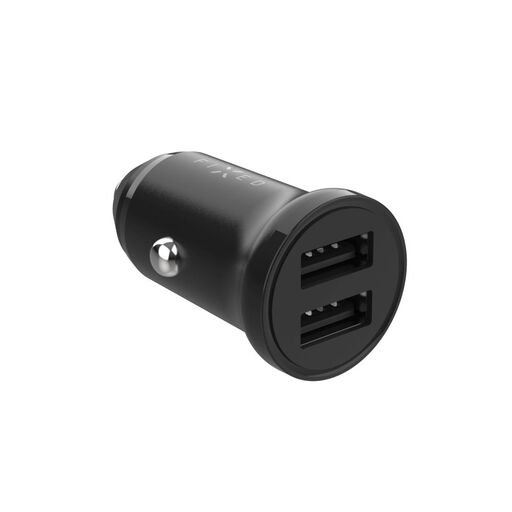
Why we chose it: Perfect for those looking for a simple, reliable solution to maintain the charge of their phone and a second device (GPS, headphones). Its minimalist and discreet design fits into any car interior.
This charger makes no unrealistic claims. It honestly delivers its 15W, split between two ports, which is more than enough for an effective maintenance charge, without false promises.
Its 12V/24V compatibility makes it just as at home in a car as it is in a truck. Its automatic device detection technology (Smart IC) optimises the power sent to each device.
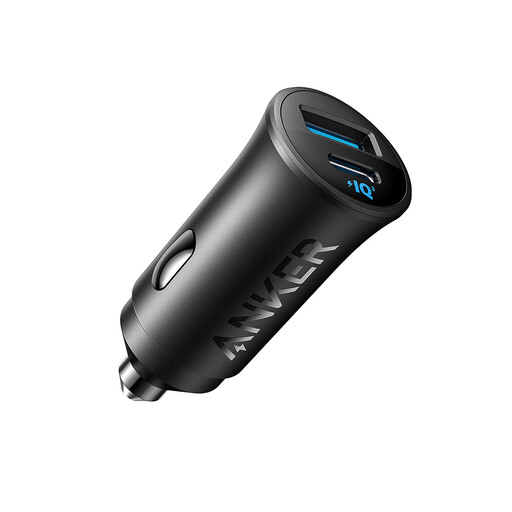
Why we chose it: For owners of recent iPhones or PD-compatible Android smartphones who accept no compromise on charging speed. Anker is a brand renowned for its reliability and product quality.
It bypasses the incompatibility trap by offering a 30W USB-C port dedicated to the Power Delivery (PD) protocol. This ensures optimal fast charging for all compatible devices.
Anker's MultiProtect technology integrates advanced protections against overvoltage and overheating, thus preserving the battery health of your precious devices.
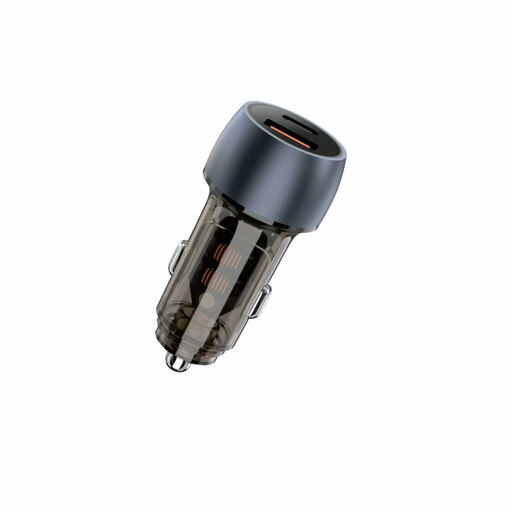
Why we chose it: The ultimate solution for those who need to charge a laptop, a tablet, and a smartphone simultaneously. Indispensable for professionals on the go or long family road trips.
It obliterates the shared power pitfall by offering a USB port capable of delivering up to 100W (enough for a laptop), in addition to a 20W PD port dedicated to a smartphone.
This is a true 100W car charger that transforms your cigarette lighter socket into a mini power station, capable of powering the most energy-hungry devices.
We have compiled a complete and up-to-date selection of chargers that meet our strict selection criteria and UK/EU safety standards.
On most modern vehicles, the power to the cigarette lighter socket is cut off when the ignition is turned off. In this case, there is no risk. If your socket remains permanently powered, be aware that a charger plugged in with nothing connected consumes a minuscule amount of energy. As a precaution, however, it is still advisable to unplug it if you do not use your car for several days.
USB-A: This is the traditional rectangular port. Compatible with the majority of cables, it generally offers a standard charging speed. USB-C: Smaller, oval, and reversible, it has established itself as the new standard. It is the port that enables truly fast charging via the Power Delivery (PD) protocol and allows for the highest power outputs.
Check your phone's manual or its online technical specifications to identify its fast-charging protocol (e.g., Power Delivery 3.0, Quick Charge 4+). Then, verify that the charger's technical sheet explicitly mentions compatibility with that same protocol and a sufficient wattage (W) (usually 20W or more).