
Livraison le jour même ou le lendemain

Qualité garantie

Débloquez vos offres de bienvenue: Livraison GRATUITE | Jusqu'à -80 % | 30 jours d'essai gratuits à JoyPlus
Téléchargez l'application
Staying connected in your car is no longer a luxury, but a necessity. Between constantly running GPS, streaming music, and the need to stay reachable, our devices' battery life is put to the test. A good USB-C car charger is the ideal solution, but the market is flooded with options, and it's easy to end up with models that don't live up to their promises. As a Product Recommendation Manager at Joybuy, my role is to cut through the noise and help you make an informed choice, steering clear of misleading marketing claims.
Before you buy, here are the most common pitfalls to avoid so you don't turn a practical purchase into a costly disappointment?:
To avoid these issues, here are the technical specifications on which you should make no compromises. They are the true hallmark of quality and performance in a USB car adapter.
Power, expressed in watts (W), is the most critical factor: it determines the charging speed. A Power Delivery car charger has now become essential for quickly powering modern devices via a USB-C port.
Also, check for compatibility with the Qualcomm Quick Charge (QC) protocol if you have older Android devices that use it via a USB-A port.
The era of the single-port charger is well and truly over. A multi-port car charger is infinitely more versatile. The most common and practical configuration combines?:
Consider your daily needs: do you travel alone or with family? How many devices do you charge simultaneously?
A good charger is, above all, a safe charger. This is a non-negotiable criterion. Make sure the model you're considering includes comprehensive protections: against overheating, overcurrent, overvoltage, and short circuits. CE certification is the bare minimum, ensuring the product complies with European safety standards. Finally, opt for compact designs made of metal alloy, which provide better heat dissipation and greater durability.
Rather than an endless list, we have selected models that cater to specific user profiles, choosing only those that excel in performance and safety.
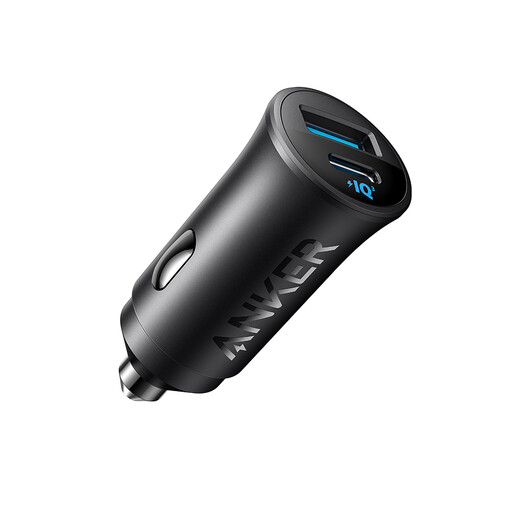
Why it's the right choice: Perfect for those who want a simple, reliable, and compact solution to charge a smartphone and a second device (GPS, headphones...). Its miniature size is barely noticeable in any car interior.
It delivers true fast charging via its 30 W USB-C port, while Anker's MultiProtect technology effectively guards against overheating and overvoltage.
Its ultra-compact design doesn't obstruct any controls. The dual ports (USB-C and USB-A) ensure excellent versatility.
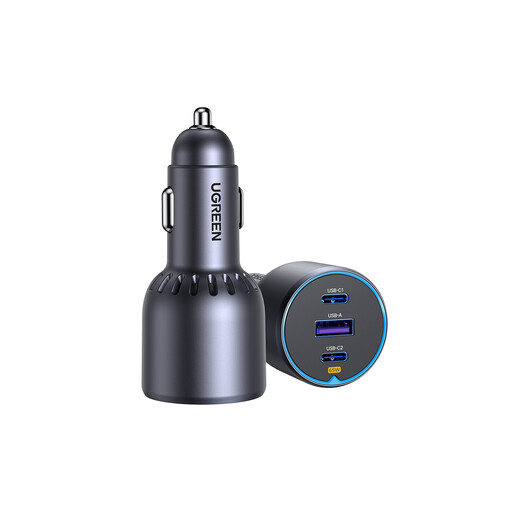
Why it's the right choice: Essential for those who use their car as a mobile office. It can simultaneously power a laptop, a smartphone, and another accessory without ever sacrificing charging speed.
It delivers genuinely high power (up to 65 W on one USB-C port), enough for a laptop, thus avoiding the trap of underpowered chargers. Its multiple protections ensure this power is managed safely.
Very high combined power of 75 W. Three ports (2x USB-C, 1x USB-A) for maximum flexibility.
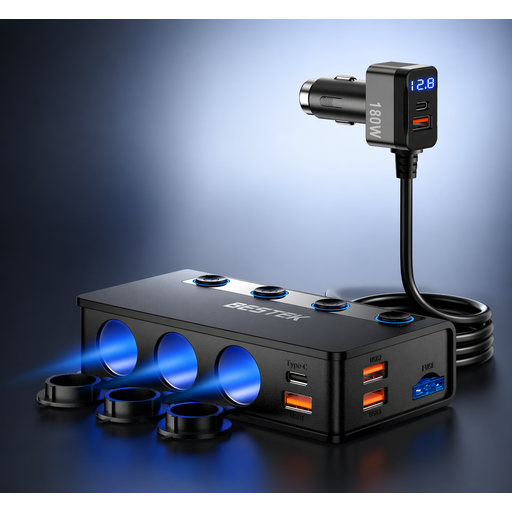
Why it's the right choice: The ultimate solution for long trips with family or friends. With its 6 USB ports (including PD and QC3.0 ports) and 3 additional cigarette lighter sockets, the war over who gets to charge their device first is over.
It radically solves the problem of not having enough ports. The independent switches for each socket are a thoughtful detail: they prevent unnecessary power consumption and premature wear.
Massive charging capacity (up to 9 devices). Independent switches and a battery voltage display provide a reassuring feature.
We have put together a comprehensive selection of chargers that meet our quality criteria and European safety standards.
It depends entirely on the device you want to charge. To give you a general idea?:
In most modern vehicles, the power to the socket cuts off when the ignition is turned off. Therefore, the risk of draining the battery is zero. In older vehicles where the socket remains powered, a quality charger has almost no idle power consumption. However, as a precaution, it's advisable to unplug it if you don't use your car for several days. Some models, like the BESTEK splitter, include switches to address this issue.
A quality fast car charger, equipped with multiple protections (overvoltage, overcurrent, overheating), is designed to communicate with your device and provide exactly the power it needs. It poses no danger to your battery. The risk mainly comes from low-quality, uncertified chargers that can deliver an unstable voltage and, over time, damage the battery. Choosing a certified product that complies with safety standards is therefore essential.