
Livraison le jour même ou le lendemain

Qualité garantie

Débloquez vos offres de bienvenue: Livraison GRATUITE | Jusqu'à -80 % | 30 jours d'essai gratuits à JoyPlus
Téléchargez l'application
Making a fresh smoothie is the ultimate wellness habit. Yet, that initial enthusiasm often crashes into a harsh reality?: a blender that gives up on frozen fruit, stubborn chunks that refuse to blend, or a cleanup that turns into a nightmare. The market is a jungle of marketing promises, and it's easy to end up with an appliance you regret from the very first use.
As a product expert at Joybuy, I'm here to cut through the noise with you. Let's forget the technical jargon and get straight to the point. Here are the three classic pitfalls to avoid when buying a smoothie blender, and the real criteria to ensure you make the right choice.
Wattage is the heavy-hitting marketing claim. However, a 1200W motor with mediocre blades will always be less effective than a well-designed 600W model. The real question is what you'll be using it for?: for simple smoothies (fresh fruit, liquids), 300 to 500W is perfectly adequate. On the other hand, if you plan to tackle ice cubes or fibrous vegetables like kale, higher power is indeed necessary.
A multifunction blender that promises to chop, mix, knead, and even juice sounds tempting. On paper. In practice, these Swiss Army knives of the kitchen often make compromises. A blender designed for smoothies has a jar and blades with a geometry optimized to create a powerful vortex, pulling ingredients down for a perfectly smooth result. An overly versatile appliance will often underperform on this specific task.
This is the star argument on every product page, and yet the main source of disappointment. Let's be clear?: a blender is only easy to clean if its blades are fully detachable and its jar has no hard-to-reach corners. A fixed blade assembly is a guarantee that residue and bacteria will build up, turning daily cleaning into a chore.
To avoid falling into these traps, focus on the three points that truly make a difference in performance and longevity.
Instead of just looking at watts, pay attention to the blade design. Blades made of stainless steel, ideally 4 or 6 of them pointing in multiple directions, ensure an effective blend. A powerful blender isn't just a big number in watts?; it's a motor capable of maintaining a high rotation speed (RPM) without overheating, even when faced with tough ingredients. For heavy-duty use like crushing ice, a model designated as an ice-crushing blender is essential.
The choice of jar material has a direct impact on your daily experience:
Capacity is also a key point. For one person, a mini blender or a personal model with a 500 to 700?ml bottle is perfect. For a family or for preparing soups, aim for a jar of at least 1.5?L.
A blender used every day must be simple to maintain. Be sure to check two things:
There's an ideal blender for every user. Here is a selection of models that meet specific needs, applying the criteria we've just discussed.

Why we chose it : Perfect for a single person or a student. Simple, compact, it gets straight to the point : making a smoothie in a flash in the morning. Its 600 ml bottle doubles as the blending jar and a to-go cup.
It doesn't get caught up in the unnecessary wattage race : its 300 W are perfectly calibrated for smoothies. Most importantly, its blades are removable, making it genuinely easy to clean, unlike many of its competitors.
Its ultra-simple one-touch operation and included portable bottle.
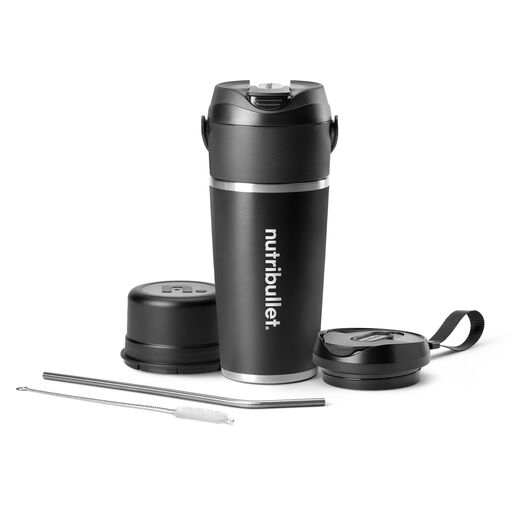
Why we chose it : The **portable blender** designed for active people. With its USB-C rechargeable battery and stainless steel thermal cup, you can make your smoothie and keep it cold anywhere : at the office, the gym, or while travelling.
It focuses on one thing—portability—and does it perfectly. It doesn't try to pass itself off as an ultra-powerful kitchen blender, avoiding the trap of the mediocre "all-in-one" device.
Its insulated cup (keeps cold for up to 24h) and universal USB-C charging.
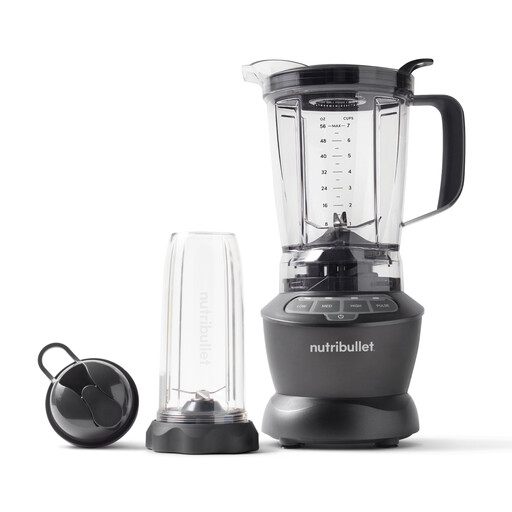
Why we chose it : Here, we're kicking things up a notch with a true **multifunction blender** that has serious power. Its large 1.8 L jar, individual cups, and 1200 W motor make it ideal for the whole family's smoothies, as well as hot soups, sauces, or homemade peanut butter.
Unlike low-end "all-in-one" devices, its power and smart programs (like the "Extract" function) ensure a flawless result for every task. Its versatility isn't just a marketing claim; it's backed by real performance.
The combination of a large family-sized jar and portable cups, complemented by 3 speeds and a Pulse mode to master the texture perfectly.
Discover our full selection of blenders that meet our quality charter and European safety standards.
For smoothies made with soft fruits and liquids, 300 to 500 watts is sufficient. If you plan to regularly blend hard ingredients (raw root vegetables, nuts, ice cubes), a motor of at least 900 watts is recommended to achieve a velvety texture and prevent premature wear.
Not for everyone. If you add one or two ice cubes from time to time, most quality blenders will handle it without a problem. However, if you're a fan of "frappé" style frozen drinks or want to crush large quantities of ice, a dedicated model with a powerful motor and reinforced blades is a smart investment to avoid damaging your appliance.
The secret is the immediate rinse reflex. Right after serving your smoothie, fill the jar halfway with warm water and a drop of dish soap, and blend for a few seconds. This simple step prevents residue from drying and sticking. And for a deep clean, we'll say it again?: always choose a model where the blade assembly unscrews.