
Livraison le jour même ou le lendemain

Qualité garantie

Débloquez vos offres de bienvenue: Livraison GRATUITE | Jusqu'à -80 % | 30 jours d'essai gratuits à JoyPlus
Téléchargez l'application
A blender can make smoothies, soups, sauces, purées, milkshakes and plant-based drinks. But a packed spec sheet doesn’t guarantee it will feel at home in your kitchen. The right choice really depends on what you usually prepare, how many people you’re serving, and how much time you’re willing to spend on cleaning.
Here are the most common pitfalls, the criteria that actually matter, and a selection of models suited to different needs.
A high wattage number catches the eye, but it isn’t enough to judge an appliance. The blade design, how ingredients circulate, the usable capacity, and the maximum continuous run time all matter just as much.
A powerful blender will handle frozen fruit or ice cubes with ease. For soft fruit and simple drinks, a less powerful model can work perfectly well. For soups, a hand blender of 600 to 650 W can sometimes be more practical than a countertop blender.
A 700 ml bottle doesn’t mean you can fill it to the brim. You need to respect the maximum fill line and leave enough room for ingredients to circulate properly. For a single serving, 475 to 700 ml may be enough. For a family, a larger jug will be far more convenient.
Also check whether the stated capacity refers to the total volume or the recommended working capacity.
An appliance that’s fiddly to take apart often ends up at the back of a cupboard. Before you buy, check which parts are removable, whether they’re dishwasher-safe, and if the blade assembly can be rinsed easily.
A blender with accessories can replace several utensils, provided you actually use the whisk, chopper or beaker that come with it. A long list of accessories won’t make up for poor ergonomics.
For versatile everyday use, a power rating between 600 and 900 W generally gives you a comfortable margin for smoothies, sauces and purées. Compact portable models sometimes have fewer watts, yet remain suitable for liquid preparations and soft fruit.
The number of speeds isn’t the only thing to look at:
For hot liquids, always check the instruction manual. Some appliances forbid them, while others specify a maximum temperature. The models shown here, for example, indicate limits between 60 and 80 °C depending on the reference.
Stainless steel blades resist corrosion and are suitable for daily use. Their shape and number influence how ingredients circulate, but these factors shouldn’t be considered in isolation from the motor power and the container design.
To choose a BPA-free blender, look for an explicit mention regarding the parts that come into contact with food. Tritan and plastics labelled BPA-free can work for beakers and bottles, subject to the manufacturer’s instructions. Also discover our selection of BPA-free blenders.
A portable blender or personal blender can be a good option for someone on the go, a student, or a small kitchen. Models designed around a bottle avoid the need to transfer your drink. On the downside, they are generally less suited to large quantities and very thick preparations.
To spend less time at the sink, look for:
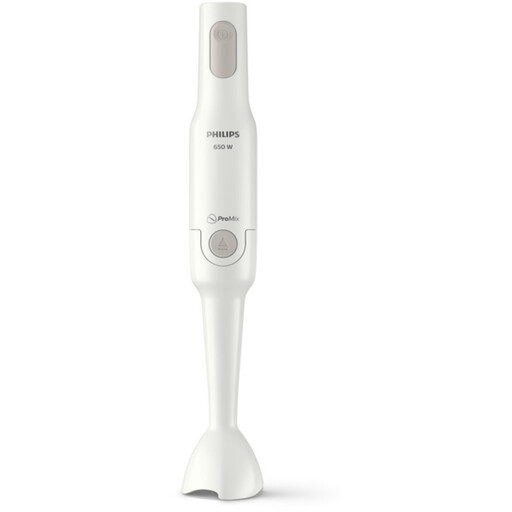
Why this choice suits this profile: This 650 W hand blender is ideal for soups, purées, sauces and smoothies made in small quantities. Its compact size stores easily in a drawer.
The anti-splash shaft and one-button release system reduce unnecessary handling. The manual states that it should not be used for ice cubes or frozen foods.
650 W motor, beaker included, easy-to-rinse plastic shaft and two-year international warranty.
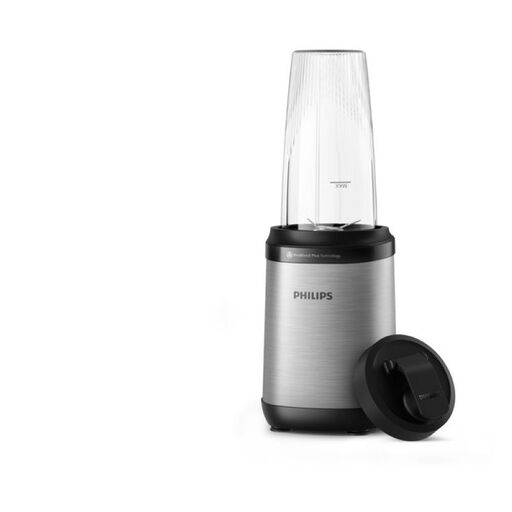
Why this choice suits this profile: This 800 W personal blender is aimed at those who regularly make smoothies, milkshakes or sauces for one person.
The 700 ml bottle lets you prepare and then carry your drink without transferring it. According to the product sheet, the removable parts are dishwasher-safe.
800 W power, six stainless steel blades, Tritan bottle labelled BPA-free and pulse function.
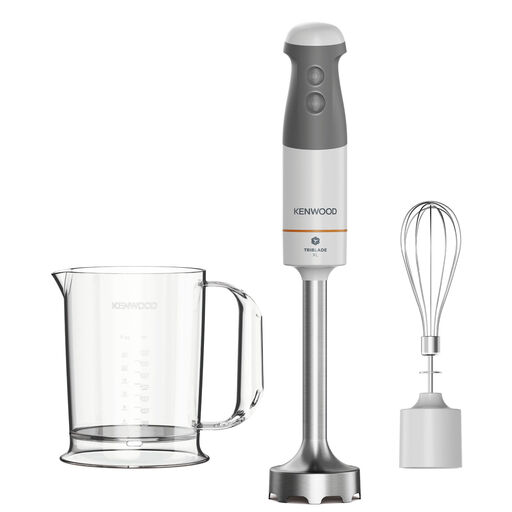
Why this choice suits this profile: Its longer shaft is designed to reach the bottom of preparations in deep saucepans. It will suit families who regularly make soups, sauces and purées.
The variable speed and Turbo mode mean you don’t have to work at a single pace. The shaft and whisk are removable for easy cleaning.
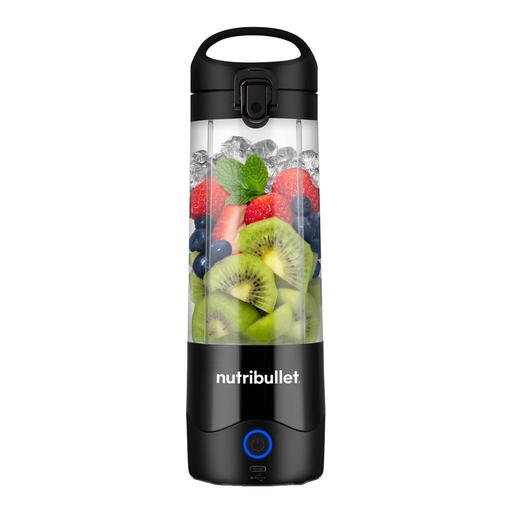
Why this choice suits this profile: This rechargeable mini-blender fits in a bag and charges via USB-C. It’s ideal for individual drinks made at the office, the gym or on the go.
Its use is clearly limited to individual portions and short 20-second cycles. There’s no point asking it to blend thick preparations or large quantities.
475 ml Tritan beaker, USB-C charging, stated weight of 0.86 kg and compact design.
We’ve put together a comprehensive, real-time updated list of products that fully meet these strict selection criteria and European safety regulations.
For a single serving, a smoothie blender of 600 to 900 W with a container of 475 to 700 ml can work well. If you use ice cubes or frozen fruit, check in black and white that the manufacturer allows this, and always add enough liquid.
It depends on the model. Some portable or personal appliances must not be used with hot liquids. Respect the maximum temperature stated in the manual, don’t overfill the container, and let the heat drop for a few moments before blending. With a hand blender, caution is still needed to avoid splashes and burns.
The lifespan depends on how often you use it, the ingredients you blend, and how well you maintain it. To protect the motor, follow the stated cycles, let the appliance cool down between uses, and never force it with foods the manufacturer advises against. A blender that’s easy to clean, properly dried and then stored, also helps prevent premature wear on the removable parts.